






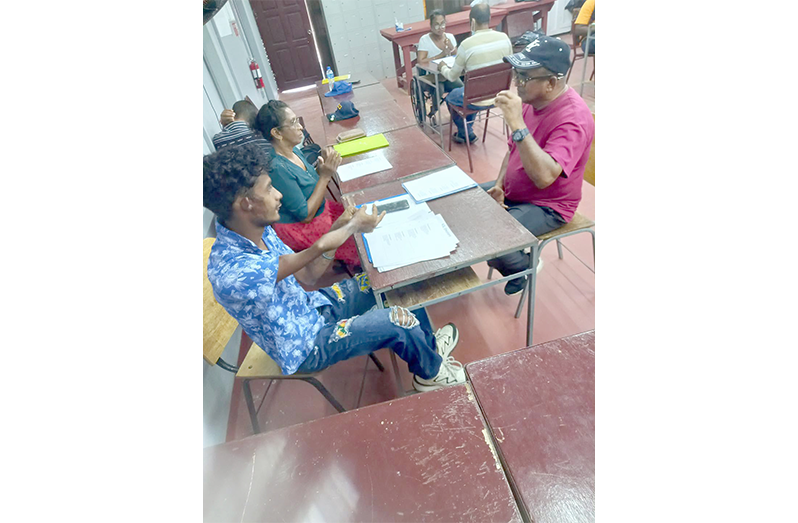
TWENTY-ONE persons have completed Levels One and Three of sign-language skills training at the Essequibo Technical Institute, as the Ministry of Human Services and Social Security continues efforts to promote inclusive communication and improve access to opportunities for persons with disabilities.
The training was facilitated through the ministry’s Support Services for Persons with Disabilities Unit (SSPDU) and was aimed at equipping participants with skills to communicate more effectively with persons who are deaf or hard of hearing.
The initiative forms part of broader efforts to promote inclusion by reducing communication barriers and encouraging greater understanding and interaction between persons with disabilities and the wider community.
Through sign-language training, participants can help improve access to communication in settings such as workplaces, educational institutions and public services, while supporting the participation of persons with disabilities in everyday social and professional activities.
Minister of Human Services and Social Security, Dr Vindhya Persaud, has continued to advocate for initiatives that promote equal opportunities and strengthen support for persons with disabilities.
The ministry said such programmes are important to building a society in which persons with disabilities are respected, understood and able to participate meaningfully in national life.
The training in Region Two also highlights the importance of extending opportunities for skills development beyond Georgetown, allowing more persons in the regions to acquire knowledge that can benefit their communities.
By equipping participants with sign-language skills, the programme seeks to encourage more inclusive interactions and contribute to an environment in which communication is not a barrier to education, employment, public services or social participation.
The ministry reaffirmed its commitment to supporting persons with disabilities and advancing opportunities for them to exercise their rights and participate fully in society.




