






HOURS before the GDFS Shahoud set sail from its base at Ruimveldt, before anyone knew the scale of the tragedy that was unfolding at sea, the Coast Guard adopted an all-hands-on-deck approach to the distress signals emanating from a beacon on board the MV Barima.
The Presidential Commission of Inquiry heard on Friday that a rapid succession of decisions by commanding officers put Coast Guard marine and air assets in proximity to the tragic sinking of the Barima.
From the moment the GDF’s Metal Shark boat arrived at ground zero, the officers on board followed the debris and the cries in the night for help and began pulling survivors from the dark, turbulent waters.
Between 2 and 3 am on July 19, 50 survivors were rescued. No one was counting. No one was plotting the locations of the survivors on their GPS. It was gut-wrenching and emotionally painful work.
That was the account that emerged on Friday as the inquiry continued at the Arthur Chung Convention Centre. The testimony traced the response from the first instructions sent to the Pomeroon floating base to the deployment of military aircraft and the searches that continued in the days after the sinking.
It also brought into focus the emotional toll on the soldiers involved. Witnesses described an experience unlike anything they had encountered in their careers, with some requiring counselling to help cope with the trauma.
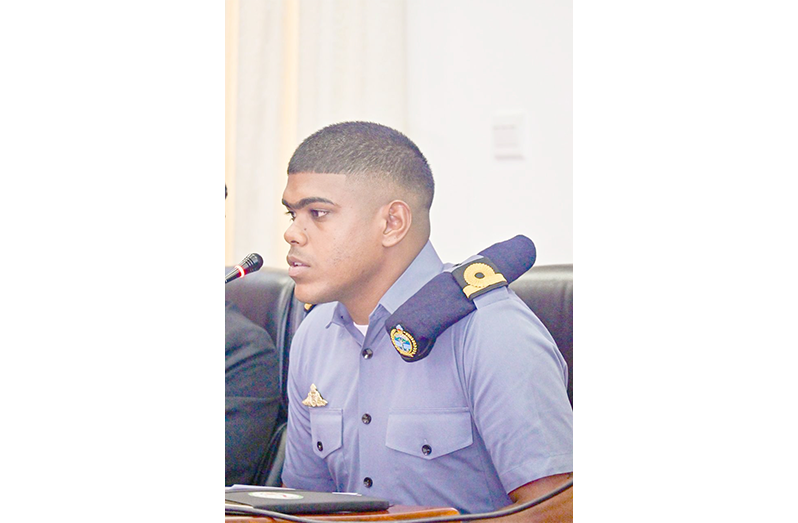
Midshipman Rahul Ramsarup, the officer commanding the District Two base at the time, testified that he received a WhatsApp message at 10:59p.m. on July 18, 2026, instructing his team to prepare for a search-and-rescue operation.
At 11:07p.m., he received the coordinates of the maritime distress signal. Ramsarup said he briefed Petty Officer Keon Smith and his team before they departed for the indicated location, believed to be offshore near Anna Regina on the Essequibo Coast.
“After receiving said coordinates and instructions to depart immediately, I briefed my team on the current situation at hand, and it took them about 15 to 20 minutes to depart to the said coordinates,” he told the commission.
He explained that travelling from the floating base to the Anna Regina area typically took about two hours during daylight. At night, the journey could take approximately four hours because of limited visibility and the need to maintain a safe speed.
While the Coast Guard marine response was taking shape, the GDF Air Corps was preparing aircraft to support the operation.
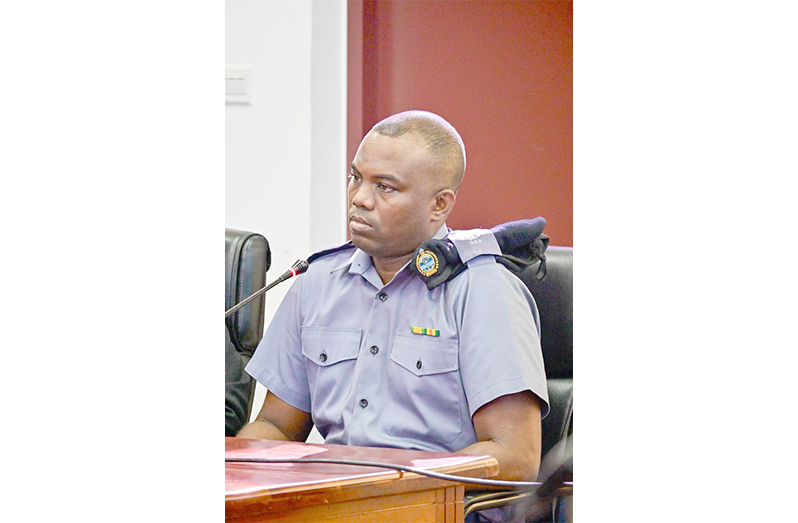
Captain Simon Gordon, a flight operations officer with the Air Corps, testified that six of nine available aircraft were deployed during the rescue operations.
He said preparations began with a WhatsApp briefing at 12:40 a.m. on July 19. The crew reported to the Eugene F. Correia International Airport at 1 a.m., and the Bell 407 helicopter was fuelled and was ready by 1:30 a.m.
“Once we get a distress [signal], we first need to confirm as much as possible where and how, essentially, if it’s not a spoof or it’s an inaccurate reading or it’s triggered before we deploy the resources,” Gordon told the inquiry.
Back at the Pomeroon floating base, the results of urgent action by the Coast Guard were beginning to pay off.
A Maritime Administration Department (MARAD) pilot vessel arrived at approximately 7:30 a.m. with 50 survivors and one deceased person.
Ramsarup said the survivors included adults and children, as well as the MV Barima’s captain, Kevin Price.
The Coast Guard coordinated the transfer of the survivors to Charity, where they were handed over to medical personnel and police. The first Coast Guard team returned to the floating base before noon that day.
Ramsarup’s records showed that between July 19 and 22, Coast Guard teams rescued and accounted for a total of 69 survivors and recovered 71 bodies during the search operation.
As the response continued, teams were assigned to search different sections of the sea and coastline.
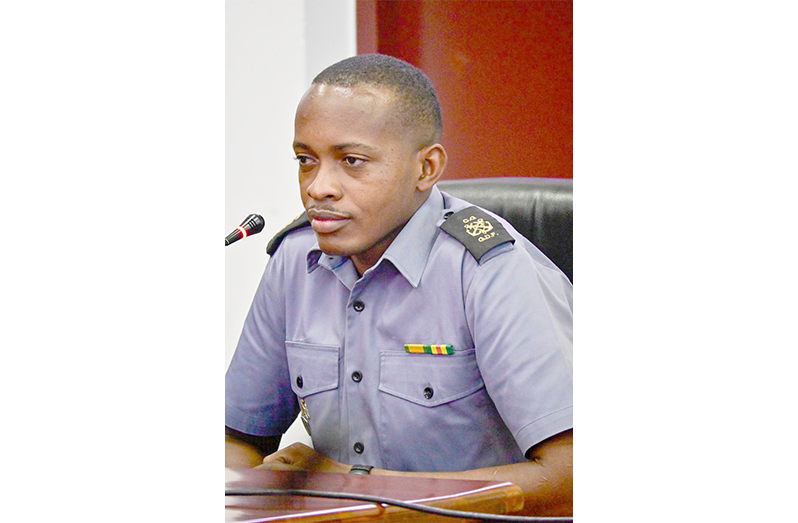
Petty Officer Wendell Walcott, a Coast Guard officer with 17 years of service, told the inquiry that his team began search-and-rescue operations on July 20, moving between designated coordinates.
Petty Officer Alwin Hibbert, who has 12 years of service, also testified that he was deployed on July 20 under Commander David Shamsudeen. Hibbert said his initial instructions were to travel from Coast Guard headquarters in Georgetown to the Pomeroon floating base. While on the way, however, the team received information from a fisherman about objects reportedly seen floating in the water.
The team contacted the fisherman, obtained coordinates and changed course.
“Upon arrival, the fisherman told us the area. When looking, I saw a gasoline tank, a propane tank, then a rooftop, then an icebox and some pillows,” Hibbert told the commission.
He said the objects were emerging from the water, helping the team identify the area where the vessel was believed to have sunk.
Sub Lieutenant Mahwana Abrams described searches farther along the coastline and between river mouths.
Abrams, who was stationed at Morawhanna in Region One, said he received instructions on July 19 from Lieutenant Commander Quincy Agard to report to the Pomeroon floating base and assist with the search.
He departed at approximately 10 a.m., searching the coastline from the Waini area southwards towards the Pomeroon River.
He arrived at the floating base at approximately 4:30 p.m., having found no survivors or significant debris during the journey.
After refuelling, his team resumed searching between the mouths of the Moruca and Pomeroon rivers, the area assigned to them.
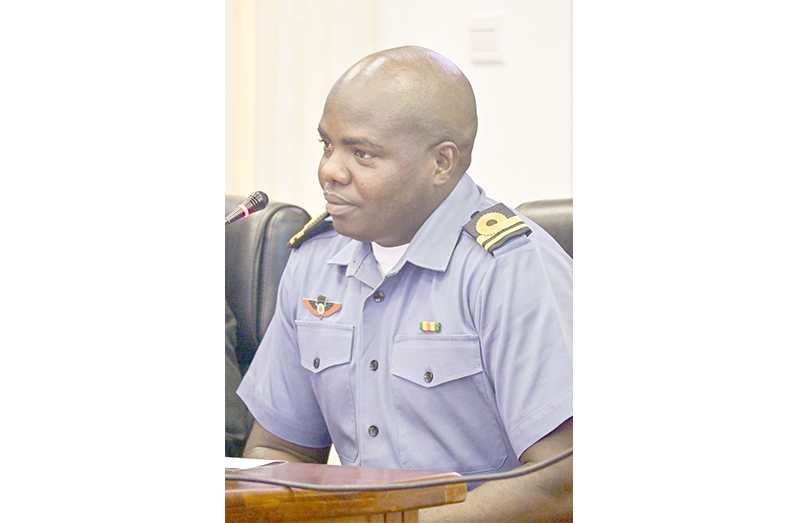
The aerial searches also continued. Lieutenant Colonel Kevin Langevine testified that he conducted three coastal search missions in a Bell 407 on July 22, 24 and 25.
The helicopter flew approximately 20 to 40 feet above the shoreline as the crew searched for survivors and bodies. None were seen during those missions.
Gordon also confirmed that the Air Corps transported French military personnel and specialised equipment during the response. The Bell 429 helicopter joined the operation on July 27.
The commission resumes on Monday with important testimony from Commander David Shamsudeen.




