






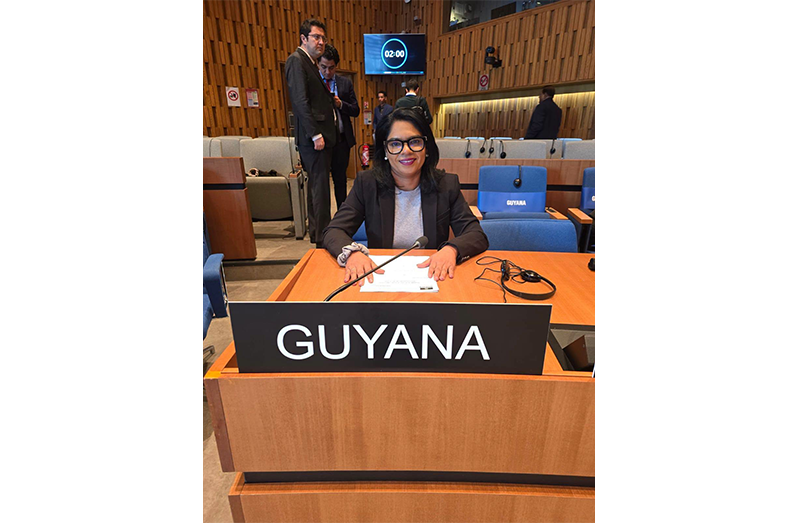
GUYANA has urged the United Nations Educational, Scientific and Cultural Organization (UNESCO) to evaluate global educational progress by how effectively countries support learners facing the greatest geographical, cultural and social barriers, particularly those in remote, indigenous and special-needs communities.
Speaking at the Plenary Debates of UNESCO’s 225th Executive Council, The Honourable Sonia Parag, Minister of Education, delivered Guyana’s official statement on the Director-General’s Report, addressing UNESCO’s work towards Sustainable Development Goal 4 (SDG 4)—the United Nations target for inclusive and quality education by 2030.
Minister Parag stressed that building resilient education systems requires sustained investment across five core areas: teacher development; foundational learning; inclusive digital transformation; predictable financing and effective planning.
“For Guyana, equity must remain central,” Minister Parag stated. “Our collective progress must be measured by how effectively we reach learners facing the greatest barriers, including those in hinterland, riverine and remote communities, Indigenous learners, and children with disabilities and special educational needs.”
She welcomed UNESCO’s focus on educators, stating that continuous professional development, proper resources and supportive working conditions are essential to improving literacy, numeracy and learning outcomes in underserved areas.
Addressing funding requirements, Minister Parag advocated for financing arrangements that account for the higher cost of delivering quality education across isolated regions, while maintaining national ownership. She also called for stronger, disaggregated data systems to inform decisions on enrolment, completion rates and resource distribution.
On technology and artificial intelligence, Minister Parag noted that digital advances must be accompanied by teacher training, accessible materials and measures to close connectivity gaps.
Looking ahead to the post-2030 education framework, Minister Parag urged UNESCO to give teachers, young people and marginalised communities a direct voice in shaping policy, even as it maintains focus on existing commitments.
Guyana backed the proposed draft decision before the council, calling for practical country-level assistance, clear milestones and measurable improvements in learning access and equity.




