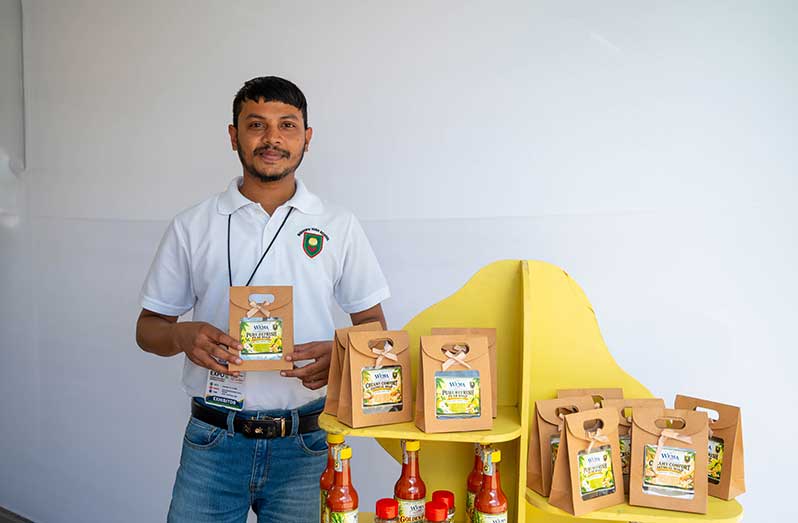
STUDENTS of The Bishops’ High School are gaining practical skills in agro-processing, with a Grade Seven project producing a range of soaps, sauces, seasonings and other products that were showcased at the 2026 TVET Fair and Exposition.
The students displayed their WEMA line of products at a booth during the recent exposition at the Arthur Chung Conference Centre, Liliendaal, East Coast Demerara, demonstrating how classroom-based technical and vocational education can be translated into practical skills with potential applications beyond school.
Among the products on display were oatmeal, turmeric, pear and honey soaps, pineapple-infused pepper sauce, mango achar and flaked seasonings. The products were made, packaged and labelled by the students under the guidance of their teachers.
Teacher Devendra Ghansharma, 27, who teaches agriculture and science to Grades Seven through Nine, said the products represented the students’ ability to apply lessons learnt through the school’s agro-processing programme.
He told the Guyana Chronicle that the school’s agro-processing facility was established about two years ago as part of efforts to equip students with practical and workforce-related skills.

Ghansharma said all 135 Grade Seven students participated in the agro-processing project, giving them an opportunity to work through the process of developing products from raw materials to finished goods.
He said the students’ creativity and willingness to put their knowledge into practice contributed to the success of the project.
The initiative forms part of the school’s participation in the Caribbean Vocational Qualification (CVQ) programme, which is being offered in secondary schools alongside traditional academic education.
The CVQ system is designed to provide students with competency-based occupational skills in addition to their academic qualifications, giving them practical experience that can be applied in the workplace.
According to information provided for the exposition, 94 secondary schools across Guyana now offer CVQ programmes, while 800 CVQ certifications have been awarded at the secondary-school level.
The expansion of technical and vocational education is also being supported through national investment in infrastructure and training. The 2026 National Budget allocated $3 billion towards strengthening technical education infrastructure, expanding regional access and aligning training with industry requirements.
Programmes such as Commercial Food Preparation and Garment Making Level One have also been expanded through Practical Instruction Centres in partnership with institutions such as the Carnegie School of Home Economics.
New and upgraded TVET facilities are being developed in several communities, including Mabaruma, Hopetown, Beterverwagting, Fellowship, St Ignatius and Bartica.
For students such as those at The Bishops’ High School, the value of such programmes extends beyond earning a qualification.
Practical exposure to food processing, product development, packaging and presentation can introduce students to areas such as entrepreneurship, agriculture, manufacturing and the wider agro-processing sector.
The CVQ qualifications are based on CARICOM-approved occupational standards, allowing successful graduates to obtain credentials that can be recognised across the region.
The Bishops’ High School project therefore provided a practical demonstration of how vocational education can complement academic learning, while exposing students to skills that can potentially support further education, employment and entrepreneurship.
For the 135 Grade Seven students involved, the WEMA project offered an early opportunity to move from learning concepts in the classroom to creating products that could be presented to the wider public.