– says community responsibility must match Gov’t investment in cleaner, safer and more beautiful communities
HEAD of the Region Three Private Sector Inc. (R3PSInc), Halim Khan, has urged Guyanese to take greater responsibility for the cleanliness and appearance of their communities, saying residents must play an active role in supporting the Government’s vision to transform villages into cleaner, safer, healthier and more economically vibrant places.
Khan said the Government, under the leadership of President Dr Irfaan Ali, has embarked on an ambitious programme to improve drainage, infrastructure, recreational spaces, markets and other community facilities, but the success of the wider transformation will also depend on the willingness of citizens to maintain and beautify their surroundings.
His call comes as President Ali advances the Model Villages Initiative, which has already seen consultations in several Region Three communities as part of a national programme that is expected to eventually reach villages across Guyana.
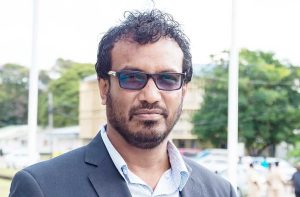
Khan said residents should not wait until local authorities or Government agencies organise clean-up exercises before taking action.
“Pick up the garbage. We can avoid many of the mosquito-borne diseases and other health problems if we keep our surroundings clean,” Khan said, urging residents to remove discarded containers and other items that could collect water or create unhealthy conditions.
He argued that personal responsibility must become a central part of community development, noting that indiscriminate dumping not only affects the appearance of communities but can also create public-health risks.
Khan said individuals who illegally dispose of waste should be held accountable, particularly in cases where dumped materials can be traced back to the persons responsible.
“We do not want to fill up the police stations or the lock-ups, but people must understand that keeping the environment clean benefits them and their own surroundings,” he said.
The R3PSInc head emphasised that the responsibility to maintain communities should not be placed entirely on the State, local authorities or contractors.
According to Khan, residents can make a meaningful difference through simple acts such as clearing overgrown areas, properly disposing of garbage, maintaining drains and verges, and planting flowers and other greenery around their homes.
“We should not wait until the bush grows five, six or seven feet high and then say the Government is not doing anything,” he said. “If we see the small vines coming up, let us deal with them.”
Khan said the same spirit of shared responsibility could help complement the major investments now being made by the Government in drainage and other infrastructure across the country.
He pointed out that while contractors and Government agencies will execute large-scale works, residents can help preserve the improvements after the projects are completed.
“We can plant flowers in front of our homes and use the things that are already around us to help beautify our communities,” Khan said. “It is not only about playfields, grounds and public spaces. We must also look at the front of our homes.”
He said cleaner and greener surroundings would contribute to healthier lifestyles and leave a better environment for future generations.
“It is our responsibility to keep our surroundings clean, not only for ourselves but for our children and grandchildren,” Khan added.
Khan’s comments closely reflect President Ali’s call for development to be built through partnership, with citizens, businesses, local authorities, religious organisations and community groups sharing responsibility for maintaining safe, orderly and caring communities.
During consultations on the Model Villages Initiative, the President outlined a development strategy centred on Connectivity, Community, Commerce and Care, with the latter placing particular emphasis on environmental responsibility, waste management, clean drains, maintained verges and green spaces.
President Ali has stressed that Government can provide the infrastructure and facilities required for development, but communities themselves must play a role in sustaining the transformation.
Khan said this approach presents an opportunity for every Guyanese to become directly involved in the development of the country.
As Region Three continues to undergo rapid transformation, he said residents and businesses must embrace a culture of community pride and responsibility, ensuring that the improvements being made are maintained and enhanced over time.
“When the contractors finish their work, we can continue to do our part,” Khan said. “We can maintain the area in front of us and make our communities places we can all be proud of.”
He said the transformation envisioned by the Government should not be viewed solely as a programme of roads, drains and buildings, but as an opportunity to foster healthier lifestyles, greater civic responsibility and stronger, more beautiful communities throughout Guyana.