
By Sasenarine Singh, M.Sc. – Finance, ACCA
Ambassador to the Kingdom of Belgium and Netherlands and
Permanent Representative to the European Union and
Permanent Representative to the Organisation of African, Caribbean and Pacific States.
HERE is a radical thought: what if poverty is not a character flaw, but a structural failure? And what if the cure was not charity, but access?
On July 30, President Irfaan Ali signed the Guyana Development Bank Act into law. The government will seed it with $40 billion. The deal is simple: entrepreneurs locked out of the traditional banking system can access loans of up to $3 million at 0% interest, with minimal collateral. Need a business plan? The technical staff at the Bank will help you write one. Need training? They will provide it.
This is not a handout. It is a key to a door that has been slammed shut for too many Guyanese for too long.
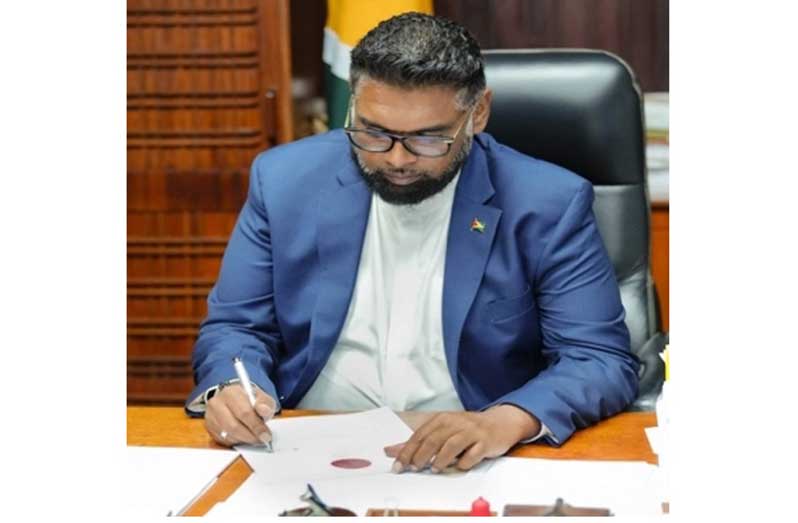
$40 Billion and a Simple Bet
The bank is designed for the street vendor with a dream, the carpenter who cannot get a loan, the community of ten persons who want to build a chicken farm together. Service your $3 million loan at the Guyana Development Bank (GDB), and you can unlock another $7 million at preferential rates (under 5%) through an enhanced partnership between the GDB and the commercial banks.
The numbers are staggering. Independent projections show that over six years, this $40 billion could recycle into $126 billion in cumulative lending, reaching 42,000 small businesses, generating $161 billion in economic benefits, and returning $3.24 for every $1 invested.
That is not theory. That is a programme that will transfer real wealth to those entrepreneurs who are at the bottom of the food chain. That is arithmetic. And the economics of this model is all about the arithmetic, not lofty promises.
But here is the hard truth that must be spoken in this column: a great idea poorly governed is a disaster waiting to happen and thus the importance of ensuring the guard rails are constructed early.
A development bank with zero-interest loans is a promising innovation. However, effective governance is crucial to prevent the pitfalls that led to failures of the past, like GAIBANK. If credit decisions are subject to political influence—such as officials prioritising requests from Regional Chairpersons rather than on merit and the bankability of the project, then the risk of accumulating bad debt within the loan portfolio increases significantly.
Such a situation would undermine the bank’s objective and threaten its sustainability. Establishing transparent, merit-based lending criteria and independent oversight is vital to ensure that loans are allocated based on sound business potential rather than connections.
The Government, through the Bank of Guyana, has made important strides by reducing the ratio of non-performing loans to total loan stock to only 1.5 percent in 2025, a remarkable achievement compared to the Caribbean average of 4.9 percent as reported by the IMF, and 7.6 percent in the Eastern Caribbean as reported by the Eastern Caribbean Central Bank at the end of 2025. Without robust governance mechanisms, these hard-won gains could be quickly reversed.
A NEW WEALTH ENGINE
Make no mistake: the genius of this bank is that it removes the two killers of small business: high interest and impossible collateral. A traditional loan at 6 or 10 percent can eat a small business alive before it even opens. Zero interest means the profits stay with the entrepreneur and their community, not a bank.
The support system (training, mentorship, regional officers who work hand-in-hand with borrowers) is what separates this from a simple cash giveaway. It says: we believe in you, and we will teach you how to make this even better.
THE FINAL VERDICT
The Guyana Development Bank could be the most transformative economic policy of this generation. It could lift tens of thousands out of poverty and build a middle class from the ground up. For this we must commend the will of President Irfaan Ali to push this agenda in an environment of competing interest for budgetary support.
His Excellency President Irfaan Ali and his team have done the hard part; they have built the vehicle. Now the country must demand that it be driven with discipline, transparency, and integrity.
Because if this bank fails, it will not be because the idea was bad. It will be because we forgot the first rule of nation-building: power without accountability is not progress; it is just reckless power.