
GUYANA’S unemployment rate fell to 6.2 per cent by the end of 2025, reflecting continued strength in the country’s rapidly expanding economy, according to the International Monetary Fund (IMF).
In its 2026 Article IV Mission Staff Concluding Statement, released on Friday following a mission to Guyana, the IMF said robust economic growth has translated into a stronger labour market, with employment opportunities expanding alongside increased economic activity.
“These trends broadly continued in the first half of 2026 though some sectors were affected by heavy rainfall. Robust growth was also reflected in a stronger labour market, with unemployment down at 6.2 per cent by the end of 2025,” the IMF stated.
The Fund noted that Guyana’s economy continues to expand at an exceptional pace, driven by both the oil and non-oil sectors. Real Gross Domestic Product (GDP) grew by more than 19 per cent in 2025, following average growth of nearly 40 per cent during 2023 and 2024.
While oil production exceeded expectations, the IMF highlighted that growth remained broad-based across the wider economy. The non-oil economy expanded by about 14 per cent, led by construction, with agriculture, mining and manufacturing also making significant contributions.
According to the IMF, those positive trends largely continued during the first half of 2026 despite the impact of heavy rainfall on some productive sectors.
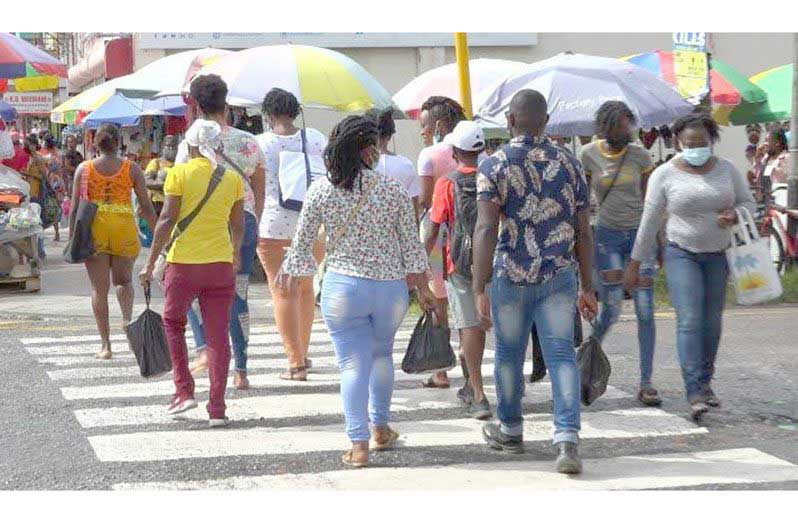
The report also noted that average inflation remained relatively moderate at 3.3 per cent in 2025, although price pressures edged higher during the first half of 2026 due to increases in global food and energy prices.
Looking ahead, the IMF said Guyana’s economic outlook remains highly favourable, with the non-oil economy projected to grow by about seven per cent annually over the next five years as government continues to implement major infrastructural and development projects.
The Fund said continued investment in physical and human capital, supported by prudent macroeconomic policies and the government’s Low Carbon Development Strategy (LCDS) 2030, is expected to sustain job creation, strengthen economic diversification and improve living standards.
The IMF also noted that strong wage growth should continue to be monitored, but said available indicators do not point to clear signs of the economy overheating or resource-driven losses in competitiveness.
It added that reforms aimed at addressing labour shortages should continue, including initiatives to strengthen workforce skills and better align training with the demands of Guyana’s rapidly expanding economy.
The IMF said that efforts to expand job opportunities, build human capital and improve food security remain central to Guyana’s broader economic diversification strategy.
Senior Minister in the Office of the President with Responsibility for Finance, Dr Ashni Singh, had recently urged young Guyanese to capitalise on the country’s expanding economic opportunities, highlighting that youth unemployment has fallen by more than half since 2020 as the government continues to invest in skills training, job creation and entrepreneurship.
According to Dr Singh, the reduction has been driven by the creation of more than 104,000 jobs during the People’s Progressive Party/Civic Administration’s first five years in office.
“We did that by creating in the first five years of being in government more than 104,000 new jobs. In a population such as ours, 104,000 is a really staggering number, and jobs have continued to be created,” he said.

Despite the gains, the minister said Guyana’s labour market is now facing a different challenge.
“The reality is that jobs are being created more rapidly than we are able to produce people with the skills required to take up those jobs,” he told the gathering.
Against that backdrop, Dr Singh encouraged young people to identify opportunities in sectors experiencing rapid growth and equip themselves with the skills needed to benefit from them.
Beyond traditional academics, Government has increased investment in technical and vocational education to prepare young people for careers in Guyana’s rapidly changing economy.
Dr Singh said more than 2,000 youths have completed specialised training through the Youth Entrepreneurship and Apprenticeship Programme (YEAP).
Another 14,000 young people have benefitted from the Youth Entrepreneurial and Skills Training (YEST) programme administered through the Board of Industrial Training.
Additionally, approximately 2,500 youths have participated in robotics, coding and digital technology training through the Presidential Award for Youth, Entrepreneurship and Robotics (PAYR) initiative.
These programmes are designed to equip young Guyanese with practical skills for careers in construction, engineering, manufacturing, technology and the country’s expanding oil and gas sector.
The Government is also seeking to cultivate a new generation of entrepreneurs.
Statistics released by the Bureau of Statistics (BoS) for World Population Day 2026 show that youths between the ages of 15 and 24 were primarily employed in wholesale and retail trade during the fourth quarter of 2024, with the sector accounting for 18.9 per cent of total youth employment.
Construction ranked as the second-largest employer of young workers, employing 14.9 per cent of youths, followed by public administration at 9.9 per cent, manufacturing at 8.6 per cent, and education at 8.2 per cent. Collectively, these five industries accounted for 60.5 per cent of all youth employment in Guyana.
The data highlights the sectors that are currently absorbing the country’s growing labour force as Guyana experiences rapid economic expansion fuelled by investments across oil and gas, infrastructure, housing, manufacturing and services.
The findings come against the backdrop of a young and expanding population. According to the Bureau of Statistics, Guyana’s estimated population surpassed one million by the end of 2025, with approximately 61 per cent of citizens below the age of 35 and 42 per cent under the age of 25.
The latest labour market figures also point to broader improvements in employment.
Overall unemployment declined from 14.5 per cent in the third quarter of 2021 to 6.8 per cent in the fourth quarter of 2024, while the estimated number of employed persons increased by more than 122,000, rising from 246,881 to 369,270 over the same period.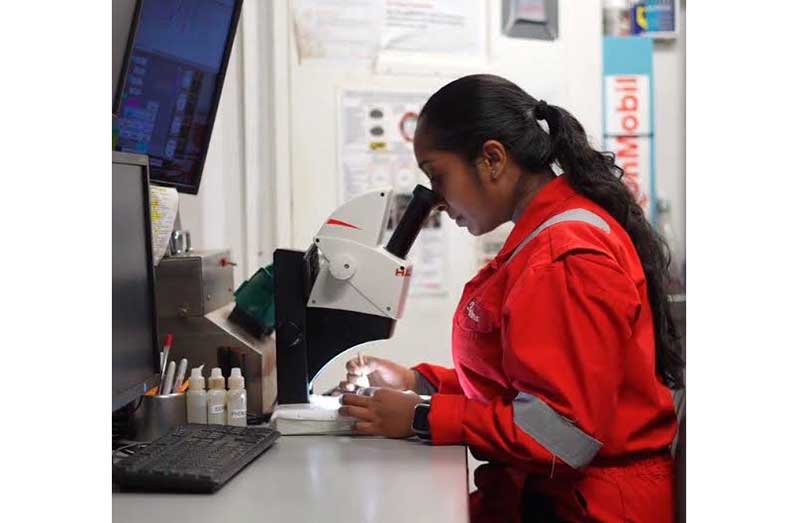
Among young people, unemployment recorded an even sharper decline, falling from 31.9 per cent in the third quarter of 2021 to 12.1 per cent by the fourth quarter of 2024.
The Bureau also reported notable gains in education among young people entering the labour force. Data show a 56.7 per cent increase in the number of youths attaining a bachelor’s degree or equivalent qualification in the fourth quarter of 2024 compared with the third quarter of 2021.
At the same time, the proportion of youths classified as not in education, employment or training (NEET) declined from 35.7 per cent to 25 per cent, indicating that more young Guyanese are either pursuing education or participating in the labour market.
The Bureau said these trends underscore the importance of aligning education, technical and vocational training programmes with the changing needs of the economy.