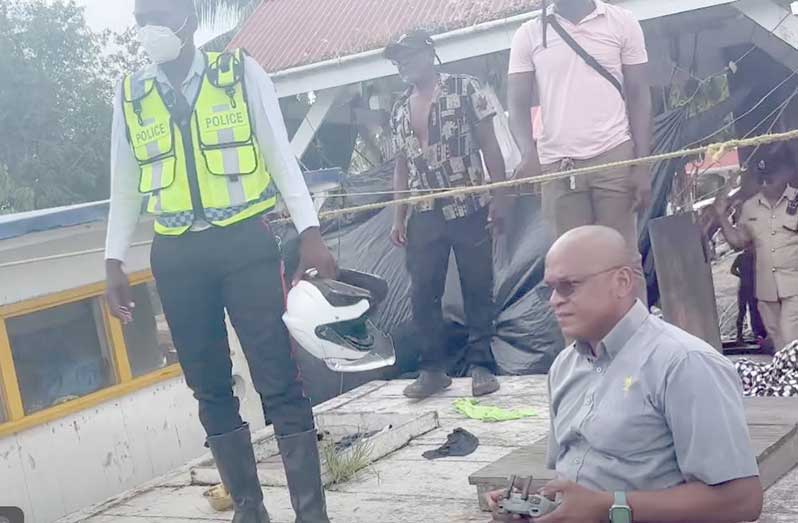
AIRCRAFT involved in the ongoing search, rescue and recovery operation following the MV Barima tragedy are being placed at risk by unauthorised drone activity, with local pilot Learie Barclay warning that such actions endanger the lives of crews operating in the area.
Barclay, who on Tuesday landed in Region Two, issued an appeal on social media urging members of the public to stop flying drones within the search zone.
“Ladies and gentlemen there are low flying aircraft in the search area including me that just landed. Please stop flying drones in the area. You are endangering our lives!!!! If you are caught, I hope they keep you for a long time to remove your recklessness from the area!!!!” he wrote.
His warning came just as Opposition Member of Parliament Sherod Duncan was detained by police on Tuesday after allegedly operating a drone in the search and recovery area without the required authorisation.
Duncan said the drone was being used to provide coverage of recovery boats offshore and nearby areas.
He said that while operating the drone, as he had been doing over the past few days, a police officer instructed him to discontinue the operation.
Speaking on the sidelines of a press conference, Minister of Home Affairs Oneidge Walrond said she understood Duncan had been operating the drone without the necessary approval.
“He is not currently in custody, he was flying, I understand, a drone without authorisation. As you know those drones cannot be flown without a proper licence and he didn’t have that, that’s as much as I’m aware… he has been released,” Walrond said.
The incident has highlighted the risks posed by drones operating in areas where aircraft are conducting low-altitude flights during emergency response efforts.
Aircraft have been playing a key role in the MV Barima search operation, assisting authorities in locating victims among other things.
The Search and Rescue Coordination Centre continues to oversee the operation, with the Guyana Defence Force Coast Guard serving as the lead operational agency.
The wider response includes the Joint Services, emergency and medical personnel, regional officials, private vessel operators, fisherfolk, community members, volunteers, civil society, the private sector and international partners.
The government also defended its handling of the investigation, pointing to the swift disclosure of key developments.
Officials noted that blood samples were taken from the captain and another crew member shortly after the incident. Both tested positive for cannabis, and those results were immediately made public before the individuals were arrested.
The government also said that once investigators realised more people had boarded the vessel than were listed on the official passenger manifest, that information was promptly released to the public.
Authorities are also urging citizens to exercise caution when sharing videos and photographs circulating on social media, warning that some content may be old, fabricated or unrelated to the tragedy.
They noted that many passengers lost their mobile phones during the sinking, making it difficult to immediately verify images and footage purportedly taken aboard the vessel.
The public is being encouraged to verify information before sharing it to avoid causing unnecessary panic and distress to grieving families.
Officials stressed that these actions demonstrate the government’s commitment to transparency rather than concealment.