






–youth-led programme to supply hospitality sector with high-value crops
MINISTER of Agriculture Zulfikar Mustapha has noted that Guyana is steadily reducing its dependence on imported high-value vegetables as local farmers, particularly young entrepreneurs, increase production through technology-driven agriculture.
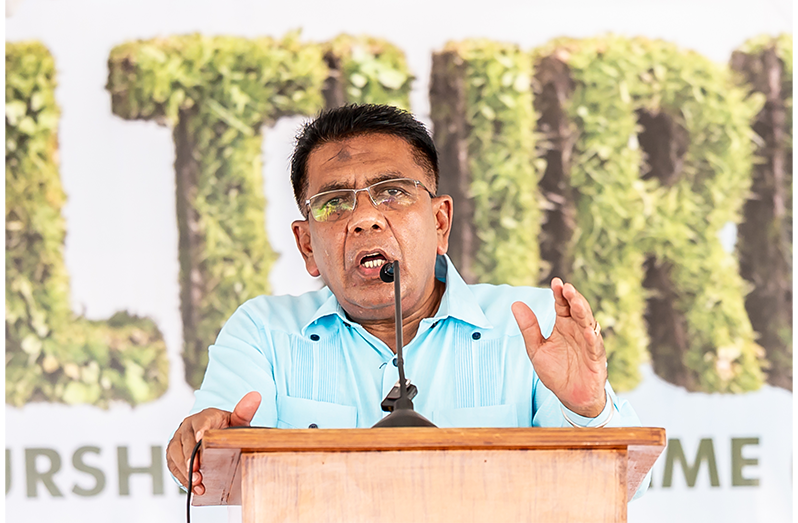
The minister made this known while delivering remarks at a recent commissioning ceremony during which he stated that the government’s Agricultural and Innovation Entrepreneurship Programme (AIEP), launched in 2021, has already begun transforming the country’s agricultural landscape by replacing imports with locally grown produce.
The minister said that when the initiative was introduced, Guyana imported approximately $600 million worth of high-value vegetables annually, including broccoli, cauliflower, carrots, lettuce and bell peppers, primarily to meet the needs of the country’s growing hospitality industry.
“Today, we are producing, and the young people in our country are producing more of those products,” Mustapha said.
He noted that the programme, which initially focused on hydroponics and shade-house farming before expanding into poultry production, has enabled young farmers to cultivate crops traditionally sourced from overseas while creating new income-generating opportunities.
Against this backdrop, intending to strengthen local markets, the Agriculture Ministry plans to convene a meeting with hotel owners and other stakeholders in the hospitality industry to establish direct supply arrangements between farmers and businesses.
“We will be inviting all the owners of hotels to come into our ministry to talk to them and link them to farmers, link them to groups where they can have their produce directly from the farmers supplied to the hotels,” Mustapha said.
He went on to note that creating stronger connections between producers and buyers would provide farmers with reliable markets while reducing the hospitality sector’s reliance on imported vegetables.
The minister said the progress achieved under the AIEP demonstrates the success of the government’s efforts to modernise agriculture by encouraging greater youth participation and introducing climate-smart technologies.
To this end, Mustapha disclosed that more than 300 young people are currently involved in the programme’s shade-house and hydroponics projects, with many entering agriculture despite having no previous experience in the sector.
He added that women are also playing an increasingly important role in agriculture, with growing participation in sheep rearing, cattle production and other livestock ventures.
It was then that the minister affirmed that the government remains committed to expanding technology-driven farming initiatives across the country as part of its broader vision of making agriculture more sustainable and commercially viable.
He said the programme reflects a shift away from subsistence farming towards modern, enterprise-based agriculture capable of meeting domestic demand while creating employment opportunities for young Guyanese.
The minister also linked the expansion of local crop production to Guyana’s wider food security agenda and its role in advancing agricultural development across the Caribbean.
Mustapha said increasing domestic production of vegetables and other agricultural commodities not only strengthens Guyana’s food security but also positions the country to supply regional markets as demand grows.



