





THE Government is moving ahead with an ambitious nationwide drainage and irrigation expansion programme that is expected to transform agricultural production, reduce flooding and unlock thousands of acres of new land for cultivation and development.
The initiative, being implemented through the National Drainage and Irrigation Authority (NDIA), includes the construction of several “Hope-like” canals across key agricultural regions, with billions of dollars allocated in Budget 2026 to modernise Guyana’s drainage infrastructure and improve climate resilience.
Minister of Housing and Water Collin Croal recently said the programme extends well beyond traditional flood-control measures, describing it as a critical investment that will create opportunities for expanded agriculture, housing development and economic growth.
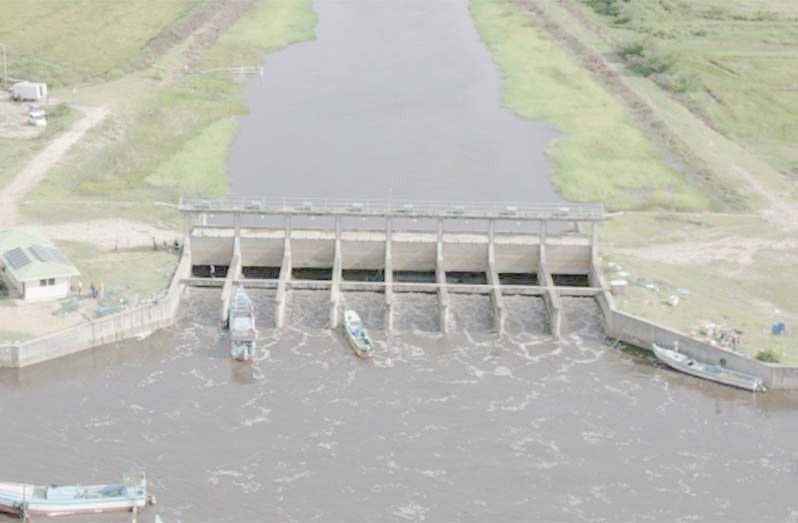
The works are planned for several regions, including Regions Three, Five and Six, where large-scale drainage canals modelled after the Hope Canal on the East Coast of Demerara will be constructed to channel excess water safely to the Atlantic Ocean while also supporting irrigation during dry periods.
The Hope Canal, commissioned to reduce flooding along the East Coast corridor, has long been regarded as one of the country’s most significant flood mitigation projects. The new canals are intended to replicate that success in other vulnerable areas while supporting Guyana’s rapidly expanding agricultural sector.
According to Minister Croal, improving drainage and irrigation infrastructure will make previously inaccessible lands suitable for productive use.
“Once you address drainage and irrigation, it allows us to open up new lands to access,” the minister said, noting that additional canals in Region Six will facilitate the expansion of agriculture into new areas.
He explained that opening these lands would allow for increased cultivation of a wider range of crops, including hemp in areas closer to Skeldon, while significantly boosting overall agricultural production.
Croal said the NDIA, operating under the Ministry of Agriculture, is already investing heavily in what he described as a “massive new drainage programme” designed to meet both current and future development needs.
The initiative complements the government’s wider strategy of expanding agricultural output while strengthening the country’s resilience to increasingly unpredictable weather patterns associated with climate change.
Budget 2026 allocated $81.9 billion for the continued improvement of drainage and irrigation systems across Guyana, representing one of the largest public investments in the sector.
Agriculture Minister Zulfikar Mustapha had earlier announced that this year’s programme includes the rehabilitation and construction of canals, sluices and pumping stations nationwide, alongside the development of approximately five major high-level canals in Regions Five and Six.
Those canals are designed to drain water directly from inland agricultural areas into the Atlantic Ocean, reducing the risk of prolonged flooding that has historically affected farming communities.
Construction of the Hope-like canals in Berbice is progressing steadily and remains on schedule for completion during 2026.
Once operational, the expanded drainage network is expected to benefit thousands of farmers and households by protecting farmlands from flooding, reducing crop losses and providing more reliable irrigation during dry periods.
Officials have said the improved infrastructure will not only increase agricultural productivity but also support the opening of new farming districts, helping Guyana diversify production while meeting growing domestic and export demand.
The programme forms part of the administration’s broader agenda to modernise the country’s agricultural sector through strategic infrastructure investments, positioning Guyana to increase food production, strengthen food security and better withstand the impacts of climate change.
With agriculture continuing to play a central role in the country’s economic diversification strategy, the new drainage and irrigation works are expected to serve as a foundation for long-term rural development, expanded cultivation and more resilient farming communities across Guyana.





