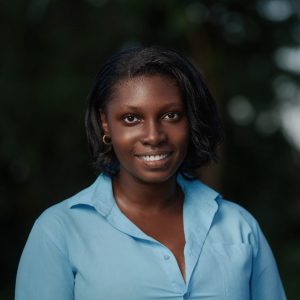
-says new system would reduce reliance on manual operations
A LOCALLY developed proposal to automate Georgetown’s sluice/kokers, could significantly improve the city’s ability to manage flooding by eliminating delays associated with manual operations, according to engineer Patrice Jacobs.
Presenting the concept to the Mayor and City Council, Jacobs argued that Georgetown’s gravity-based drainage network is increasingly struggling to cope with rapid urban development, rising sea levels and more intense rainfall events.
He said the automated system would use sensors and controllers to monitor water levels in canals and outfalls, opening and closing sluice doors automatically to maximise drainage opportunities while preventing seawater from flowing inland. The proposal, he added, offers a practical, locally driven solution to enhance the efficiency of the city’s existing drainage infrastructure and reduce the risk of flooding during extreme weather conditions.
While making his proposal to the council, Jacobs noted that his system aims to alleviate the drainage and flooding issues facing Georgetown. The current drainage system, he explained, relies on gravity, with the exception of a few pumps installed in recent years.
While functional, Jacobs argued that the city’s drainage infrastructure must evolve in keeping with its broader development. “The gravity system as we know it has done its best while it lasted, but as we all know, as we continue to evolve as a city, we find that the drainage system is woefully inadequate. The drainage system as we know it works on tide. The challenge is that we continue to be a country or a city that is below the coastal line. We have two tides per day, and that is when you are especially required to achieve all the drainage that you set out to achieve.”
Jacobs also cited the fact that the current system is manually operated and called on the city to consider new opportunities for improvement through an automated system that would function regardless of whether an attendant is present.
Speaking on the impact of the 2005 flood, he noted that research shows Georgetown took the brunt of the economic fallout, with more than half of the total loss attributed to the capital.
Jacobs emphasised that the flood highlighted the vulnerabilities of the gravity drainage system, compounded by persistent challenges such as the country’s low-lying terrain and growing concerns over global warming and rising sea levels.
“The issue we continue to face is the question of rising sea levels. We all know that global warming has contributed to rising sea levels. Our fortunes will not change unless we do something different in terms of how we manage to stop a flood. And as such, this situation will not change, so the gravity system will be under extreme pressure if we continue to use the same system as the sea level continues to rise,” he said.
Speaking on how the current system works, Jacobs explained that Georgetown’s drainage network depends heavily on tides and manual intervention. Kokers are opened by attendants when water levels in the city’s canals are higher than those in the outfalls, allowing water to drain during low tide. As the tide rises and reaches the same level as the canal, the attendant must close the koker to prevent seawater from flowing back into the city.
According to Jacobs, delayed openings or closures represent a primary downside of the current system, resulting in missed drainage opportunities and reduced efficiency.
He further argued that Georgetown’s drainage infrastructure is struggling to keep pace with increasingly intense rainfall, noting that the city’s system can drain only about 5.5 millimetres of rainfall per hour, compared with recent events that have exceeded 17, 21 and even 24 millimetres per hour.
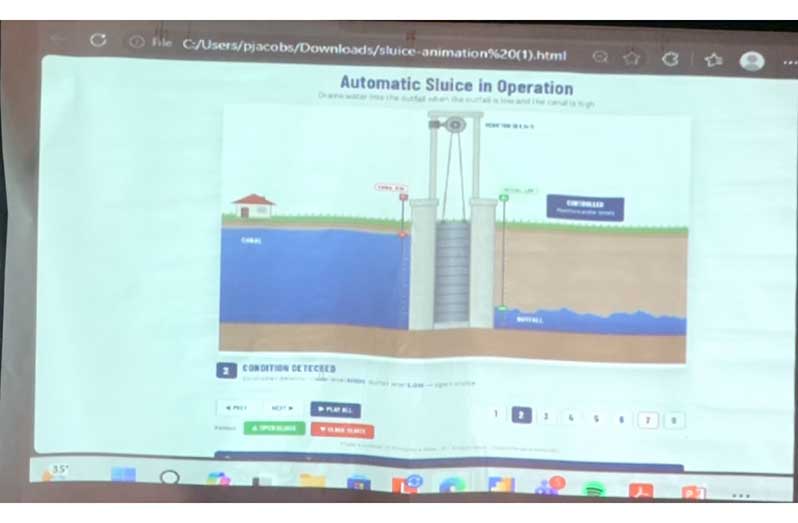
Jacobs’ proposal centres on an automated koker management system designed to reduce reliance on manual operation and improve drainage efficiency. The system would use sensors installed on both the canal and outfall sides of each sluice to continuously monitor water levels, while a controller would analyse conditions and make real-time decisions. When water levels in the canal are higher than those in the outfall, the system would automatically open the koker to allow drainage.
He said: “The solution that I am offering is really an automatic solution. It is going to open automatically. It does not require a manual interface. And it is going to close automatically with space seals. It is going to run 24 hours. And it is always on standby to respond to extreme conditions… it is going to respond at the appropriate time to allow for drainage. So, you would not lose 15 minutes because an attendant was asleep, or he was cooking, or it was raining and he could not get out.”
As tides rise and water levels equalise, the system would automatically close the koker door to prevent seawater from re-entering the city.
Walking the Mayor and City Council through a live simulation, Jacobs explained, “Currently you have high water in the canal and the tide is low, so we can allow the system to begin draining. The next thing that is going to happen, and this will happen in sequence, it is not going to be manual, the door is going to open automatically because the sensors detected that the water was high in the canal and low in the outfall.”
He further added, “The water will then start to recede. If you look at the sensors, the colours change. You see it is red here, which is dangerously high, and low on the outfall side, so it tells you it is good to open the door. It is going to drop, and the canal sensor turns to green as it gets lower. It will reach a point where the canal and the tide will have the same level, and at that point the koker will close. There is no manual required.”
Jacobs told the council that the technology could be implemented using local expertise, noting that while some equipment would have to be imported, the design and operational knowledge already exist in Guyana.
The Mayor and City Council are expected to review the proposal as part of ongoing efforts to strengthen Georgetown’s drainage infrastructure and improve the city’s resilience to flooding and climate-related challenges.