






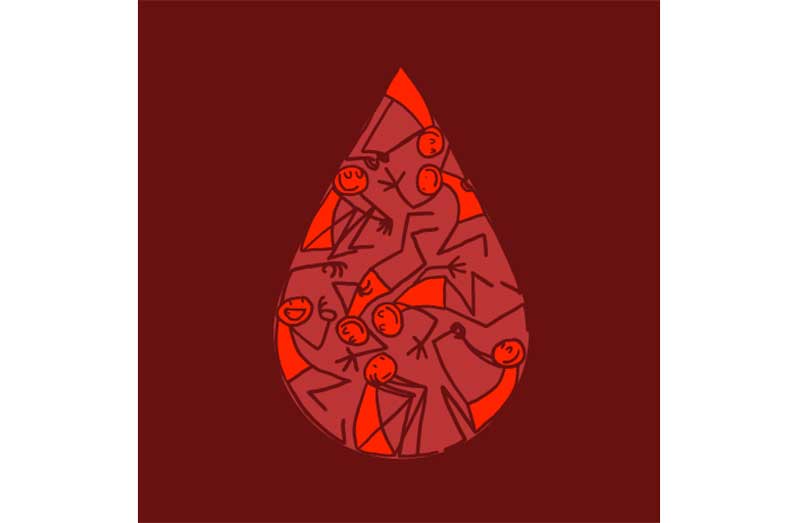
AS Guyana joined countries around the world in observing World Blood Donor Day on June 14, health officials are encouraging more citizens to become regular blood donors, emphasising that a single donation can make the difference between life and death for multiple patients.
The call was made through an awareness video recently shared by the Georgetown Public Hospital Corporation (GPHC), in which Head of the Laboratory Services Department, Dr Pheona Mohamed-Rambaran, highlighted the critical role blood donors play in supporting the nation’s healthcare system.
The observance was held under the theme, “One Drop of Humanity. Give Blood. Save Lives,” which seeks to underscore the importance of voluntary blood donation as an act of compassion and community service.
According to Dr Mohamed-Rambaran, blood donation involves individuals voluntarily giving a unit of blood at the National Blood Transfusion Service or other designated donor sites across the country.
The National Blood Transfusion Service also conducts blood drives to make donation more accessible to members of the public.
She explained that donated blood is an essential resource for hospitals and healthcare facilities, where it is used to treat patients facing a wide range of medical emergencies and conditions.
Patients involved in traumatic accidents, mothers experiencing complications during childbirth, newborns requiring urgent medical intervention, and individuals undergoing treatment on medical and surgical wards are among those who may depend on blood transfusions.
“If there is a trauma, patients will require blood. Sometimes babies are born and they will require blood for some reason or the other. A mother who’s delivering may be bleeding and they may need blood. Patients who are admitted on the medical or surgical wards, all of those patients, for specific reasons and diagnoses, will need blood,” Dr Mohamed-Rambaran said.
She warned that maintaining an adequate blood supply is crucial to ensuring timely patient care. When blood stocks are low, treatment can be delayed, potentially affecting recovery times and overall health outcomes.
For trauma patients in particular, the absence of readily available blood can result in longer hospital stays and postponed procedures, placing additional strain on both patients and healthcare providers.
“When there isn’t enough blood, it affects patient care,” she noted, adding that delays in treatment can impact how quickly patients recover and are discharged from hospital.
Dr Mohamed-Rambaran also sought to reassure persons who may be hesitant about donating blood, describing the process as safe and beneficial to the wider community.
She pointed out that one blood donation has the potential to help several individuals because donated blood is separated into different components that can be used to treat patients with varying medical needs.
“My message to those who are hesitant about donating blood is that blood donation is safe,” she said. “Apart from that, you are donating a unit of blood that can be utilised for four patients because when one unit of blood is donated, it is separated into components that can save four lives.”
Health authorities continue to encourage eligible persons to become voluntary donors. Previous reports indicate that individuals aged 16 years and older can donate blood at approved facilities throughout Guyana.
In Georgetown, donations can be made at the National Blood Transfusion Service located on the GPHC compound. Donor sites are also available at regional hospitals in Regions Two, Three, Four, Five, Six, Nine and Ten.
Additional locations include the Guyana Red Cross Society, Empire Medical Centre Inc., and private facilities such as Eureka Medical Laboratory and New Vision Labs Inc.
Meanwhile, the World Health Organization (WHO) said this year’s World Blood Donor Day campaign places humanity at the heart of blood donation efforts. According to the organisation, every donation represents more than a medical procedure; it is an act of solidarity that strengthens communities and helps ensure that lifesaving blood remains available to those who need it most.
The WHO also noted that despite advances in blood screening, testing and transfusion safety, healthcare systems around the world remain dependent on individuals who are willing to donate blood regularly and voluntarily.
As demand for blood continues year-round, health officials hope the observance will inspire more Guyanese to contribute to a resource that remains one of the most important tools in saving lives and improving patient outcomes.




