-as efforts to improve Guyana’s criminal justice system continue
THE Government of Guyana has poured significant resources into courts, judges, and legislation, but without proper training, it all amounts to nothing.
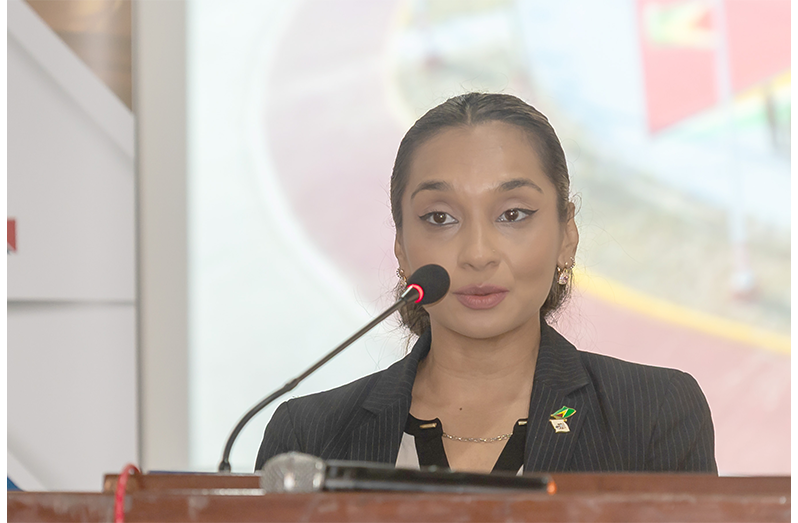
This was the message delivered by Deputy Solicitor General, Shoshanna Lall, on behalf of Attorney General, Mohabir Anil Nandlall, at the opening of a two-day joint training workshop for prosecutors and investigators on Thursday morning.
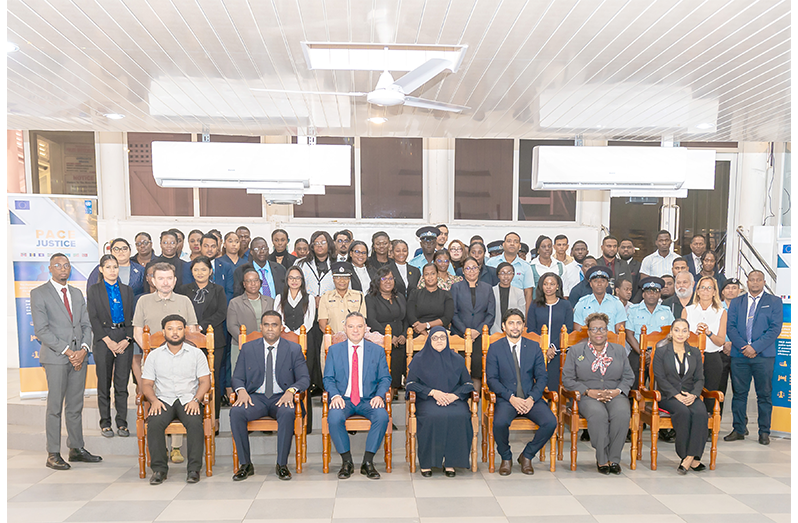
Lall was joined by Crime Chief and Deputy Commissioner of Police, Wendell Blanhum; Chargé d’Affaires of the European Union Delegation to Guyana, Spiros Polycandriotis-Van Duynhoven; Director of Public Prosecutions, Shalimar Ali-Hack; UNDP Guyana Officer-in-Charge, Dhiraj Singh, among others, at the activity hosted under the PACE Justice Project. The hosting of the event was a partnership between the United Nations Development Programme and the European Union, and it aimed to reduce criminal backlogs across eight Caribbean countries.
The workshop is the latest activity under the PACE Justice Project, which spans Antigua and Barbuda, Barbados, Belize, Dominica, Guyana, St. Kitts and Nevis, St. Lucia, and Trinidad and Tobago. The project was born out of a 2020 UNDP Judicial Needs Assessment of nine Caribbean countries, which found that efficient access to justice across the region was being undermined by delays at key stages of the criminal justice process. Those delays which were largely caused by constraints on human and technological resources, created massive bottlenecks in the justice sector, contributing to high numbers of prisoners on remand and incarceration rates that are already among the highest globally. The project seeks to address this through three broad outputs, deploying technology and infrastructure, building capacity across justice institutions, and strengthening national and regional processes and procedures.
Lall, while delivering the feature address on behalf of AG Nandlall, highlighted the government’s considerable investment in the justice sector in recent years, noting, “The Government of Guyana has invested huge amounts of resources in augmenting infrastructure and human resources within the judicial system. All of this is aimed at alleviating the backlog and creating greater access to justice and efficiency in the justice landscape.”
Moreover, Lall noted that these investments must be backed by equipping prosecutors with the right expertise. “We can speak about the many courts the government has built over the last couple of years, including in very rural areas, the appointment of new magistrates and judges, new legislation and rules. But all of that accounts for nothing if we do not equip our justice actors with the right training,” she stressed.
MODERN POLICING
Also addressing the participants of the workshop was the Crime Chief who spoke to the importance of modern policing and the need for investigators to work in keeping with the changing demands of the justice system.
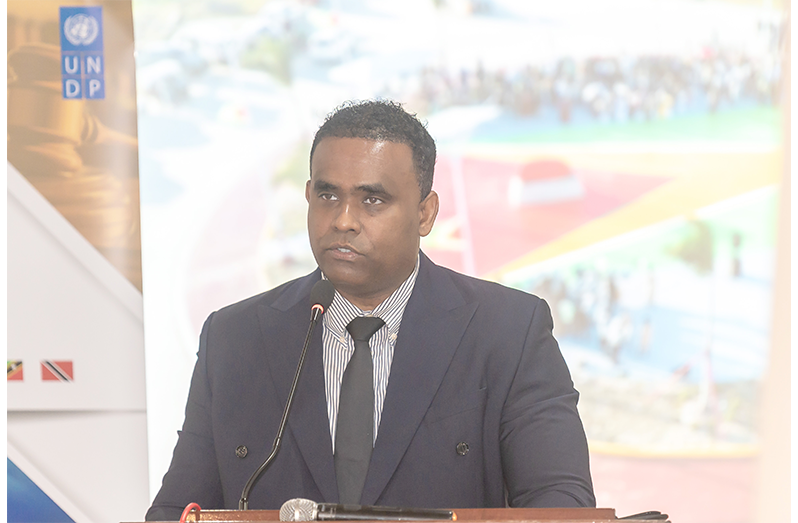
Speaking on the goal of this and similar workshops, Blanhum said, “Ultimately, the goal is to assist Guyana in improving our criminal justice processes and procedures. These objectives naturally complement and embrace the five pillars of the Guyana Police Force’s Strategic Management Plan.”
He added, “They promote modern policing and necessitate that investigators utilise available technologies in crime fighting. As part of our joint reform initiative, the Guyana Police Force continues to incorporate technologies into our daily operations across areas such as intelligence, investigation, and prosecution.”
He also addressed what he described as a mischaracterisation of the justice system, noting that while investigators work hard to build strong cases, the blame for delays is often due to external factors.
The Crime Chief explained, “Commentators frequently point to inordinate delays within the justice system. However, the reality is that many delays are attributed to external factors, such as witnesses being reluctant to attend court.”
Further, he said, “Unfortunately, public perception does not always account for these nuances and instead criticises the justice system as a whole. That is why a multifaceted approach is absolutely essential to ensure the criminal justice system remains efficient and effective.”
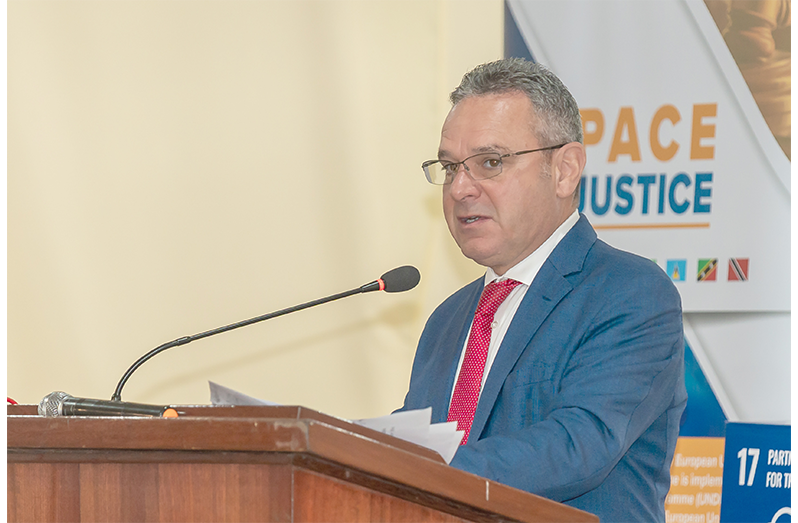
Meanwhile, Polycandriotis-Van Duynhoven outlined where Thursday’s workshop sits within the broader PACE Justice programme, noting that it was the fourth in a series of training sessions following earlier ones in Barbados, Saint Lucia, and Saint Vincent.
“To date, these sessions have yielded valuable insights which, along with key lessons from study visits to France and Spain in May 2026, attended by officers from the Guyana Police Force, among others, will be consolidated during a final workshop in Barbados on 18 and 19 June,” he said.
He further noted that the overall objective is to develop standardised operational procedures for the Caribbean region, promote more effective and consistent law enforcement practices, and provide participants with practical skills that can be directly applied in daily work. He further noted that what sets this training apart is its strong operational focus, ensuring that participants gain practical, actionable skills that can be immediately applied.
Since the project document was signed in 2023, UNDP Guyana has procured approximately US$304,000 in hardware for the Guyana Police Force, the Office of the Director of Public Prosecutions, the Guyana Prison Service, the National Forensic Laboratory, and the Guyana Fire Service, and has spent more than US$130,000 on additional court recording software.
Training has already been delivered in restorative justice, criminal mediation, case management, and criminal trials, and officers have travelled to Barbados and Europe for specialised training in forensics, digitisation, and AI.