






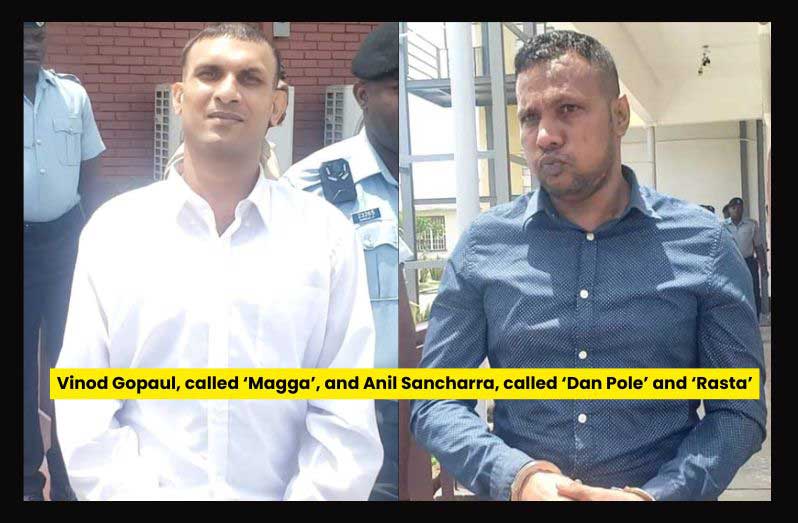
ANIL Sancharra, called “Dan Pole” and “Rasta”, and Vinod Gopaul, called “Magga”, were on Tuesday found guilty of the gruesome murders of cousins Joel Henry and Isaiah Henry following a trial in the Berbice High Court.
The verdict was returned by a 12-member jury after deliberations on Tuesday afternoon before Justice Simone Morris-Ramlall.
Sancharra, called “Dan Pole” and “Rasta,” of D’Edward Village, West Coast Berbice, and Gopaul, called “Magga,” of Yakusari, Black Bush Polder, Corentyne, were convicted for the September 2020 murders of the teenage cousins whose mutilated bodies were discovered in the Cotton Tree backlands.
Following the guilty verdicts, Justice Morris-Ramlall ordered that probation and psychological reports be prepared on both men before sentencing. The matter was adjourned to June 26, 2026, for sentencing.
Throughout the trial, the jury heard extensive testimony from witnesses, police investigators and medical personnel as prosecutors sought to establish the circumstances surrounding the deaths of the two teenagers.
A key witness for the prosecution was Akash Singh, who was initially charged in connection with the murders but later became a state witness.
Singh testified that on the day of the killings he was with the two accused men in the backlands where marijuana was allegedly being cultivated.
According to Singh, he had accompanied Sancharra and Gopaul on several occasions to the area to tend to marijuana plants and transport supplies, including fertiliser and food items.
He told the court that when the men returned to the cultivation site approximately three weeks after planting seedlings, they discovered that the plants had been destroyed. Singh said there were also signs that crops on a nearby farm had been damaged, which he believed was the result of pesticide.
While discussing the destruction, Singh claimed that two teenagers approached the camp. According to his testimony, one of the teenagers laughed after he mentioned the damaged crops.
Singh said Gopaul questioned the teenager about whether he knew anything about the destruction of the marijuana plants.
The witness told the court that the situation quickly escalated.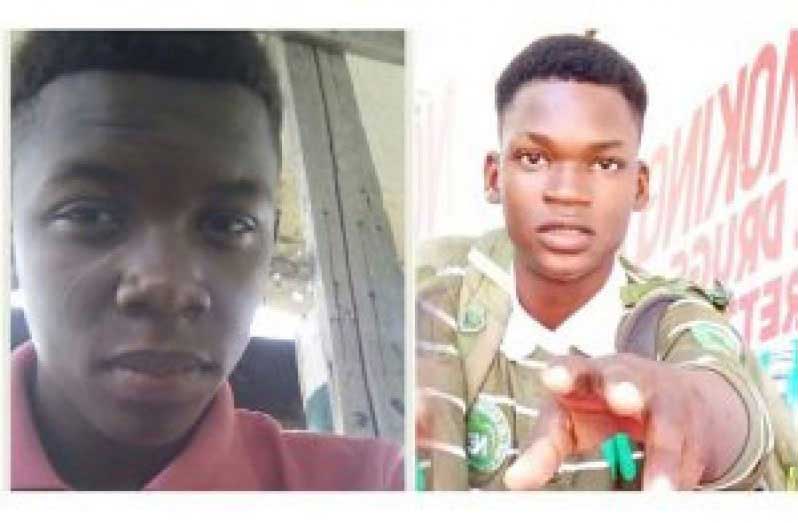
He claimed that one of the teenagers attempted to run away and was attacked by Gopaul, while Sancharra attacked the other.
Although he said he could not recall the exact number of blows inflicted, Singh testified that both teenagers were repeatedly chopped during the attack.
The court heard that after the killings, Singh was allegedly instructed to assist in disposing of the bodies.
According to his evidence, the bodies were tied onto horses before being removed from the area by the accused men.
He claimed that he was later instructed to dismantle and dispose of the cutlasses allegedly used in the killings and to throw away his bloodstained clothing.
Singh said he discarded the items in a canal.
The witness further testified that the accused men threatened him and warned him against informing authorities about what he had witnessed.
Despite those threats, Singh said that after his arrest in January 2021, he disclosed everything he knew to investigators.
He also claimed that he had informed his sister and two other persons about the killings before he was arrested, but they did not believe him.
During his testimony, Singh also alleged that the accused men attempted to influence his account of events while they were incarcerated.
He told the court that Sancharra and Gopaul instructed him to falsely tell investigators that police had beaten him into giving statements.
Under intense cross-examination by defence attorney Dr. Dexter Todd, Singh maintained that his account was truthful and denied fabricating the allegations against the accused men.
He repeatedly rejected suggestions that police investigators had assaulted him or coerced him into making statements.
“I come out from prison to talk the truth,” Singh told the court.
Singh also informed the court that he remains fearful for his safety because of what he claimed to have witnessed.
Additionally, he denied that he had received any promises from investigators in exchange for his testimony.
He also denied suggestions that charges against him had been withdrawn as part of any arrangement with the prosecution.
Attorney Chandra Sohan also challenged Singh’s credibility during cross-examination.
Sohan questioned him about his appearance while incarcerated and suggested that because he had long hair, he may not have been in prison during the period he claimed.
However, Singh rejected the suggestion and stated that prisoners were allowed to keep long hair.
The jury also heard testimony regarding Singh’s efforts to assist investigators.
According to his evidence, he later took police to the area where he claimed the cutlasses used in the killings had been discarded.
However, investigators were unable to recover the weapons.
Medical evidence presented during the trial detailed the extent of the injuries suffered by Joel and Isaiah Henry. Pathologist Dr. Nehaul Singh testified regarding the numerous wounds sustained by both teenagers and outlined the severe trauma inflicted on them before their deaths.
The medical evidence formed a significant part of the prosecution’s case as jurors were presented with details of the violent nature of the attack.
The State’s case was led by prosecutor Marisa Edwards, who called a number of witnesses in support of the prosecution’s allegations.
The accused men were represented by attorneys-at-law Dr. Dexter Todd, Dexter Smartt and Chandra Sohan.
The murders of Joel and Isaiah Henry in September 2020 sparked widespread outrage and unrest across West Coast Berbice and drew national attention.
The discovery of the teenagers’ bodies in the backlands led to days of protests and calls for justice from relatives, residents and members of the wider public.
With Tuesday’s verdict, the case now moves to the sentencing phase, where the court is expected to consider the probation and psychological reports before determining the punishment to be imposed on the convicted men.




