—new amendments to see sex offenders registry, development bank, commercial law amendments and restoration of former Presidents’ benefits framework
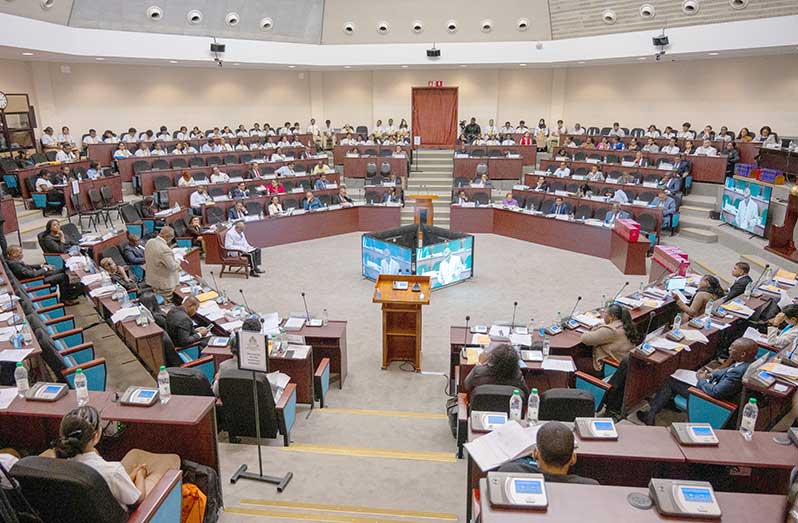
SIX major pieces of legislation were introduced in the National Assembly on Friday, as the government advances a broad agenda of economic, legal and governance reforms.
Among the measures tabled for first reading was the Guyana Development Bank Bill, which seeks to establish a specialised financial institution aimed at expanding access to financing and support for small and medium-sized enterprises (SMEs).
Minister of Human Services and Social Security Dr. Vindhya Persaud also tabled the Sexual Offences Amendment Bill, a measure the government has described as landmark legislation.
The bill seeks to modernise Guyana’s legal framework by establishing the country’s first National Sex Offenders Registry, while strengthening protections and support mechanisms for victims of sexual violence.
Meanwhile, Minister of Tourism, Industry and Commerce Susan Rodrigues tabled the Hire-Purchase (Amendment) Bill 2026 and the Security Interests in Movable Property (Amendment and Validation) Bill 2026.
According to the government, the two bills form part of efforts to strengthen Guyana’s commercial and financial legislative framework, improve access to credit, and create a more enabling environment for business growth and investment.
The Security Interests in Movable Property (Amendment and Validation) Bill seeks to improve the implementation of the principal Act by providing for manual registration where electronic registration is not possible, extending the transitional period and validating registrations and related actions undertaken during periods when the electronic registry was unavailable. The proposed amendments are intended to ensure continuity, legal certainty, and confidence in secured lending transactions.
Also introduced was legislation to provide for the sale of depreciating property. The bill was tabled by Attorney-General and Minister of Legal Affairs Anil Nandlall.
Another key measure introduced was the Former Presidents (Benefits and Other Facilities) Bill, which was tabled by Senior Minister in the Office of the President with Responsibility for Finance Dr. Ashni Singh.
According to the Ministry of Finance, the bill seeks to repeal and replace legislation enacted by the former APNU+AFC administration in 2015, and restore the framework that was originally established in 2009. The government said the move would create a single and predictable standard governing the benefits afforded to former Heads of State.
Under the 2009 legislation, former Presidents were entitled to benefits including the payment of utility expenses at their residence, personal household staff, transportation and security services, as well as medical coverage for themselves and their dependents.
The ministry noted that the 2015 legislation placed limits on several of those benefits, including capping medical coverage at $200,000 annually, and provided for benefits to be withdrawn if a former President engaged in private business, paid employment or trade.
In defending the proposed changes, the government said the benefits recognise the continuing obligations, representational responsibilities and security considerations associated with the office of the President, even after leaving office.
According to the ministry, restoring the 2009 framework would establish a fair and equitable standard for all former Presidents while ensuring a benefits regime that is clear, consistent, and reflective of the dignity of the country’s highest office.
The bills will now proceed through the parliamentary process for debate and further consideration.