







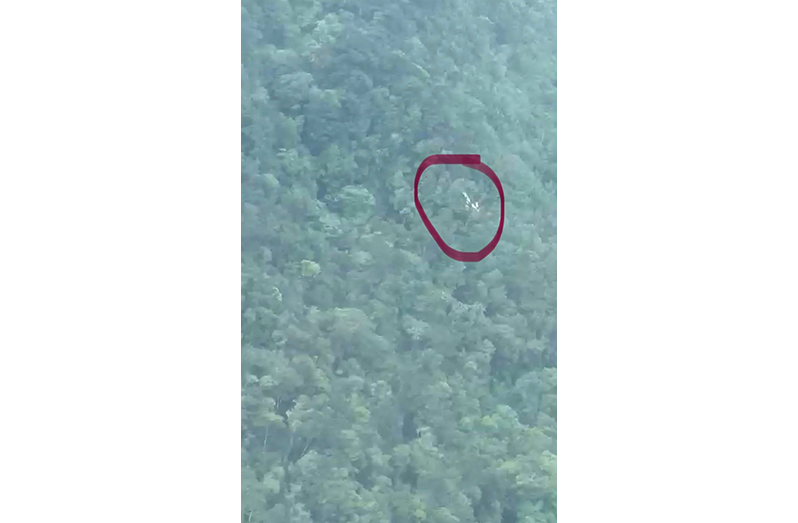
–ground insertion deemed safest as teams prioritise saving pilot, Captain Gouveia says
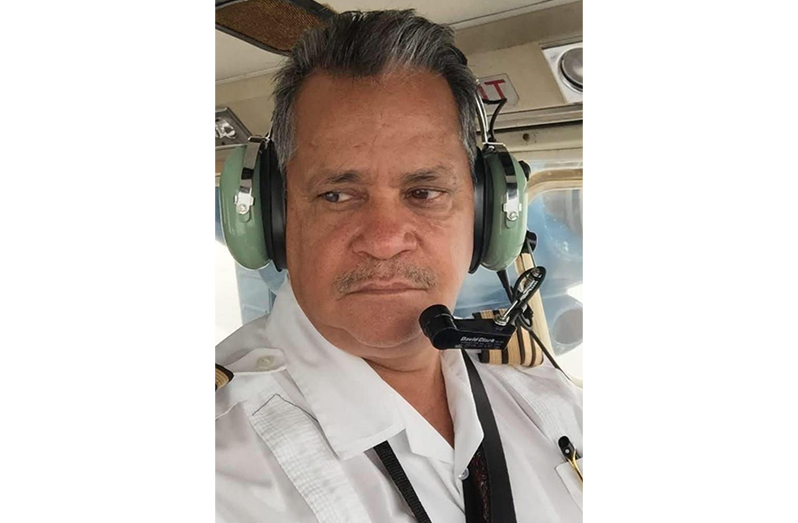
NATIONAL Security Adviser to President, Dr Irfaan Ali, Captain Gerald “Gerry” Gouveia on Sunday warned that there are “very real aviation constraints” affecting helicopter rescue efforts at the Imbaimadai crash site, where teams are racing to reach the lone pilot of a downed aircraft.
The rescue operation was launched after an Air Services Limited (ASL) Cessna 208 crashed in mountainous terrain near Imbaimadai while en route from Mahdia, on Friday.
The aircraft failed to report its arrival, triggering a search-and-rescue mission involving the Guyana Defence Force (GDF) and other agencies.
The pilot has been identified as Captain Ryder Castello, a national of Nicaragua with approximately 20 years of flying experience, who was the sole occupant of the aircraft at the time of the crash.
Against this backdrop, Gouveia, a veteran aviation professional, explained the dangers facing aerial rescue teams attempting to access the site.
“It is important that the public understands the very real aviation constraints involved in this rescue operation,” he said.
He noted that the crash site is located “on the eastern face of a steep mountain ridge in the Mazaruni, at approximately 4,200 feet above sea level,” adding that it is “a sharply inclined, heavily forested environment with limited or no safe landing zones.”
Gouveia said prevailing wind conditions further complicate operations.
“Guyana’s prevailing winds come from the east-north-east. This means that any helicopter approaching the eastern face of the mountain is likely to encounter strong tailwind conditions relative to the slope,” he explained, adding: “[this] significantly reduces control margins, especially during hover or low-speed manoeuvring.”
He pointed out that even advanced aircraft face severe limitations under such conditions.
“Helicopters such as the Bell 429—or even larger platforms like the Sikorsky S-92—require stable airflow, adequate clearance, and controlled approach paths to safely conduct hover or winching operations,” Gouveia said.
However, he stressed that “the steep incline, dense tree canopy, and proximity of the rock face severely restrict rotor clearance and manoeuvring space.”
Gouveia warned that attempting to hover directly above the wreckage would be extremely dangerous.
“Attempting to position a helicopter directly above the crash site would place it dangerously close to terrain and vegetation, with very little margin for error,” he said.
He also highlighted the risks posed by rotor downwash, noting: “The force of the downdraft in such a confined and unstable environment could cause debris—or even the aircraft wreckage itself—to shift or move violently, potentially endangering the life of any survivour on the ground.”
“These are not theoretical risks. They are real, immediate operational hazards that pilots must account for in every decision,” he stressed.
Gouveia said that ground insertion is being prioritised, noting: “This is why, in certain conditions, the insertion of trained personnel on the ground becomes not just an option, but the safest and most effective method of reaching the site.”
He emphasised that all decisions are guided by the urgent objective of saving the pilot’s life.
“It is also important to remember that this mission is being conducted with one overriding priority: to find the pilot alive,” Gouveia said.
“These are difficult, high-risk conditions. The teams involved are making calculated, professional decisions in real time. They deserve our understanding and our full support,” he added.
Meanwhile, the Guyana Civil Aviation Authority (GCAA) has confirmed that investigators have been deployed to the crash site, while the Search and Rescue Coordination Centre continues to support ongoing operations. GDF special forces are working to establish access to the area, as dense vegetation and steep terrain continue to hinder rescue efforts.



