
COMMUNITY service often finds its greatest strength not in spectacle, but in consistency rooted in lived experience, professional commitment, and a genuine desire to uplift others.
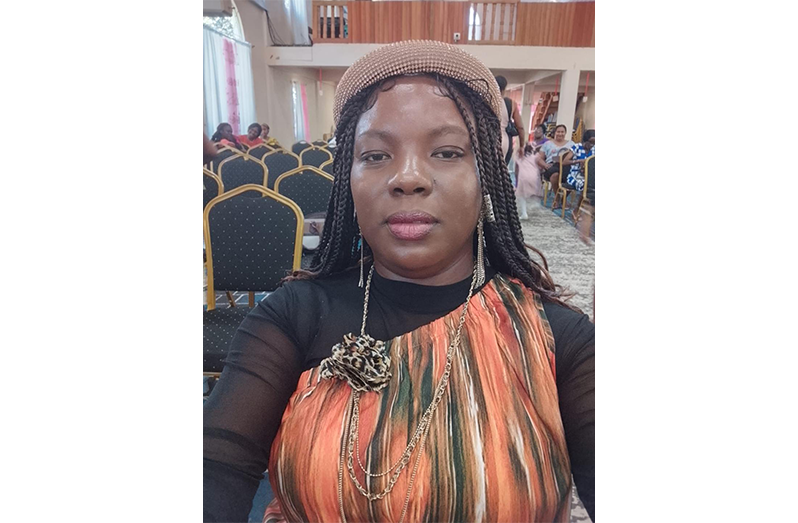
Dr Susan Farley-Charles exemplifies this quiet yet consequential form of service.
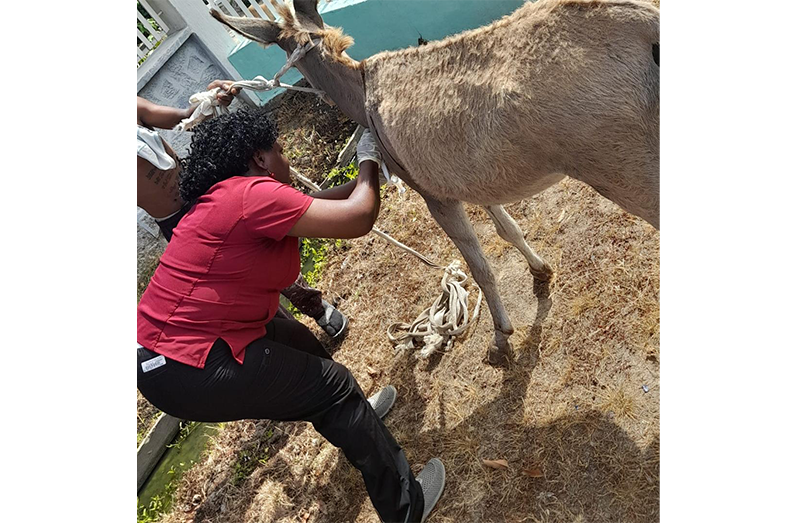
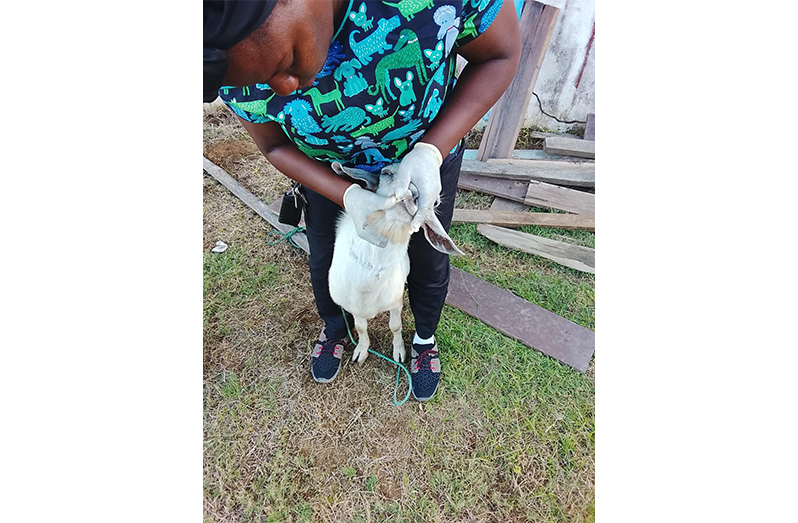
Through her work as a Veterinary Officer with the Guyana Livestock Development Authority (GLDA) and her sustained engagement within her community, she has forged a career defined by compassion, competence, and national contribution.
Dr Farley-Charles’ professional life is closely intertwined with Guyana’s broader goals of food security, rural development, and agricultural sustainability.
By strengthening animal health systems and supporting livestock farmers across the country, her work contributes directly to the resilience of communities whose livelihoods depend on agriculture—one of Guyana’s most critical economic and social pillars.
Born and raised in Black Bush Polder, a rural agricultural community in Region Six, Dr Farley-Charles’ early years were shaped by an environment where co-operation, discipline, and hard work were everyday necessities rather than abstract ideals.
Growing up in a close-knit setting fostered in her a deep respect for service and collective responsibility, values that would later guide her professional choices.
Her academic journey began at New Amsterdam Multilateral School, where she demonstrated an early aptitude for science and learning.
This foundation, coupled with personal determination, positioned her for advancement through the Government of Guyana Scholarship Programme.
The award proved pivotal, offering her the opportunity to pursue tertiary education in veterinary medicine, an area critical to national development but often under-represented.
In 2009, Dr Farley-Charles graduated as a Doctor of Veterinary Medicine and Zootechnics, a milestone that reflected both personal achievement and the long-term returns of public investment in education.
Her success underscores the role of state-supported human capital development in strengthening Guyana’s technical and professional workforce.
In her current role at the Guyana Livestock Development Authority, Dr Farley-Charles operates at the intersection of science, policy, and community engagement.
Her responsibilities extend beyond clinical veterinary care to include farmer education, advisory services, and technical guidance aimed at improving animal welfare, productivity, and disease management.
Colleagues and farmers alike describe her as approachable and methodical, known for taking the time to explain best practices and translate technical knowledge into practical, on-farm solutions.
This hands-on approach is particularly significant in rural and small-scale farming contexts, where access to veterinary services and scientific information can be limited.
Through consistent engagement, she helps empower farmers to make informed decisions, thereby strengthening livelihoods and reinforcing national food systems.
Her work reflects a broader shift within Guyana’s agricultural institutions toward extension-based, farmer-centred service delivery—one that recognises that sustainable development depends as much on knowledge transfer as on infrastructure and policy.
COMMUNITY ENGAGEMENT BEYOND THE WORKPLACE
For Dr Farley-Charles, service does not end with official duties.
Beyond her professional responsibilities, she remains actively involved in community development through the arts, using dance as a vehicle for empowerment and social connection.
A passionate dancer and instructor, she dedicates time to teaching dance choreography, particularly to young people. Her classes promote discipline, creativity, teamwork, and self-confidence, offering participants a constructive space for expression and growth.
For many of her students, these sessions provide mentorship and encouragement that extend well beyond performance, reinforcing positive life skills and resilience.
This integration of professional life with cultural and creative engagement highlights a holistic approach to community service, one that recognises the importance of social and emotional development alongside economic and technical advancement.
Married and the mother of one, Dr Farley-Charles, balances family life with a demanding career and active community involvement.
She often emphasises that the values underpinning service, responsibility, respect, and compassion, are first cultivated at home.
Her ability to navigate these multiple roles reflects a strong sense of purpose and an intentional commitment to leading by example.
In a professional environment that frequently demands long hours and fieldwork, her experience illustrates the importance of balance in sustaining long-term service and personal well-being.
Dr Susan Farley-Charles’ contributions may not always attract public attention, yet their impact
is felt daily in healthier livestock, better-informed farmers, empowered youth, and strengthened communities.
Her journey from Black Bush Polder to national service through the GLDA demonstrates the transformative power of education, opportunity, and sustained commitment.
Through science, mentorship, and creative engagement, she embodies the principle that community service is not a singular act, but a lifelong practice.
In doing so, Dr Farley-Charles stands as a role model for emerging professionals and a reminder that meaningful national development is built quietly, steadily, and with care.