
PRESIDENT Dr Irfaan Ali has hailed Guyana’s low and stable inflation rate as “a success” in a volatile global environment, crediting prudent macro-economic management and targeted fiscal policies which have protected citizens’ purchasing power while sustaining rapid economic growth.
Speaking during a recent examination of the government’s fiscal package for 2026 and the performance of the economy, President Ali said that despite the shocks of the COVID-19 pandemic and global price surges, Guyana now enjoys one of the lowest inflation rates in the region.
Looking at the global scheme of things, he said this stability is a cornerstone of the government’s efforts to “shock-proof” and “future-proof” the economy.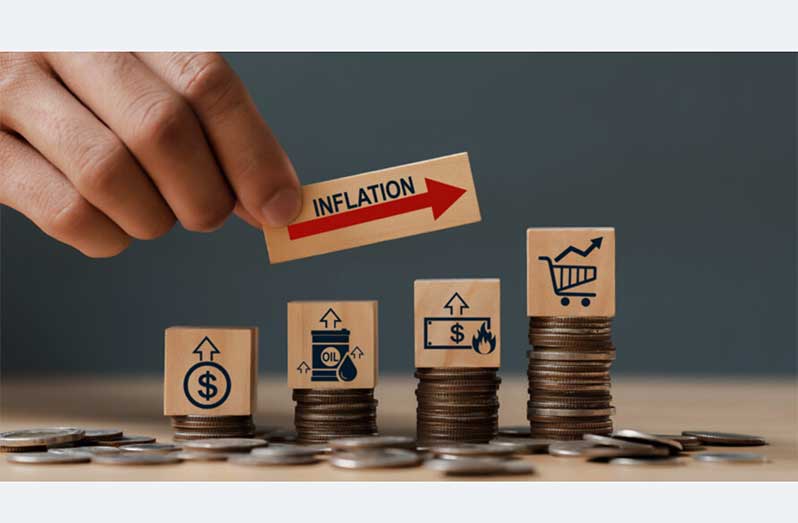
“We have the lowest inflation rate in Latin America and the Caribbean, and among the lowest in the world because of the way we have managed the economy, because of the way we have managed issues surrounding cost of living and price inflation,” the President said.
He recalled that inflation stood at 0.9 per cent in 2020, before global disruptions took hold, and stressed that the administration has since managed to contain price pressures even as it ramped up public investment and implemented large-scale development projects.
“We have to be, we have to be very fortunate, and that we have a government in place that is shock proofing and future proofing our economy as I speak to you today. If you look at inflation, inflation in 2020 was 0.9 per cent. Of course, COVID came, we know what happened. And today it is one of the lowest inflation rates in the region.”
President Ali linked low inflation to a broader policy framework that has reduced the tax burden on citizens while preserving fiscal space.
He noted that the effective tax rate, tax as a share of GDP has fallen from 14.5 per cent in 2020 to 6.4 per cent in 2025, meaning Guyanese are now paying about 8.1 per cent less tax on every dollar earned.
“If you look at the effective tax rate again, the story is one of great success. The effective tax rate in 2020 was 14.5 per cent… tax for GDP today, it is 6.4 per cent. If you look at the total public and publicly guaranteed gap to GDP ratio, it came down from 53 per cent in 2020 to 30 per cent in 2025. All of these things you know, when you look at the effective tax rate, this is the average amount of tax paid on every dollar on earners’ income,” the President explained.
According to him, the combination of lower taxes and low inflation ensures that households keep more of their income in real terms, while businesses benefit from a predictable environment for planning and investment.
OVERHEATING
He went on to explain that Guyana has managed to avoid the kind of overheating and runaway inflation often associated with resource booms.
While real GDP grew by 19.3 per cent in 2025, almost six times the global average, non-oil GDP also expanded by 14.3 per cent, with strong growth in agriculture, mining, construction, manufacturing, and services.
He said this broad-based, non-oil growth reflects deliberate efforts to diversify the economy and build structural resilience, rather than relying solely on oil revenues. Sectors such as agriculture up 11.5 per cent, construction up 31 per cent and professional, scientific and technical services up 35.7 per cent have all expanded, supported by access to credit and targeted incentives.
FOREIGN INVESTMENT
Foreign investment peaked at $11.2 billion in 2025, with credit to the private sector increasing by 18 per cent between 2024 and 2025, figures President Ali said would not be possible without confidence in both the currency and the overall policy environment.
“Credit to the private sector will only grow if there is confidence in the economy, if the economy is performing,” he said, describing the lending patterns as evidence that the financial system is aligning with the country’s diversification and development objectives.