–among education priorities for 2026 with planned injection of $183.6B
THE Government of Guyana has allocated $183.6 billion in Budget 2026 to continue modernising the education system, with a strong emphasis on expanding access, improving quality, and aligning learning to the demands of a rapidly changing economy.
Senior Minister in the Office of the President with Responsibility for Finance, Dr. Ashni Singh, made the announcement during his presentation of Budget 2026, noting that education remains a central pillar of Guyana’s national development strategy.

Dr. Singh said the government’s goal is to ensure that “every single Guyanese child has access to world-class education to prepare them for adulthood, and every adult has the opportunity to upskill or reskill themselves”.
Over the next year, investments will target physical infrastructure, teacher education, digital access, and curriculum enrichment, all aimed at empowering citizens to take advantage of emerging economic opportunities.
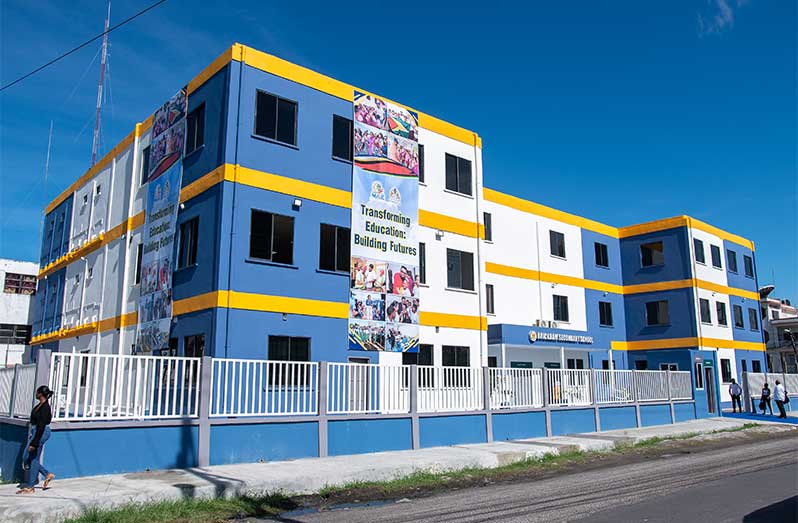
A total of $24.3 billion is earmarked for the completion of over 40 new schools, including Falls Top and Kanapang nursery schools, Cracrana and Diamond No. 2 primary schools, and Karaudarnau and Kwebanna secondary schools.
Works will also advance on student dormitories at Jawalla, North West, Port Kaituma, Santa Rosa, and Waramadong, to improve educational access for hinterland students. The budget also includes funds for continuous rehabilitation and maintenance of existing schools countrywide.
The Government’s focus on teacher education continues, with the Cyril Potter College of Education (CPCE) having trained more than 5,000 teachers over the past five years, raising the percentage of trained teachers from 69 per cent in 2021 to 86 per cent in 2025.
In 2026, further emphasis will be placed on training teachers in mathematics, science, and music, areas critical to developing a well-rounded and competitive education system.
To enhance learning quality, $2.3 billion is budgeted for the procurement of new textbooks and reading materials, ensuring that every student at the nursery, primary, and secondary levels has access to required texts. Additionally, $3.1 billion has been allocated for school grants so that teachers have resources to purchase classroom supplies directly.
Digital access and inclusion remain top priorities. Through the Guyana Learning Channel, more than 200 schools countrywide have received televisions, solar panels, and satellite equipment under the Hinterland and Riverain Television Project.
Building on this success, the Guyana Digital School, launched in December 2025, is expanding rapidly—over 22,000 students have already registered, and by March 2026, all secondary grades will have access to the platform. This initiative, with $176 million allocated for continued operations, is revolutionising free access to digital learning content across Guyana and the wider CARICOM region.
MAJOR WELFARE AND EQUITY PROGRAMMES
The government will also continue major welfare and equity programmes, with $7 billion dedicated to the National School Feeding Programme, providing nutritious meals to more than 110,000 nursery and primary school students, as well as 4,600 secondary students in hinterland and riverain areas.
The Because We Care cash grant and uniform assistance will also continue in 2026, providing $55,000 per child, at a total cost of approximately $11.7 billion. Additionally, the government will maintain full coverage for up to eight CSEC and CAPE subjects for all students, both public and private, building on last year’s $290.7 million in reimbursements.
At the tertiary level, the government will continue its UG loan write-off programme, having already relieved more than 4,000 borrowers of over $3 billion in debt. Enrolment at the University of Guyana has surged to 26,000 students, compared with 17,800 the previous year, driven in part by the removal of tuition fees.
To meet rising demand for skilled professionals, the government is expanding medicine and engineering programmes in Regions Two, Three, and Six, at a cost of $1 billion, while UG’s total 2026 allocation stands at $14.5 billion.
Access to higher learning continues to widen through the Guyana Online Academy of Learning (GOAL), which granted 10,805 scholarships in 2025. This year, the government has committed $5.8 billion for an unlimited number of scholarships, ensuring that all eligible Guyanese can pursue tertiary studies. In parallel, over 490 public servants have enrolled in professional upskilling courses through the Public Service Upskilling Platform launched in partnership with Coursera.
In technical and vocational education, $2.5 billion is allocated to expand TVET programmes, while $723 million will support the Board of Industrial Training (BIT) in training over 2,000 more people in trades such as welding, plumbing, and electrical installation.
Further, a new practical instructional centre will be built at Mahdia in 2026, complementing the recently completed Guyana Technical Training College at Port Mourant, which trains workers for the oil and gas sector.
Minister Singh said these investments reflect government’s unwavering commitment to building a modern, inclusive, and technologically empowered education system.
With targeted spending across all levels—from nursery to tertiary, from traditional classrooms to digital learning—the 2026 education programme seeks to equip every Guyanese, regardless of geography or background, with the skills and knowledge to thrive in the country’s fast-growing economy.