







— gov’t, banks implement measures to integrate small entrepreneurs and everyday workers into the formal financial sector
MINIBUS DRIVERS, conductors and small vendors may not typically think of private banking, but President, Dr Irfaan Ali alluded on Friday that they, too, are central to Guyana’s financial modernisation.
Speaking at the launch of Guyana Bank for Trade and Industry’s (GBTI) private banking services, President Ali highlighted efforts to bring banking directly to the “small man” at the grassroots.
“So as we are in this beautiful lobby, launching this dynamic product, so too the bank should be in the bus parks, launching a direct engagement and education programme with all those who operate minibuses, whether the drivers or conductors, and get them engaged in a process of registering in the financial system of the country by owning a bank account,” he said.
For President Ali, opening a bank account is more than a procedural step, it is the foundation of personal wealth.
“That is the first way of building your own balance sheet, your private balance sheet, in creating wealth and opening up opportunity ahead of you,” he noted, framing the effort as part of a broader transformation of the financial sector to meet the country’s economic growth.
The President pointed out that banking reforms over the last two months have simplified account opening significantly, resulting in “tremendous response to the simplified system of opening up a bank account.”
He explained that these reforms are not limited to the wealthy or urban clients; they are designed to bring all citizens into the formal financial system, ensuring inclusivity at every level.
Beyond account access, the reforms also aim to link small-business operators to mentorship and growth opportunities.
President Ali illustrated this with practical examples, consolidating small vendors into collective business entities and connecting them with banks and high-value clients to leverage resources.
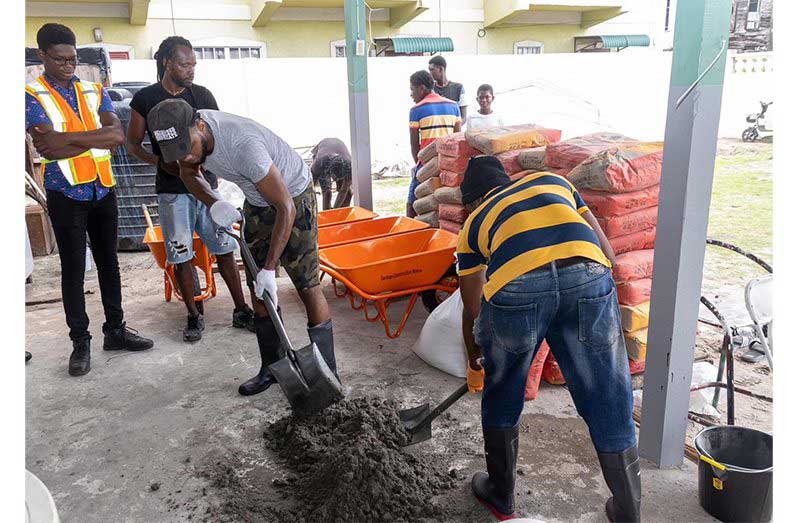
He cited a successful initiative in Leopold Street Inc., a community-based company formed by residents of Leopold Street, Georgetown, participating in a government initiative for employment and community development, primarily through a block-making project for the national housing drive, whereby they produce concrete blocks for contractors and even construct houses themselves, showcasing local enterprise and empowerment.
The initiative, supported by President Ali himself and the Central Housing and Planning Authority (CHPA), provides training in construction skills and connects the group with contracts, transforming residents into developers and fostering positive change in the community.
Turning his attention to financial inclusion, President Ali stressed, is about more than just accounts, it’s about engagement and education.
“We must recognise that the banking sector, over the last couple of months, would have revolutionised the way they interact with customers at every level,” he said, highlighting the government’s forward-looking approach.
According to President Ali, the launch of private banking at GBTI fits within this inclusive strategy, providing tailored services for those with complex financial needs while ensuring the broader population benefits from simplified banking.
“Banking was created for people and not the other way around. A modern banking system must therefore become more accessible to individuals,” he said.
President Ali framed these reforms as a decisive move towards a modern, efficient financial system that integrates all citizens, from the everyday worker to sophisticated investors.
By combining simplified account-opening, grassroots engagement and private banking services, Guyana is setting the stage for a financial ecosystem that supports wealth creation, economic participation, and a more inclusive future.




