

IF anyone had told Colnita Jervis-Wilson that her adult life would be rooted in an isolated rural village, managing livestock and sustaining a family ranch, she would have been sceptical. A self-described “city girl”, her formative years were firmly embedded in urban Guyana. Yet today, Jervis-Wilson’s life and livelihood are deeply intertwined with the agricultural landscape of Lighttown Village, East Bank Berbice—where tradition, resilience, and purpose converge.
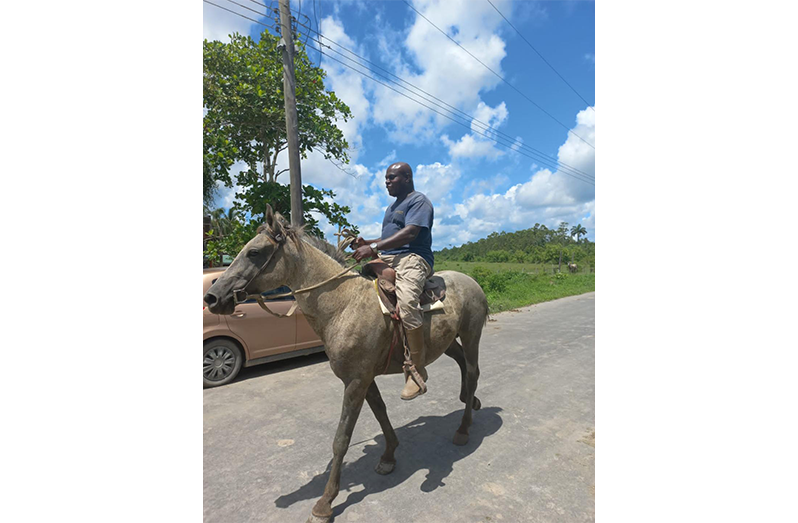
At 42, Jervis-Wilson represents a compelling story of return, adaptation, and commitment to agriculture. Together with her husband, Joseph Wilson, a re-migrant who returned to Guyana in 2021 after years of living and working in the United States as a licensed pilot and aviation engineer, she deliberately decided to relocate their family to Lighttown Village. The move was driven by more than practicality; it was anchored in legacy. The Wilson family ranch required stewardship to ensure its survival, and the couple resolved to preserve it for future generations.
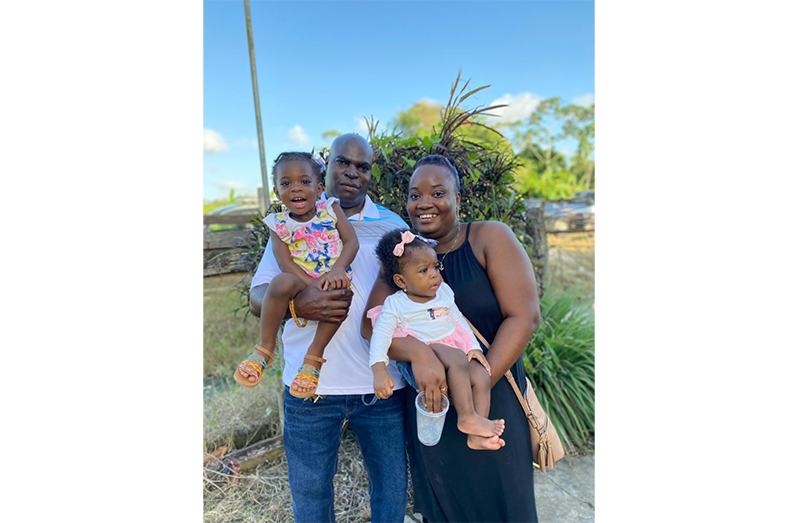
Married with two children who attend school in New Amsterdam, Jervis-Wilson balances rural life with professional responsibility. She is a teacher at Multilateral Secondary School in New Amsterdam, continuing a distinguished career in education spanning decades. The transition to Lighttown Village, however, was far from seamless. When the family first relocated, the village had no electricity, no paved roads, and no reliable cellular service. While electricity and all-weather roads have since improved access and mobility, telecommunication challenges persist, highlighting the ongoing infrastructural constraints faced by rural communities.
Despite these limitations, the decision to relocate was grounded in shared values. Both Jervis-Wilson and her husband have a deep passion for agriculture and envisioned a lifestyle centred on sustainability, self-reliance, and purpose. They saw themselves as laying the foundation for a future in which their children could appreciate the value of the land and food production.
Jervis-Wilson’s connection to agriculture is longstanding. After completing high school, she enrolled at the Guyana School of Agriculture (GSA), initially aspiring to become a veterinarian. Although a scholarship opportunity to Cuba did not materialise, her interest in animals and farming never waned.
Economic realities soon required her to enter the workforce, and at just 18, she became an agriculture teacher at Tucville Secondary School in the city.
Her teaching career progressed steadily. In 2005, she successfully applied for a vacancy at Queen’s College, where she taught for 17 years. During this time, she was encouraged to qualify further and subsequently specialised in agriculture and science, which became her professional and academic strengths.
At the University of Guyana (UG), she pursued studies in environmental science, completing her final-year capstone on Guyana’s emerging Low Carbon Development Strategy (LCDS), a national policy framework that resonated deeply with her interests in sustainability and climate adaptation.
On the farm, however, the realities of agriculture have tested that resolve. Like many small-scale producers, the Wilsons have experienced significant losses. Their poultry operation, which focused on layers, suffered a devastating blow when disease wiped out about 3,000 birds. The loss was both financially and emotionally draining. Despite engagement with extension services and visits from technical officers, the entire flock was lost, forcing the family to reassess their production strategy.
In response, they diversified into pig production, beginning with a small herd. Since then, the operation has shown promise, with several sows now heavily pregnant and plans to expand swine production in place. The family is also becoming more familiar with the artificial insemination (AI) programme offered by the Guyana Livestock Development Authority (GLDA), which they view as a critical tool for improving productivity and genetic quality.
Their experience with small ruminants proved equally challenging. Sheep relocated to a secondary farm in Region Five were either stolen or killed by dogs, resulting in the loss of the entire flock.
“It was one loss after another,” Jervis-Wilson recalled, describing a period marked by frustration and uncertainty as the family struggled to recover from repeated setbacks.
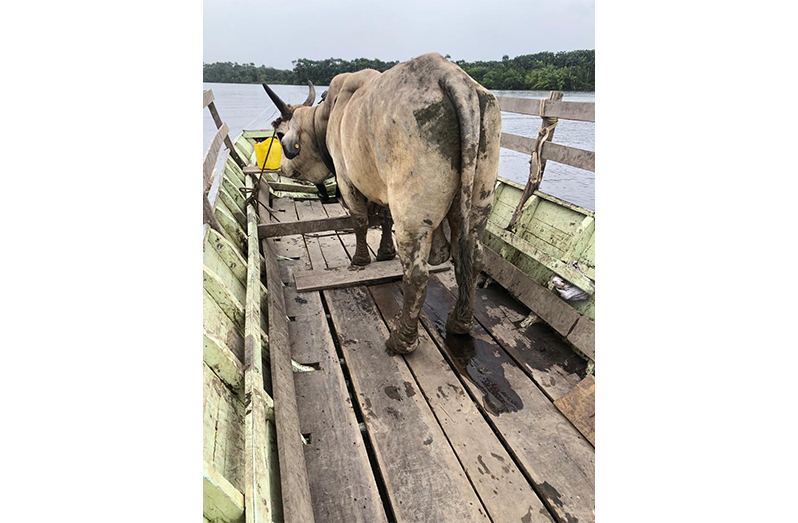
Cattle production remains part of their agricultural portfolio, though constraints persist. An ageing bull has limited herd improvement, and the family is currently awaiting support through the GLDA’s Bull Rotation Programme. They have, however, benefitted from drainage and irrigation works implemented by the National Drainage and Irrigation Authority (NDIA), which have significantly reduced flooding risks in the village.
Looking ahead, Jervis-Wilson is cautiously optimistic. The family hopes to re-enter poultry production once conditions and financing are more favourable and is anticipating the establishment of the Agriculture Development Bank, which would provide access to interest-free loans. Moving forward, they are also desirous of deeper collaboration with GLDA to integrate more climate-resilient technologies, including improved animal husbandry practices and resilient breeds suited to Guyana’s changing climate.
They have welcomed recent initiatives by the Ministry of Agriculture (MOA), through the GLDA and the Guyana Food Safety Authority (GFSA), to introduce a national livestock traceability system. For the Wilsons, implementing a digital traceability platform using QR codes represents a significant step forward in food safety and transparency across the production chain. Most importantly, Jervis-Wilson believes it will strengthen consumer confidence by allowing buyers to make informed decisions about where their food is sourced.
“In the long run,” she noted, “this will increase the marketability of food produced right here in Guyana.”
Further diversification continues to define the family’s approach. Joseph Wilson has recently ventured into beekeeping, partnering with apiculturist Shane Fullington under the “From Hive to Bottle” honey initiative, an enterprise that aligns with their broader commitment to sustainable agriculture.
For Colnita Jervis-Wilson, agriculture is not simply an occupation; it is a lived philosophy shaped by education, experience, and perseverance. Her story reflects the broader realities of farming in Guyana—marked by loss and renewal, challenge and innovation—and underscores the vital role of committed individuals in sustaining the nation’s agricultural future.