






…Gov’t MP details progress in bridging gap between coastland and hinterland
…talks up autonomy of village councils
WITH the Hinterland Employment and Youth Service (HEYS) training almost 4000 youths and creating some 2000 businesses, the introduction of radio and internet in bridging the connectivity gap and over 300km of roads developed, government has greatly bridged the gap between the coastland and hinterland over the past four years.
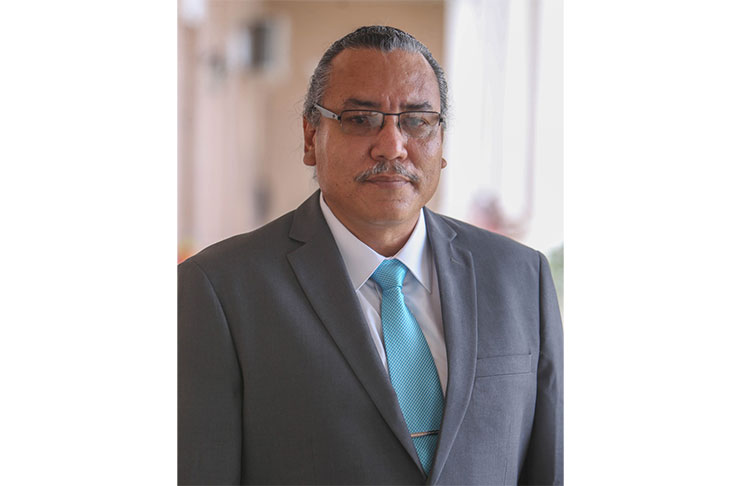
This was shared by adviser to the Minister of Indigenous Peoples’ Affairs and Member of Parliament, Mervyn Williams, during a radio interview on 107.1 FM radio, on the “Straight Up Live” show, earlier this week. Bridging the development gap between the coastland and the hinterland has been a focus of President David Granger since his ascension to office in 2015, a section of his wider vision for the decentralisation of essential services and development across the country.
“Development is accelerating across Guyana’s hinterland,” Williams conveyed. Williams backed his statement by outlining several infrastructural repairs conducted over the past few years. “This government has invested in the repairs and maintenance of over 300km of hinterland roads; repaired, maintained or reconstructed some 57 airstrips across Guyana’s hinterland. There was the recommissioning of the MV Kimbia which traverses the Georgetown to Region One route. Villages now have access to internet, and radio stations are now available via several hinterland areas,” Williams outlined as he spoke of the “silent revolution in the hinterland.”
He added that Mahdia, Mabaruma, Aishalton, Lethem are now equipped with community radio stations that feed into the national network. “These connections, they allow our people to not only experience what is happening outside of their scope of life but communicate with each other in their first language. It helps with the revitalisation of the Indigenous Languages, it helps with the maintenance of the Indigenous culture and that Indigenous culture is taking up its rightful place of pride in this beautiful country of ours,” Williams said.
DECENTRALISATION

According to him, much emphasis has been placed on letting the villages decide on their own projects and be integral in the development of their communities, as opposed to having central government mandate what initiatives should take place. “It’s about self-determination now, it’s not about dictatorship. Our administration has embarked on a deliberate path to place free power and the self determination of Indigenous People above and beyond. We have eradicated the practice we found where [central government] goes into a village and decide okay you need a benab; here’s $1 million build a benab, or you need an outboard engine; here buy an engine,” Williams noted.
“We have moved away from that and we have said to Indigenous leaders you need to craft your own developmental agenda, put together your own proposal and if you need technical support, the ministry has offices that can render that support.”
Towards the aim of taking their development into their own hands, President Granger tasked the villages to craft a village improvement plan. “It is a 10-year plan that spells out what the village envisages its development to be over this 10- year period. So far 43 villages have completed their plan and others are working on theirs. Coming out of that, we have been able to roll out the HEYS project which has in fact over the four years trained some 4000 Indigenous People in a wide array of skills, from catering to forestry, tour guiding, furniture manufacturing, fabric construction, and all these different things,” Williams related.
EMPOWERING RESIDENTS
HEYS is one part of President David Granger’s 2015 Hinterland 10-Point Plan of Action, first presented at the National Toashaos Council 2015 Meeting. Some $702.698M has budgeted in the 2019 National Budget for Amerindian Development Projects, including HEYS, bringing the total spent on initiative since 2017 to $2.810B. Some $1.176B was spent in 2017 and $931.777M spent in 2018. The HEYS programme involves one year of vocational and entrepreneurial training for participants, who are given a monthly stipend during the training, and a one-off $50,000 grant, at the end of the programme, to invest in their business.
“A whole wide range of different things are now happening. When you go into these different villages, it’s amazing,” Williams said.
“Some people have opened up shops, some became caterers, some people are producing furniture, some people are going into precious stones, there’s the tomato business of Paramakatoi which is employing a number of farmers. There’s organic tomatoes being processed and there’s the sun dried tomato salad dressing.”
The hinterland region has also seen much development in the area of telecommunications. “Seventy one communities have benefitted from [the installation of] Wifi. Smart classrooms are moving in. In Kabakaburi, Minister Cathy Hughes visited the site where the satellite dish has been mounted and we’re happy that the school is benefiting from free Wifi, that’s going to be extended to the entire village,” Williams shared.
Government has also directly invested in school children through the 5B’s initiative, which speaks to bus, bicycles, boats, breakfast and books. Additionally, to make tertiary education easier on hinterland students, who have to travel to the coastland to access that level of education, earlier this year the government commissioned a new $186M dormitory for tertiary hinterland students, at Liliendaal.
“That facility envisions young people in larger numbers accessing tertiary education, for those who have difficulty finding place to stay in Georgetown. It is a remarkable intervention. It’s the kind of intervention that can make Indigenous People proud of our President because they are now seeing the plans come together. It’s not just a one-off intervention, it’s an entire plan falling into place. The plan for Guyana’s hinterland is coming together,” Williams said.




