“WE do not support corruption as a matter of policy; however, if anyone has evidence… bring it forward and we act on it.”This was the emphatic position underscored by the People’s Progressive Party (PPP), General Secretary, Clement Rohee, when asked to respond to comments made by outgoing British High Commissioner, Andrew Ayre.Aye was quoted recently as saying that the administration is not doing enough to fight corruption.
During the PPP’s weekly press conference at Freedom House, Rohee pointed out that the outgoing British High Commissioner has not taken into account what has been done to address the challenge of corruption, painting an unbalanced picture.
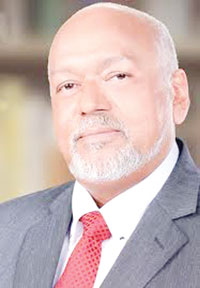
“I don’t agree with him because I don’t think he has said what we have done, he may have said what we have not done, which is quite okay, but in order to balance that off, he ought to have pointed out what we have done in the fight against corruption,” Rohee said.
The PPP General Secretary bemoaned the fact that the issue of corruption has been “sexed up” in the interest of sensational headlines, as opposed to more merit-based approaches.
He also alluded to the fact that no less than President Donald Ramotar has acknowledged the problem that is corruption.
COMMITTED
The Head of State’s consistent position is that his administration is committed to tackling corruption wherever it is spotlighted. “We are not sitting on our hands,” he stressed at a recent forum where he addressed the issue.
According to President Ramotar, the successive PPP administrations have addressed the implementation of “elaborate systems” to address corruption.
However, he acknowledged that there continues to be challenges and emphasised that these are engaging the attention of officials.
“Where there is corruption, we will deal with it,” he said.
The President referenced the open public procurement process, as well as the current scope of the Auditor General’s office as some of the systems implemented by the ruling party, systems and processes that were absent pre-1992, when the party took office. Also, the Public Accounts Committee (PAC) of the National Assembly scrutinises the Auditor General’s report and identifies area for additional investigation to move towards prosecution.
SUPPORT WELCOMED
Additionally, last year, the Caribbean Development Bank (CDB) offered technical assistance to the current administration to tackle corruption – an offer President Ramotar made clear that his Government is open to.

CDB Head Warren Smith, at the time of making the offer, said, “We certainly recognise and insist that good governance is part and parcel of the development of a country. We want to see and ensure that the persons we elect exercise good judgment and also good governance. I think that there is sufficient evidence out there that when these principles are not observed, it hampers the growth and development of a country.
“…there is no country in this world, and I dare say, that has not had issues with corruption. It is important that countries continuously adopt measures that will reduce the incidence of corruption in their domain… certainly if they (borrowing member countries) request that kind of assistance, the CDB would be more than happy to help.”
TI REFERNECE
Ayre also reportedly referenced the ranking given to Guyana under the Corruption Perception Index (CPI) of Transparency International (TI).
TI’s report, released recently, sees Guyana ranked 124th, with 30 points. Last year, Guyana was ranked 27th, one place up from the 28th spot in 2012. This year’s index includes 175 countries and territories.
However, TI’s credibility has been facing mounting criticism worldwide, given the organisation’s reliance on questionable data.
The yardstick used against which countries are ranked is widely inconsistent, as seen in TI’s report, and this point was underscored last year by the World Bank itself, which is cited as one of Transparency International’s sources.
The World Bank, at the time of the last report’s release, had criticised the Index as a method of ranking corruption, saying “Changes in sample base and methodology have complicated year-to-year comparisons,” while “survey respondents in different countries describe corruption in different terms.”