






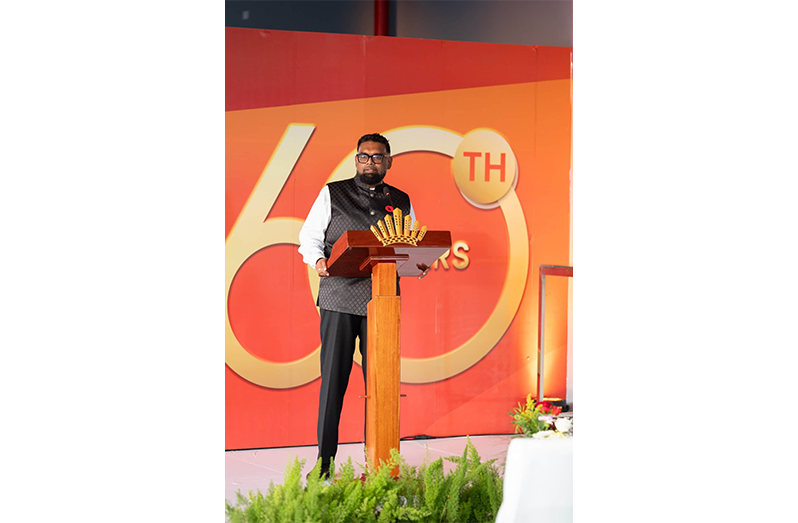
THE government is investing in digital platforms and a national payment system to help extend financial services to families across Guyana, President, Dr Irfaan Ali said at last Friday’s opening of the Bank of Baroda’s new headquarters.
During his address to stakeholders, the head of state highlighted a gap between global bank-account ownership and mobile-phone access. He cited account ownership of 79 per cent worldwide, compared with mobile-phone ownership of 85 per cent in middle- and low-income countries, arguing that digital technology could help more people access financial services.
“That is why we are investing now in the technology to allow us to reach every family across Guyana through the digital platform and through the national payment system that we have.
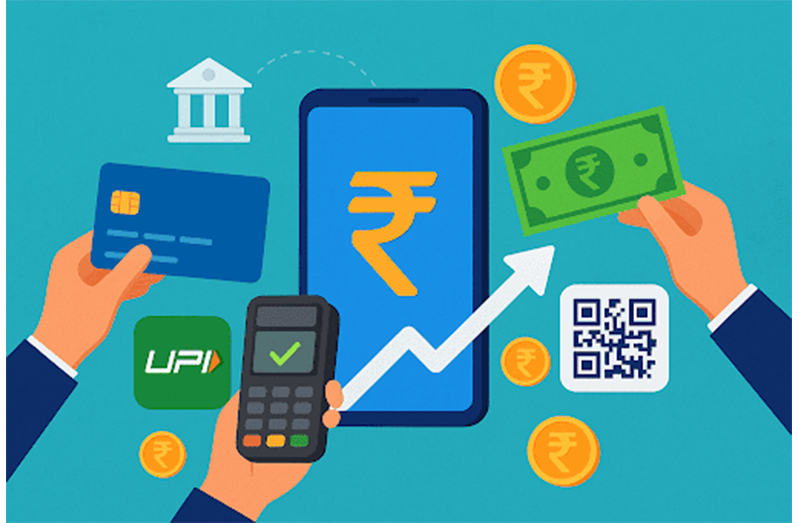
Once we complete this project overnight, the financial architecture, the financial system, financial inclusion, the services of the banking sector will reach across the country and add to the GDP.
President Ali said the planned digital infrastructure could broaden access to banking and payments and contribute to economic growth.
This [is] part of efforts towards a wider goal of making financial services available to families across the country.
“We are moving into a new era of financial growth in our country, and unless the financial system primarily advances [and] understands the direction that we’re going into, they can be left in a time vacuum that does not allow them to restructure their approach to the market and their approach to the financial system,” he said.
Last week, Dr Ali and India’s Minister of External Affairs, Dr Subrahmanyam Jaishankar, signed three bilateral agreements aimed at strengthening co-operation between Guyana and India, including initiatives to support infrastructural development, small businesses and digital payments.
A major focus is the development of Guyana’s national payment system, with India providing technical assistance.
President Ali said the system was expected to be launched by the end of the year and would help reduce the cost of doing business, improve competitiveness and increase transparency.
He said: “It will reduce the cost of doing business, improve our competitiveness, enhance financial security, and create greater transparency in the financial system.”
President Ali also said more than 20 Guyanese professionals would travel to India for on-the-job training in the UPI environment.
The quick-impact projects agreement is intended to foster collaboration between innovators in the two countries, particularly in new technology and systems.
“By the end of this year, we will be able to launch the national payment system,” he added.
According to the Office of the President, the agreements include a Memorandum of Understanding on Indian Grant Assistance for the Implementation of Quick Impact Projects (QIPs); a Memorandum of Agreement on the Supply and Installation of Micro and Small Enterprises (MSEs) Manufacturing Projects; and an Agreement on Co-operation in the Field of Digital Public Infrastructure and the Functioning of a Unified Payments Interface (UPI)-like system in Guyana.




