






–mother who lost both children, family mourning daughter and grandson testify before inquiry
SHIVANIE Wells heard her six-year-old daughter screaming for her in the darkness as the MV Barima sank.
She could not reach her. Elsewhere in the water, Grenville Smith surfaced alone, not knowing whether his wife, their children or their grandson was alive.
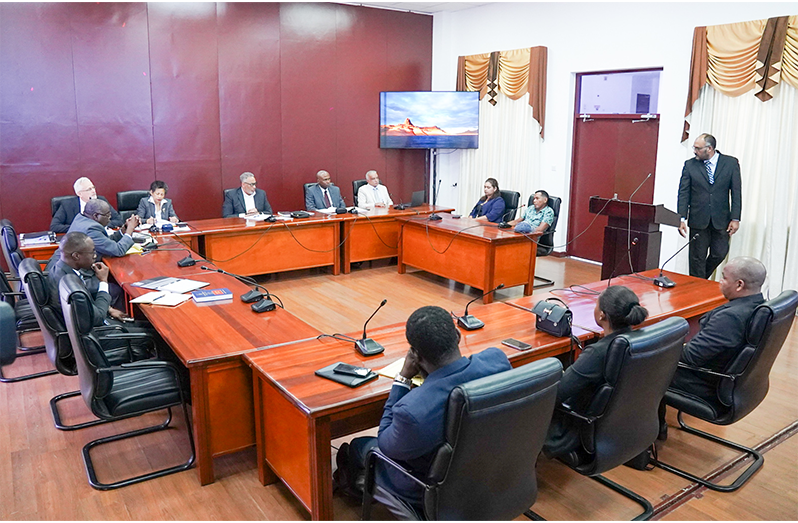
On Thursday, those were the painful recollections survivors brought to the Presidential Commission of Inquiry (CoI).
They were stories of desperate escapes, help from strangers and reunions overshadowed by children who never came home.
Their evidence also raised questions about crowded passageways, access to life jackets, cargo and boarding procedures on the vessel’s final journey on July 18.
Wells lost both her children – her six-year-old daughter and five-year-old son – just a year after their father died.
Asked what she wanted as outcome of the CoI, she said she wanted justice for her children. “They didn’t deserve to die that way. It’s hard for me as a mother. I does cry, and I lose their father one year ago,” she testified.
The family had been travelling to Mabaruma to visit Wells’ father. It was her first journey aboard the Barima.
Other passengers helped her find somewhere comfortable for the children to rest, offering a hammock after she complained about misplacing the one, she brought for the journey.
But she became uneasy during the voyage, recalling water on the lower deck and what she described as the engine stopping twice.
“Aunty, this ain’t feel right,” she remembered telling another passenger.
When the vessel tilted, Wells initially held on to both children. Then they became separated. She said she could not access life jackets inside a locked cage covered with plastic.
“I heard my daughter calling for me, but the place was too dark.”
Another passenger helped Wells stay afloat. Fellow survivors encouraged her to remain conscious before a fishing vessel rescued them after approximately seven hours. She later had to identify both children’s bodies.
Grenville and Roselle Smith had also boarded with children who did not survive: their daughter, Shamera Smith, 13, and grandson, Aarav Daniels, seven.
Returning from a family funeral in Georgetown, the couple and their son, Alex, survived. Grenville said all five shared one bench. Later, children lay on the floor, leaving scarcely any room to pass.
“The whole passageway was so full. You can’t pass, no way,” he said.
Grenville recalled heavier rocking after a change in engine sound. Someone subsequently told him there was water downstairs, although he did not see it himself. Then the vessel tilted twice.
The interval, he said, was “not even ten seconds.”
“We didn’t get a chance to hold a life jacket,” he testified, adding: “So quickly things happened.”
Grenville felt his way out underwater, found a life jacket after surfacing and spent about seven hours at sea before the Coast Guard rescued him. Roselle, who could not swim, described going under three times before gripping an icebox lid.
Alex had been listening to music through earphones when he suddenly found himself in the water.
He held a box with other passengers until rescuers pulled them aboard. Seeing his parents again brought a simple response: “I feel good.”
Survivor Marvin James described another escape without a life jacket. Asleep in a hammock when the vessel overturned, he heard screams and cargo sliding.
The jackets nearby, he said, appeared old and mildewed and were secured behind a padlock.
“I didn’t have the opportunity to grab nothing,” he said. He survived by holding an icebox.
James also testified that he paid a woman he identified as a ticket attendant $3,000 aboard the vessel but received no ticket.
He said the cargo was greater than on previous journeys: “It was more than normal.”
Nicholas Craig, who was travelling with a broken hand and leg, likewise recalled more goods than usual.
He described the vessel moving slowly but claimed no direct knowledge of machinery problems.
Commissioners offered condolences and thanked witnesses for recounting painful experiences. Roselle confirmed receiving counselling.
The testimony returned repeatedly to the speed of the sinking and the lasting consequences for those who escaped.
For Wells, survival now means finding strength while grieving two children and their father.
“I pray to God to give me the strength to keep going,” she said.




