CARIBBEAN shipping leaders are calling for greater investment in port infrastructure, stronger regional trade and more efficient maritime services, warning that the region’s economic future will depend on its ability to improve connectivity while adapting to changes in global shipping.
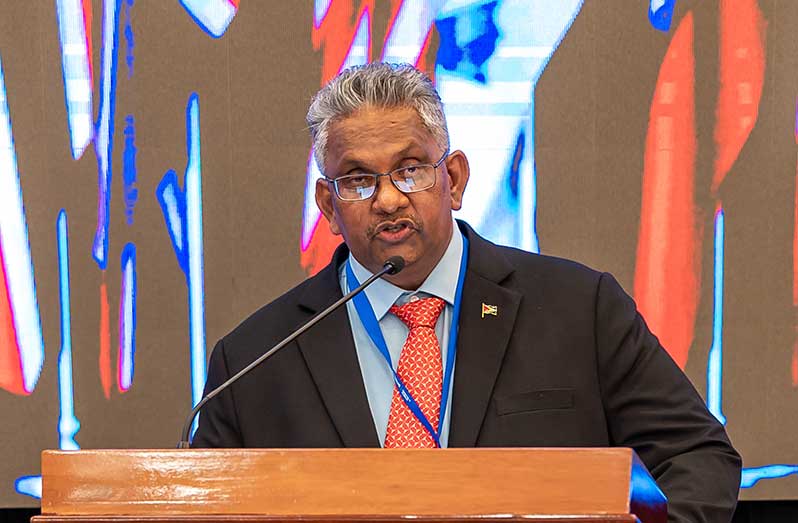
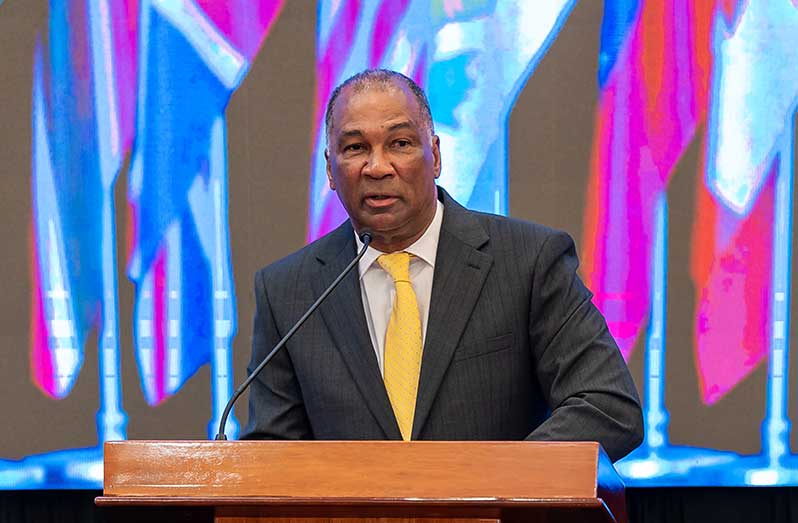
Chairman of the Shipping Association of Guyana (SAG), Dr Komal Singh, and President of the Caribbean Shipping Association (CSA), William Brown, made the call on Monday during the opening of the association’s 56th Annual General Meeting, Conference and Exhibition in Georgetown.
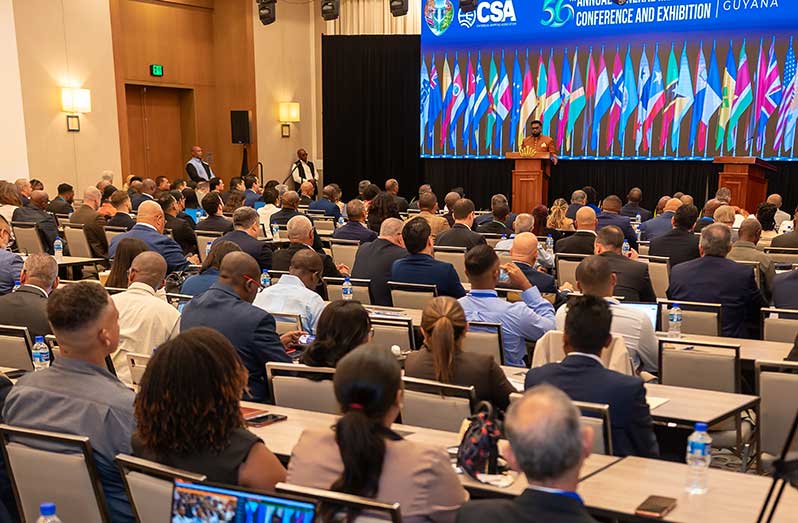
The four-day conference, which runs until October 28, has brought together more than 400 delegates, including shipping executives, port operators, policymakers and investors, to discuss the future of the maritime industry. Both leaders highlighted the importance of ensuring that the region’s shipping infrastructure keeps pace with economic growth, while reducing the cost of doing business and creating opportunities for countries of different sizes.
Speaking on the growth of Guyana maritime sector, Singh said Guyana’s expanding economy has created greater demand for efficient ports, deeper navigational channels, reliable shipping services and modern cargo-handling facilities.
He noted that significant investments have been made in the country’s ports and infrastructure over the past five years. Singh also stressed that development must continue to match the pace of economic expansion, noting, “Our challenge is to ensure that the pace of maritime development keeps up with the pace of economic growth, For this, it requires a shared commitment to move forward,” he said. Singh identified port modernisation, improved efficiency and stronger regional maritime connectivity as key areas requiring attention.
He said ports must be equipped to handle increasing movement through regional ports the changing demands of international commerce, while technology, simplified procedures and better coordination could help reduce delays in vessel turnaround, cargo clearance and logistics operations.
The SAG chairman also said efforts to improve efficiency must also be assessed to create lower costs for consumers. While some expenses are influenced by developments beyond the region’s control, Singh argued that Caribbean countries must address the inefficiencies within their own ports and shipping systems.
“In those areas that we have control over, we need to look at how we can improve our port efficiency to help bring those costs down so our end product for consumers can be one that is affordable at the end of the day,” Singh said.
He also called for more reliable and commercially sustainable shipping connections between Caribbean countries, noting that the movement of goods remains more costly and complicated than it should be despite the region’s geographical proximity. Guyana’s growing productive capacity, particularly in agriculture, manufacturing and energy-related services, presents an opportunity to expand trade, he said, but that potential will depend on dependable and affordable transportation links.
Meanwhile, Brown said the industry must prepare for significant changes in shipping while ensuring that Caribbean countries have a meaningful role in decisions affecting their future.
He noted that Guyana’s rapid economic growth is increasing demand for port capacity, logistics services, efficient systems and skilled workers. At the same time, the industry is facing pressure to move away from fossil-fuel-based operations and adopt cleaner energy technologies.
Brown said the challenge is to use opportunities created by the current energy economy to help finance the technologies, infrastructure and skills that the industry will need in the future. “Solutions designed for larger markets cannot simply be transferred to the Caribbean. Our routes are different. Our volumes are different. All port infrastructures are different. Our costs are different. So any framework or technology and any financing mechanism for this region must work with those realities or it may not or will not work at all,” he said.
Brown also stressed that Caribbean countries must be involved in shaping international policies, financing arrangements and technological decisions, rather than being expected to adopt policies already developed.
“The Caribbean must be present when policies, financing mechanisms and technologies are shared and not be consulted on these decisions after they are made,” he said. Williams was keen to note that the CSA has strengthened its engagement with institutions including the Inter-American Development Bank, the World Bank and the regional office of the International Maritime Organization, while also engaging with regional organisations and governments.
He maintained that this participation is important because decisions made by international institutions can influence the region’s financing options, technical support and ability to modernise its maritime infrastructure. However, Brown cautioned that regional development must not leave smaller island nations behind, noting, “It is our strategic intent to ensure that we bring along those small members and that as we grow, we do not think that we get so big that the smaller ones get left behind,” he said.
The CSA president identified sustainable Caribbean trade as another central priority, saying the shipping industry must work with governments and ministries responsible for sectors such as tourism and agriculture to improve the movement of goods between markets.
He noted that regional connectivity continues to face barriers, including limited shipping options and obstacles between national markets.
Brown said the industry must also prepare its workforce for technological change, warning that modernised ports and digital systems would not be effective without people equipped to operate them.
The leaders’ remarks come as Guyana seeks to strengthen its position as a regional logistics hub, supported by investments in ports, transportation infrastructure and productive sectors. Their calls also reflect wider concerns about the cost of shipping, the need for improved regional trade and the financial and technical challenges associated with cleaner maritime operations.
As the conference continues through October 28, delegates are expected to examine opportunities for collaboration and investment to build a more connected, resilient and competitive Caribbean shipping industry.