
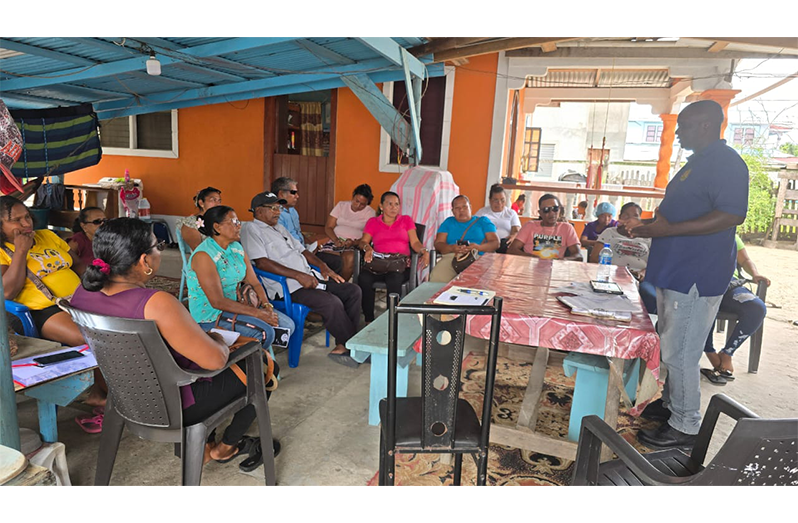
- Essequibo disability movement creates opportunities through agriculture
FOR Puran Ramdas, earning a livelihood is essential to inclusion.
The retired headmaster is putting this belief into practice on the Essequibo Coast, where members of the South Essequibo Coast Persons with Disability Movement (SECPDM) are raising Black Giant chickens to produce food, generate income, and take a more active role in their economic advancement.
Supported by the Guyana Livestock Development Authority (GLDA), the initiative connects that ambition with practical assistance: birds to start poultry ventures, training to build skills, and regular extension visits to help growers sustain their efforts.
For participants, it offers a tangible opportunity to turn daily care and commitment into something of value for their households.
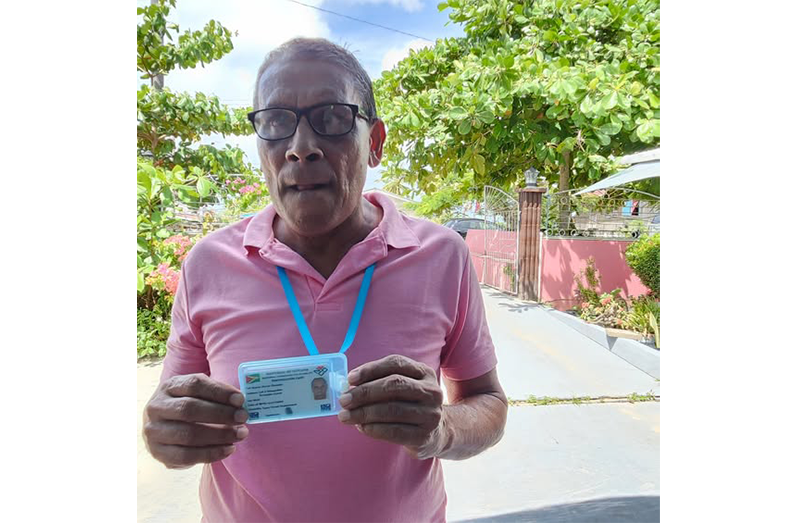
Ramdas’ determination to expand opportunities for people with disabilities drives the initiative. A visually impaired 66-year-old, he founded the movement in August 2023.
The community-based, non-profit group promotes disability awareness, advocates for equal opportunities, and supports members through livelihood initiatives and social activities.
By bringing together people with disabilities, families, and volunteers, it strengthens economic independence and participation in community life.
Originally from Wakenaam Island on the Essequibo River, Ramdas has carried his commitment to education into this community advocacy work.
His efforts centre on helping others access the support they need to participate more fully in social and economic life. Agriculture has become one practical way of advancing that mission.

The poultry project began taking shape in mid-2024, when the movement approached GLDA for Black Giant chickens to support members interested in raising birds.
The aim was to create manageable opportunities for production and income generation, supported by a fair process for selecting recipients.
To advance that proposal, the group compiled a list of interested members, vetted their eligibility against predetermined criteria, and submitted the final list to GLDA.
In October 2024, the first recipients received birds and began incorporating them into their poultry-rearing operations.
That initial distribution laid the foundation for an ongoing partnership.
According to Ramdas, the movement has since received approximately 2,000 birds in three distributions, with eligible members receiving allocations of 25 birds.
As members integrated those birds into their holdings, the project’s purpose became increasingly practical.

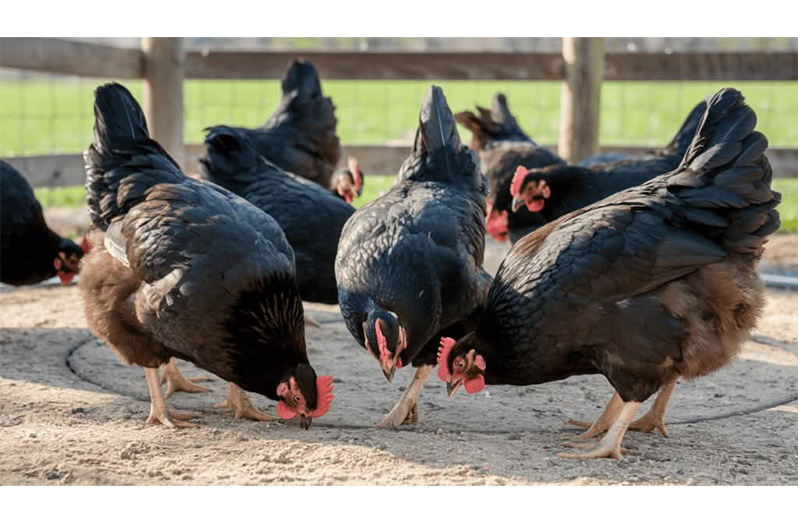
Black Giant chickens are raised for both meat and eggs, giving participants opportunities to meet household needs while earning income from sales.
These two forms of production let growers use their flocks in ways that fit their circumstances and priorities.
Within the group, this productive role is central to economic empowerment. Members care for their birds and develop their ventures, contributing to the broader goal of greater self-sufficiency.
In Region Two, ample market opportunities for both meat and eggs support these efforts, giving members an outlet for their produce and an incentive to sustain their ventures.
The growers take pride in supplying high-quality meat and eggs to people in the region, recognising that their work supports local food supplies as well as their own households.
Sustaining that work, however, requires more than an initial allocation of birds. Some growers face physical challenges in carrying out poultry-rearing tasks, so ongoing guidance and practical support are especially valuable.
GLDA’s Region Two livestock extension team, led by Ms Lashon Thomas, provides that continuity through regular visits and training.
Its engagement helps members build knowledge, address challenges, and maintain focus on flock care as the project progresses.
This ongoing support builds on the work of former GLDA Region Two extension officer, Ms Paula Daniels, who worked with the movement during its first phase.
Ramdas recalled that she visited recipients to assess their progress and commended their dedication to their poultry ventures.
“We are grateful for the support we receive from the Guyana Livestock Development Authority, especially Dr Walrond, the CEO, and the Region 2 GLDA Extension team headed by Ms Thomas, Region 2 Regional Coordinator,” he said.
That gratitude reflects a relationship that extends beyond distributing agricultural inputs. Throughout the project, members have had access to technical personnel who have guided their efforts and supported their development as poultry growers.
With this assistance, the initiative remains vibrant despite the physical challenges some participants face.
Their continued involvement underscores why agricultural support must be paired with opportunities to learn, seek advice, and build confidence through experience.
That participation also benefits more than individual households. Ramdas said members contribute birds to the movement’s monthly luncheon, allowing the products of their work to sustain a shared community activity.
In this way, poultry production has become part of a broader network of mutual support. Members raise birds to meet their own economic needs while also contributing to gatherings that bring the group together and strengthen its connections.
Those gatherings include members aged 16 to 71, with women comprising the majority. Held at Ramdas’ residence on the last Saturday of each month, the meetings provide a regular space for participation, companionship, and the movement’s ongoing work.
Maintaining that network is a collective effort. Ramdas’ wife, Ms Angela Singh, and his sons, Mr Juste Ramdas and Mr Vasquez Ramdas, support him.
Neighbours, friends, and members of the Vilvoorden Women’s Group also volunteer their time, especially during the monthly meetings.
Their contributions help connect the movement’s advocacy to the everyday support that makes participation possible. Alongside GLDA’s extension services, this community involvement gives members a foundation to keep developing their poultry activities.
For Ramdas, the project gives practical meaning to the cause he champions. Members care for their flocks, produce meat and eggs, earn income, and contribute food to their monthly gatherings.
Each activity affirms the movement’s purpose: creating opportunities for people with disabilities to use their abilities and shape their futures.
On the Essequibo Coast, that work takes root in agriculture, supported by a partnership that places members’ participation at its centre.