






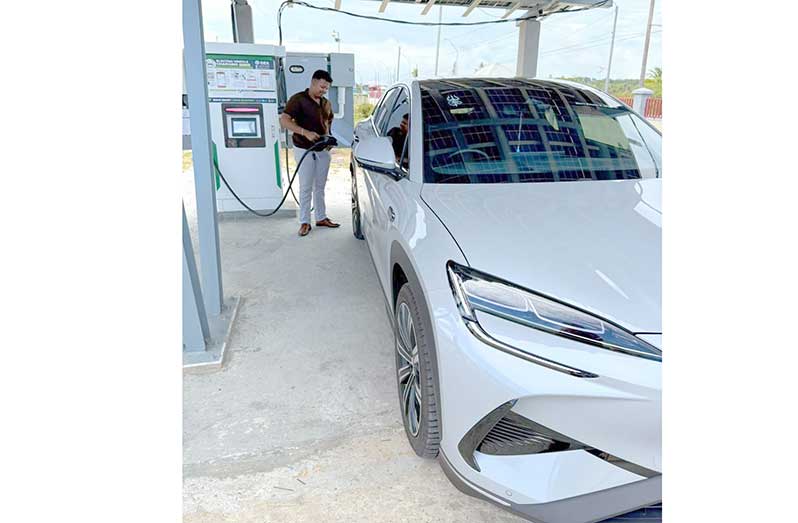
– facility combines renewable energy with technical and vocational education
THE Mahaicony Technical and Vocational Training Centre has introduced a solar-powered electric vehicle (EV) charging station, combining renewable energy technology with efforts to promote sustainable development and technical education in Guyana.
The public charging facility features a 60-kilowatt electric vehicle charger supported by a 15-kilowatt solar photovoltaic (PV) system, allowing users to charge electric vehicles using electricity generated partly from solar energy.
According to the Ministry of Education, charging costs G$80 per kilowatt-hour, with an additional session fee of G$220.
Users can arrange charging sessions and make payments digitally through the FlashChargeEV application, which also allows them to check availability before arriving at the facility.
The installation represents an effort to integrate renewable energy solutions into the operations of a technical and vocational training institution, while providing a public service for electric vehicle owners.
The initiative aligns with Guyana’s Low Carbon Development Strategy (LCDS) 2030, which promotes sustainable development, environmental protection and the use of cleaner energy solutions.
By incorporating solar technology into the charging infrastructure, the facility demonstrates how renewable energy systems can be applied in practical settings, including educational institutions and public services.
The project also provides an opportunity to expose students and the wider community to technologies associated with the transition towards lower-carbon energy systems.
Electric vehicles can help reduce emissions from road transport, particularly when charged using electricity generated from renewable sources. Solar-powered charging can further reduce reliance on conventional electricity generation, although the extent of the benefit depends on the amount of solar energy used and the source of any supplementary electricity.
The installation at Mahaicony Technical and Vocational Training Centre adds to the growing intersection between technical education, renewable energy and emerging transport technologies in Guyana.
The Ministry of Education said the initiative reflects the importance of collective action in promoting environmental responsibility and building a more sustainable future.




