–gov’t seeking international partner to develop aviation skills, human resources
GUYANA is positioning itself to become a global hub for aviation training and human resource development as the country seeks to build capacity to support the rapid expansion of its aviation sector.
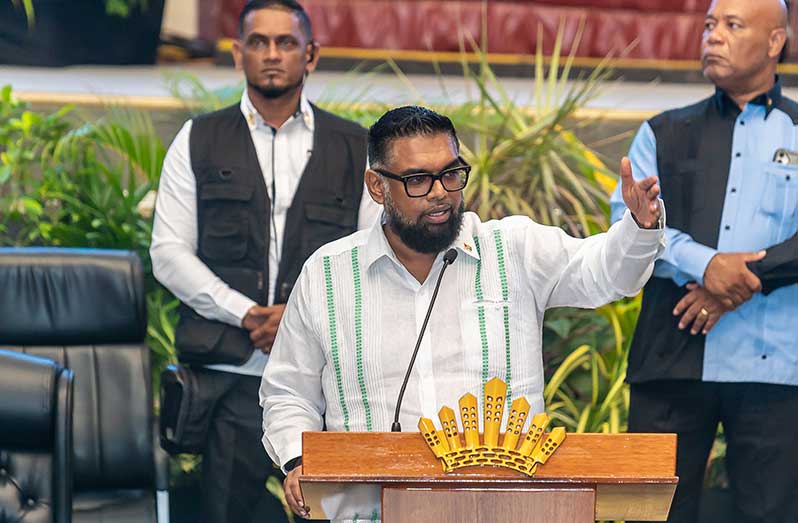
This was according to President Dr. Irfaan Ali during his address at the opening ceremony of the ICAO/EASA Third Global RSOO and RAIO Forum on Aviation Safety on Tuesday.
The President noted that the government is looking for an international partner to help establish a comprehensive aviation development ecosystem covering areas including safety, security, aircraft maintenance and pilot training.
He added that the development of human capital must remain central to Guyana’s aviation ambitions.
“We want to position Guyana as a human resource training and development hub for aviation globally,” the President said.
He related that the government wants to identify a partner that can work with Guyana to develop training infrastructure and programmes covering “every aspect of aviation”.
“We want to build in our education, development, and aviation hub here that deals with training comprehensively, and we are going to put the infrastructure in, but we are looking for that international partner,” Dr. Ali said.
The President said the need for greater investment in aviation training is being driven by a global mismatch between the demand for skilled personnel and the available supply of human capital.
Against this backdrop, he identified aviation and healthcare as two sectors where labour shortages are particularly evident, and said Guyana must assess the size of the gap both regionally and internationally.
“We have to have a comprehensive gap analysis within the region and globally, and to see how we position our markets to meet that gap,” he said.
According to the President, addressing the shortage of aviation personnel is also directly connected to maintaining safety as the sector expands.
With this, he highlighted the need for sufficient numbers of pilots and other aviation personnel, noting that shortages could result in increased utilisation of existing resources and inadequate rest for pilots, which has major safety implications.
“If we don’t have enough pilots, and pilots are not having the required rest, if we don’t have enough assets, and assets are stretched in terms of utilisation, all of this has an impact on safety,” he said.
President Ali noted that the push to develop aviation training capacity comes as Guyana’s aviation sector undergoes rapid expansion.
He disclosed that weekly seats have more than doubled over the past five years, while international and domestic passenger traffic, international flights, overflights and offshore flights have all recorded significant increases.
The number of airline operators has also grown from six to 22, while the number of destinations served has increased from six to 22.
President Ali said this growth must be accompanied by corresponding investment in human resources, regulatory capacity and safety oversight.
He said Guyana’s objective is not simply to expand its own aviation sector, but to also position the country to provide skills and expertise to the wider international industry.
“We want to find a way in which we can build this ecosystem with an international partner, and I’m looking for ideas. We’re looking for those who are ready to journey with us,” the President said.