– over 30,000 speeding tickets in six months
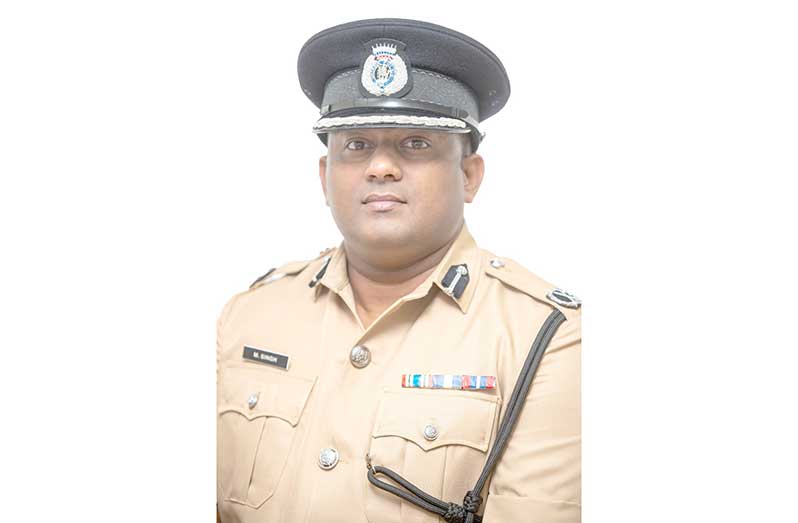
MORE than 30,000 speeding tickets issued during the first half of 2026 have prompted Traffic Chief and Assistant Commissioner Mahendra Singh to call for stronger penalties and greater accountability to curb dangerous driving and reduce road fatalities.
According to the government’s 2026 Mid-Year Report, the Safe Road Intelligence System (SRIS) issued 30,226 speeding tickets between January and June, bringing the total number of tickets issued through the system to 62,450 since its launch in April 2025.
Singh, in a recent interview with the Guyana Chronicle, said continued warnings and leniency would not be sufficient to bring about a lasting change in drivers’ behaviour.
He argued that penalties for serious traffic violations should be severe enough to deter repeat and reckless offending, including periods of licence suspension and, in certain cases, mandatory custodial sentences in addition to fines.
“This is my view, without any reservation, unless there is a cost attached to the actions of a driver, so punitive that it takes away from you, the driver’s licence for specific periods, and/or you make certain prison sentences mandatory to accompany the fines, there will not be any paradigmatic shift positively, where the culture of a driver’s behaviour is concerned,” Singh said.
He maintained that without meaningful consequences, motorists would continue to disregard traffic laws despite repeated appeals from the authorities.
“Unless and until that takes place, that such a measure is in place, we will not be seeing any change,” he said.
Singh also stressed that road safety cannot be treated solely as the responsibility of the Traffic Department, but requires co-operation from the wider population and all law- enforcement agencies.
He raised particular concern about the conduct of some law-enforcement officers, saying officers and other officials are also observed committing traffic violations.
“You will see all law-enforcement agencies, staff and officials, you will see them behave the same way. You will see them drive the same way,” Singh said.
He said such conduct could undermine road-safety efforts and contribute to the problem authorities are seeking to address.
“This will not lend to an enhancement of road safety. It will only lend to the escalation of the problem, making it larger,” the traffic chief said.
Singh further argued that authorities could not continue warning motorists about dangerous behaviour while expecting road fatalities to decline.
“We cannot go forward warning people or condoning what is taking place in the public domain and expect fatalities to reduce,” he said.
He noted that police officers have the authority to enforce traffic laws by issuing tickets, making arrests or charging offenders, but said ranks sometimes face criticism when they take a strict approach.
Singh also expressed concern about attempts by motorists to offer police officers money in exchange for leniency, after being stopped for traffic violations.
He said both the officer who solicits a bribe and the motorist who offers one could face criminal consequences.
“As you make the offer, so are you operating in a criminal manner too,” Singh said.
Meanwhile, the government’s mid-year report indicates that the SRIS is currently monitoring 112 lanes in Regions Three and Four, with a further 48 lanes expected to be added in Regions Four and 10 before the end of 2026.
The report also states that the installation of 8,000 automatic speed-control regulators is scheduled to begin during the second half of the year.
The expansion of automated enforcement comes as traffic authorities continue to target speeding and other prevalent violations on the country’s roadways.
Singh said technology, enforcement and legislation must be complemented by responsible behaviour from motorists, pedestrians and other road users if road safety is to improve.
“It is not a departmental issue alone. It is an entire force in an entire country. All are captured within the environment where this problem exists,” he said.