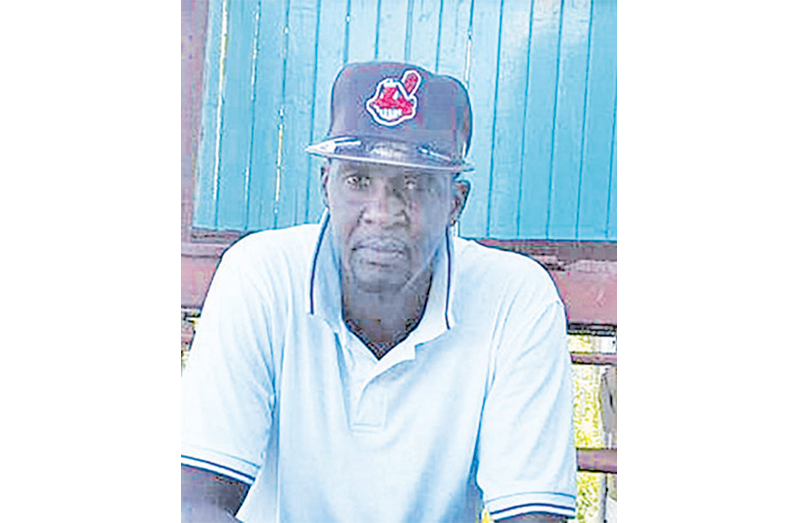
–cuts sentence from 56 to 15 years
THE Court of Appeal has overturned Foster Gravesande’s murder conviction and slashed his 56-year prison sentence to 15 years for the 2017 killing of his neighbour, 49-year-old Courtney Porter.
The court substituted the initial conviction with a manslaughter conviction on the ground of provocation.
Porter, a Mahaica, East Coast Demerara (ECD) resident who was known to Gravesande, was struck to the head with a piece of wood during an altercation on March 25, 2017.
He was hospitalised following the incident but succumbed to his injuries on April 9, 2017.

The recent ruling came in the appeal of Foster Gravesande v Director of Public Prosecutions (DPP), in which the appellate court found that a material misdirection by the trial judge concerning the defence of provocation deprived Gravesande of proper consideration of that defence by the jury.
Gravesande, 55, was represented by attorneys Nigel Hughes and Kiswana Jefford, while Assistant Director of Public Prosecutions, Mercedes Glasford, appeared for the DPP.
The Court of Appeal, however, rejected the argument that the jury’s original murder verdict was unreasonable based on the evidence.
It also found no error in the directions given by the trial judge on the defences of self-defence and accident.
The court found that the trial judge had adequately identified and explained inconsistencies and omissions in the prosecution’s evidence, and had properly directed the jury on how those matters should be assessed.
It also determined that the jury had been correctly instructed that the prosecution bore the burden of disproving the defences of self-defence and accident.
However, the appellate court took issue with how provocation was presented to the jury.
While the trial judge had correctly stated the legal principles governing provocation, the Court of Appeal found that he failed to connect those principles to the evidence that formed the basis of Gravesande’s defence.
That evidence centred on an alleged confrontation between Porter and Gravesande’s wife.
According to the defence evidence, Porter had confronted Gravesande’s wife in the street, allegedly tearing her clothing and grabbing her. Gravesande reportedly intervened and twice demanded that Porter release his wife.
The defence maintained that Gravesande subsequently threw a stick in Porter’s direction.
The defence had relied on self-defence, accident and provocation in seeking to explain the circumstances surrounding the incident.
The Court of Appeal held that the trial judge’s failure to relate the law on provocation to the evidence concerning the alleged assault on Gravesande’s wife was significant.
The court concluded that the omission deprived Gravesande of a meaningful opportunity to have the jury consider whether the circumstances amounted to provocation.
It further held that it could not be satisfied that a properly directed jury would inevitably have convicted Gravesande of murder. Consequently, the murder conviction could not be preserved by the proviso.
Rather than ordering a retrial, the appellate court substituted a conviction for manslaughter by reason of provocation.
In resentencing Gravesande, the Court of Appeal considered the circumstances in which Porter died, noting that the fatal injury resulted from a single blow delivered with a weapon of opportunity during what appeared to have been a spontaneous incident.
The appellate court fixed a starting point of 18 years’ imprisonment before reducing the sentence to 15 years after taking mitigating factors into account.
Among those factors were Gravesande’s status as a first-time offender, his lack of a history of violence and the fact that he had acted in response to an assault on his wife.
The 15-year sentence is effective from the date of his original sentencing and is subject to credit for the time Gravesande spent on remand.
The period the convict spent on remand — nearly four years — is to be deducted from the sentence, leaving an effective remaining sentence of approximately 11 years.
The latest ruling significantly alters the outcome of a case that dates back more than nine years.
The Guyana Chronicle had previously reported that Gravesande, then 50, was sentenced in January 2021 after being convicted by a 12-member jury in December 2020 for the murder of Porter.
During his sentencing hearing before now Chief Justice Navindra Singh at the High Court in Demerara, Gravesande pleaded with the court for mercy and apologised to Porter’s family.
He also expressed a willingness to provide financial assistance to the victim’s relatives.
The prosecution had described the matter as “the senseless killing of one friend by another,” highlighting that Gravesande and Porter were known to each other.
Justice Singh ultimately sentenced Gravesande to 56 years’ imprisonment, with the possibility of parole after he served 28 years. The trial judge had found no mitigating factors at the time, including on the issue of remorse.
The Court of Appeal has now replaced that murder conviction with manslaughter by reason of provocation and substantially reduced the period of imprisonment.
Gravesande has since applied for leave to appeal the Court of Appeal’s decision to the Caribbean Court of Justice (CCJ).