






–as Court of Appeal allows case to continue but blocks final decision pending expedited constitutional challenge
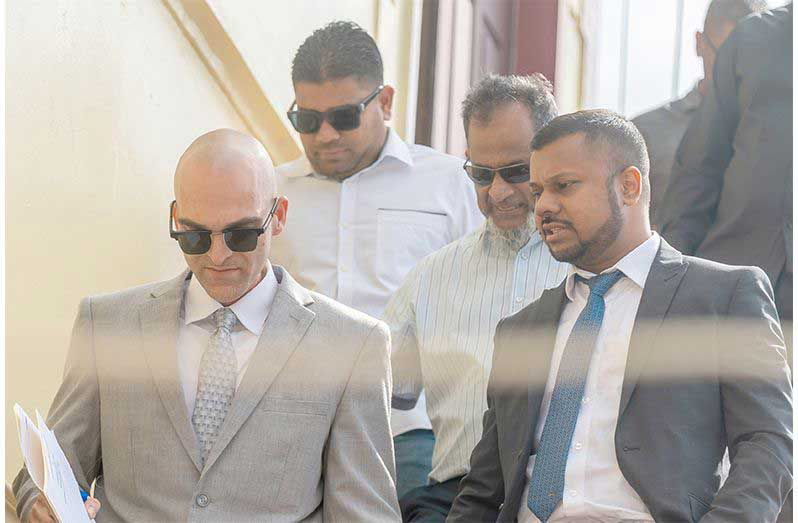
AFTER a string of unsuccessful legal challenges aimed at derailing their extradition, Opposition Leader Azruddin Mohamed and his father, businessman Nazar Mohamed, have again failed to secure a complete halt to the proceedings against them.
The Court of Appeal has instead ordered that the extradition case continue before Chief Magistrate Judy Latchman on September 3, 2026, while preventing her from making a final
determination until the latest constitutional appeal is heard and decided.
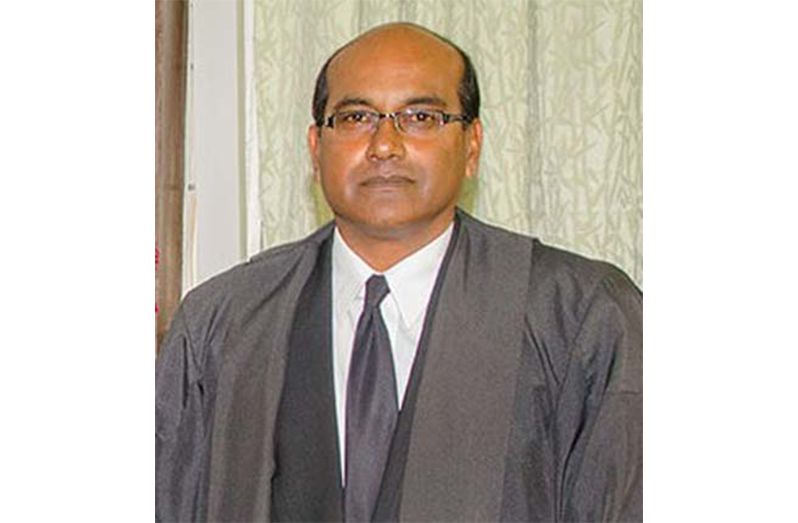
The unanimous ruling was handed down on Thursday by Acting Chancellor of the Judiciary Justice Roxane George, SC, sitting with Justices of Appeal Rishi Persaud and Nareshwar Harnanan.
The court was considering an application by the fugitive offenders for a stay of the extradition proceedings pending the determination of their substantive appeal, which challenges the constitutionality of provisions of the Fugitive Offenders (Amendment) Act.
In its ruling, the Court of Appeal said it was not satisfied that the proceedings should be brought to a complete stop. However, it found that it was appropriate to allow the Magistrates’ Court process to continue while protecting the effectiveness of the constitutional appeal by preventing a final decision in the extradition matter.
The Court of Appeal ruled, “The extradition proceedings in the Magistrate’s Court involving the Appellants are to proceed; howsoever, that the final disposition of the said proceedings by the presiding magistrate is stayed until the hearing and determination of this appeal.”
The Court of Appeal has ordered that the constitutional appeal be heard on an expedited basis, with the Mohameds required to file their Record of Appeal by September 4 and written submissions by September 9.
The Attorney General is to file his submissions by September 23, with the appellants allowed to respond by September 30, while the substantive appeal is scheduled for hearing on October 13, 2026, at 09:30hrs.
The latest legal battle stems from a constitutional challenge brought by the Mohameds against provisions governing the extradition process.
Acting Chief Justice Navindra Singh, in a February ruling, found that Section 8(3)(B) of the Fugitive Offenders Act was inconsistent with the Constitution, while upholding the other provisions challenged by the two men.
The Mohameds subsequently appealed that decision and are seeking to have the constitutional questions determined before the extradition proceedings can reach a conclusion.

Senior Counsel Roysdale Forde, assisted by attorneys Siand Dhurjon and Damien DaSilva, represented the Mohameds in the latest application.
Attorney General Anil Nandlall, SC, appeared in person for the State, assisted by Solicitor General Nigel Hawke, Deputy Solicitor General Shoshanna Lall, Joshua Cullen, and Dishon Persaud.
Forde has argued that the constitutional issues were sufficiently serious to warrant interim protection, while expressing concern about the consequences of allowing the Magistrates’ Court proceedings to advance before the appeal was determined.
The defence has contended that provisions of the legislation improperly give the executive a role in a process that should remain within the judiciary, raising issues concerning separation of powers and judicial independence.
Nandlall argued that the Mohameds had not shown that allowing the committal proceedings to continue would undermine their constitutional appeal, noting that committal would not have resulted in their immediate surrender to the United States.
He maintained that the men remained protected by available legal remedies, including habeas corpus, appeals and bail, and that another stay would have further delayed an already interrupted extradition inquiry.
Nandlall therefore urged the Court of Appeal to refuse the stay while supporting an expedited hearing of the constitutional appeal.
The latest application is another chapter in the Mohameds’ prolonged legal battle over the extradition request made by the United States.
The U.S. formally requested their extradition on October 28, 2025, after which Home Affairs Minister Oneidge Walrond issued an Authority to Proceed (ATP) on October 30 under Section 12 of the Fugitive Offenders Act.
The ATP formally set the extradition machinery in motion and required the Magistrates’ Court to proceed with the matter.
Latchman subsequently issued warrants for the arrest of the two men, who were arrested on October 31, 2025, and brought before the court. They were each granted $150,000 bail, with conditions requiring them to surrender their passports and report to the Ruimveldt Police Station every Friday while the extradition proceedings continue.
The committal proceedings commenced on January 6, 2026, but were interrupted by the successive legal challenges mounted by the Mohameds.
The first major challenge was raised before Latchman, who on December 10, 2025, rejected preliminary constitutional and bias questions raised by the Mohameds as frivolous and vexatious.
On December 23, 2025, they moved to the High Court, seeking, among other reliefs, to have the ATP quashed and the extradition proceedings stayed. Acting Chief Justice Singh dismissed that application on February 4, 2026, and refused the stay.
They appealed to the Court of Appeal the following day and again sought a stay.
The Court of Appeal dismissed that challenge on March 17, 2026, upholding the High Court’s decision.
The Mohameds then pursued the matter before the CCJ, which, in March, temporarily stayed the extradition proceedings before ultimately dismissing their appeal on July 29.
That stay was subsequently lifted, allowing the extradition case to proceed.
The Mohameds had argued that Home Affairs Minister Oneidge Walrond, and the Attorney General were politically biased against them when the ATP was issued. However, the CCJ rejected the bias challenge and dismissed their appeal.
The current proceedings therefore return to the Magistrates’ Court, where the U.S. is seeking the surrender of the two men to face criminal charges in the United States.
The extradition case stems from a multi-year U.S. investigation into an alleged gold-export and tax-evasion scheme involving the Mohameds, which prosecutors said resulted in more than US$50 million in unpaid taxes and royalties.
The Mohameds are the subjects of an 11-count US indictment involving allegations including wire fraud, mail fraud, money laundering, conspiracy, and customs offences.
They have denied the allegations and have challenged the extradition process on constitutional and procedural grounds.
The extradition proceedings are scheduled to resume before Chief Magistrate Judy Latchman on September 3, 2026, with further full-day hearings set for September 4, 7, 8, 9 and 10.
One witness has testified so far—Permanent Secretary of the Ministry of Foreign Affairs and International Cooperation Sharon Roopchand-Edwards, who was being cross-examined when the proceedings were interrupted.




