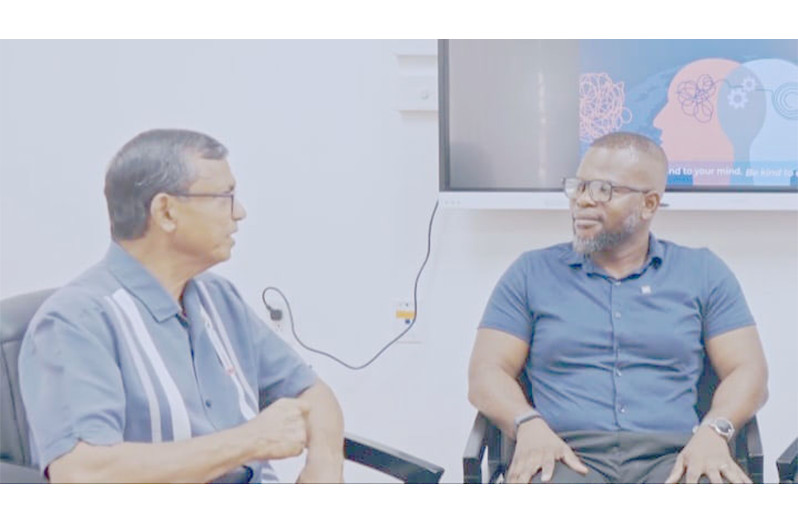
THE Ministry of Health’s Mental Health Unit is seeing a growing number of men taking the initiative to seek professional help for mental, emotional, sexual and reproductive health concerns, signalling a gradual shift in attitudes towards issues that were once rarely discussed openly.
Head of the Mental Health Unit at the Georgetown Public Hospital Corporation (GPHC), Dr. Bhiro Harry, said while stigma surrounding mental illness remains, the department’s work over the years has contributed to a significant change in the willingness of men to come forward.
“Very long ago, rarely you would get a man coming in to say, ‘Look, I have problems, I don’t sleep, I’ve been sad, or I have bad thoughts,’” Dr. Harry said.
He noted that men would more often describe their experiences simply as stress, poor sleep, unhappiness, difficulty concentrating or having problems, rather than identifying them as mental-health concerns.
“Today, what we have found is that men will come in and tell you up front that I am having these problems,” he said.
Dr Harry said the change is also evident in the willingness of men to discuss sexual and reproductive health concerns, which have traditionally carried an additional layer of stigma.
He explained that whereas men previously might have presented with general complaints such as back pain, tiredness or weakness, some are now more direct about seeking help for intimate health concerns. The change, he said, reflects a broader evolution in how men approach their well-being.
“We have evolved,” Dr. Harry said. “What has caused that evolution, I am not sure but I have some ideas,” he added.
For many years, mental-health professionals would often encounter concerns about men through their family members. A wife, parent or other relative would seek assistance, and conversations would eventually lead back to the male figure in the household.
Dr. Harry said men are increasingly becoming active participants in that process themselves. The shift is particularly significant against the backdrop of traditional expectations of masculinity, where men are often expected to be responsible, dependable and strong for their families and communities.
During a discussion, Dr. Harry highlighted the “silent battle” that men frequently face while managing multiple forms of stress and responsibility.
He said being a man involves being present for one’s family, upholding values and serving as a role model, but those responsibilities do not remove the need for men to care for their own well-being. Despite the progress, Dr. Harry stressed that stigma has not disappeared.
“The stigma still exists,” he said, noting that some patients still request additional privacy because they do not want others to know they are seeking care.
However, such requests are now relatively uncommon, pointing to the progress made through years of work within the Mental Health Unit.
The changing behaviour among men reflects a wider effort to normalise conversations around mental health and encourage people to seek assistance before challenges become more difficult to manage.
For the Mental Health Unit, the growing number of men who are willing to walk through the doors and speak openly about their concerns represents an important step forward.
Experts note that erectile dysfunction is not always only a physical issue, as stress, anxiety, depression and relationship pressures can also play a major role in men’s sexual health. Research shows that psychological factors account for a meaningful share of cases, and men living with anxiety or PTSD are especially vulnerable Health professionals say this is why open conversations matter, because early support can help men address both the emotional and physical sides of the problem before it affects confidence, relationships and overall well-being