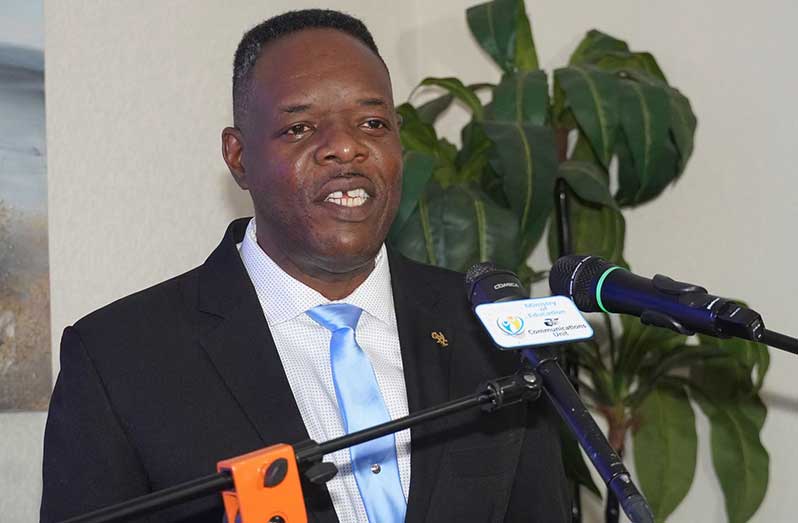
THE skills behind the Caribbean’s colourful carnivals, crafts, creative industries and emerging orange economy could soon be formally certified under new certification models being rolled out by the Caribbean Examinations Council (CXC), according to Registrar and Chief Executive Officer (CEO) of the Caribbean Examinations Council (CXC), Dr Wayne Wesley,
Dr Wesley said the new models are intended to expand the way people can gain qualifications, while also allowing Caribbean countries to develop programmes based on their own economic priorities and emerging sectors.
In an invited comment on the sidelines of a recent event, Wesley related that CXC has moved beyond its traditional qualifications, including CSEC, CAPE, associate degrees and diplomas, by introducing new approaches that can combine CXC qualifications with national programmes, or allow countries to develop their own programmes.
He noted, “CXC has developed what we call our product-innovation model, which now gives our standard classical product, which persons are used to, the CSEC, the CAPE, our associate degrees and diploma. But now we have created two new additions to our services that we provide, and that is hybrid innovation and proxy innovation.”
The hybrid innovation model will allow countries to combine existing CXC products with specialised programmes developed around national priorities.
Wesley said this could mean a programme created by a member state uses a newly developed Caribbean Targeted Education Certificate (CTEC) qualification, CSEC or CAPE alongside a specialised national programme, with CXC working with the country to certify students.
As he explained, “The hybrid innovation is simply combining products from CXC with products at the national level that is [sic] of importance to that particular country in awarding a particular qualification.”
According to Wesley, this approach will allow member states to make use of CXC’s established qualifications while ensuring that programmes also respond to the specific skills and areas of development needed in their countries.
He stated, “Countries and member states might develop a programme that will utilise our newly minted CTEC qualification or our CSEC or our CAPE to be combined with specialised programmes that is [sic] unique to their country’s priority, and we work together to certify the students in those areas.”
The second model, known as proxy innovation, will give member states greater flexibility to design programmes of their own, with CXC providing quality assurance and regional recognition.
Dr Wesley said CXC would assess these programmes against its skills-and-competency framework, which was developed to identify the skills needed for economic development and employability.
“The other product-innovation model that we have come up with is that of the proxy innovation. This is where member states are now able to design their own programme[s],” he said.
Dr Wesley related that the framework covers five thematic areas and 15 sub-theme areas, including problem solving, communication skills and critical thinking.
The aim, he said, is to ensure that programmes being developed across the region are aligned with the competencies students need to become productive members of their economies.
Dr Wesley further noted, “CXC will come in and quality assure those programmes, giving it regional recognition within the context of global acceptance because CXC is globally recognised.”
The new models could also open a pathway for people with practical and creative skills to gain formal recognition for abilities that are often demonstrated outside traditional classrooms.
He pointed specifically to the region’s growing focus on the orange economy, noting that events such as carnivals and cultural festivals showcase a wide range of skills that can now potentially be certified.
Dr Wesley shared, “There are certain areas of that economy like the design, the craft, the cultural skills, and the design skills that persons will display in our carnivals, in our Crop Over in the case of Barbados, and the carnivals in the case of Trinidad and Tobago and those festivals that we have right across the region. There are several skills that are being demonstrated in those events and activities that we can now certify.”
He said the certification process would provide a quality-assurance seal that could give people greater confidence in qualifications earned through nationally developed programmes.
Dr Wesley said once programmes meet the required standards under the CXC’s framework, the qualifications could receive recognition beyond the country where they were earned, giving skilled Caribbean people greater opportunities to apply their abilities internationally.
As he added, “Persons can be assured that the qualification that they receive at the national level will now have regional recognition and global acceptance. So, our students are not limited to performing or applying their skills in the region, but globally as well.”