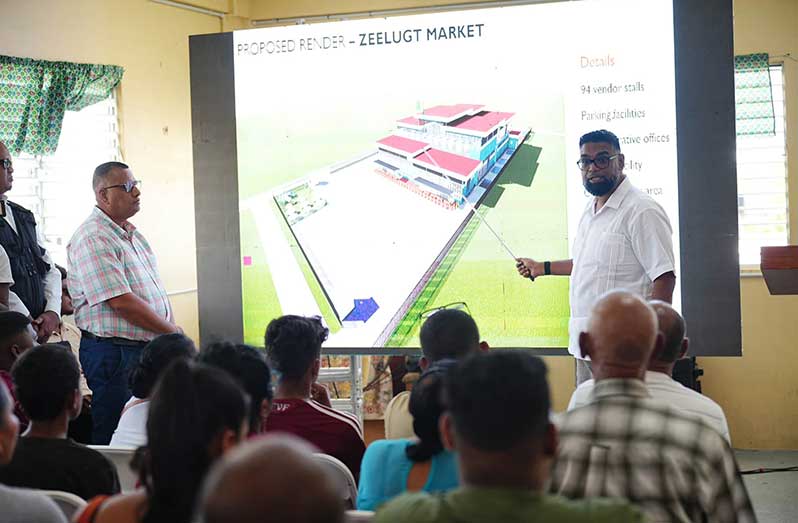
–President Ali tells residents, as widespread public consultations begin on new ‘Model Village Initiative’
–emphasises stakeholder input key to process as persons know best what their needs are
PRESIDENT Dr Irfaan Ali has rolled out an ambitious, nationwide village development programme built around four pillars: connectivity, community, commerce and care, that will touch every village in Guyana.
Addressing the beginning of the public consultations on this “Model Village initiative” in Leonora on the West Coast Demerara on Monday, Dr Ali told residents that national prosperity must translate into “community prosperity,” and warned that rapid growth must not turn villages into mere “dormitories” where people only sleep.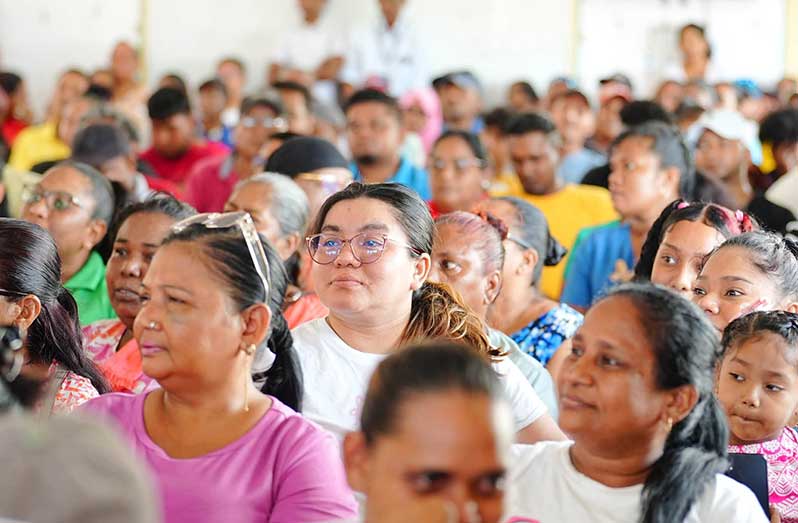
“If development does not reach the level of the village, then development has not fully reached the people,” Dr Ali said, adding: “We are launching a programme that would eventually touch every single village in our country.”
Citing the 2022 national census, the President noted that almost three out of every four Guyanese still reside in villages, even with the increase in the number of towns.
He described the coastland as “essentially a ribbon of villages, stretching from Crabwood Creek to Charity,” arguing that any serious development strategy must start where most people actually live.
Consultations continued throughout Monday at Zeelugt, Goed Fortuin, Parfait Harmonie and Tuschen, before concluding at the Pouderoyen Market.
The exercise moves to Region Four today, with sessions scheduled for Kaneville, Grove and Diamond along the East Bank of Demerara.
Dr Ali stressed that residents, not the government alone, must drive the design of their villages, since they understand local needs best.
“We are not here simply to tell you what the village should look like. We are here to listen, because the people who live in the village know that village better than anyone else,” he said, adding: “You know where the roads are needed. You know where the drainage problems are. You know where the children play. You know where the businesses are. You know where the heavy machinery creates problems. You know where lighting is needed. You know where the playground should be. You know where services are missing. You know what makes your village special.”
While the government will improve infrastructure, services and the policy environment, the President said villages should be seen as an “ecosystem” that produces food, skills, businesses, artisans and community leaders, not simply a cluster of houses.
He described the village as the historic cradle of the nation, where schools, churches, mosques, temples, farms and workshops were first built, and where artisans once passed their skills from generation to generation.
Laying out his vision for a model village, Dr Ali explained that such a community is not defined merely by paved roads or streetlights, but by a place where people can live well, work, learn, raise families, worship, build businesses, access services and feel a strong sense of belonging.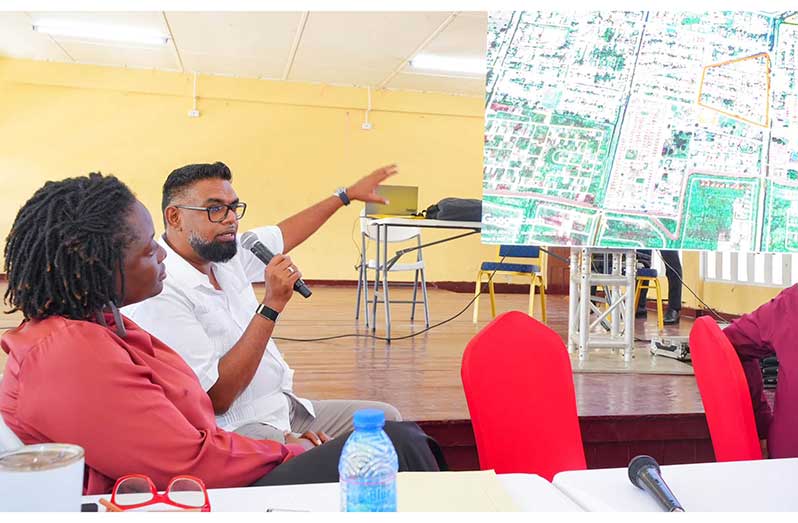
“It should be physically sound, socially connected, economically productive, environmentally attractive and safe. And importantly, it should retain its own character,” he said, noting: “We do not want to erase the character of our communities. We want to develop villages that are well planned while preserving what makes each village unique.”
On connectivity, the President said the focus will be on proper roads, bridges, culverts, reliable drainage, street lighting, pedestrian crossings, parking, and designated areas for heavy-duty machinery, while ensuring residents are efficiently linked to schools, workplaces, markets and services.
He said the key questions are whether children can get to school safely, whether farmers can transport produce to market, whether emergency services can respond quickly, and whether businesses can operate efficiently.
On the community front, Dr Ali said the aim is to rebuild the social fabric so that villages become more than a collection of houses, while on commerce, he argued that villages cannot thrive if residents must leave daily to find economic opportunity elsewhere.
Instead, the government wants to make villages economically self-sustaining, with space for agriculture, markets, shops, workshops, light manufacturing, digital businesses and other forms of entrepreneurship.
The final pillar, care, speaks to the quality, dignity and well-being of residents, Dr Ali said, including access to education, health services, safety and security, and inclusion of persons with disabilities.
It also covers stewardship of the physical environment, such as proper waste management, clean drains, maintained bridges, green spaces and trees.
“The village must be a place of care and concern, a place of cradling the future,” he said, noting: “Care must become a community value. We must develop a culture in which people say, ‘This is my village, and I have a responsibility for how it looks and how people live in it.’