—Credits Toshaos, village councils for accountable stewardship of LCDS resources
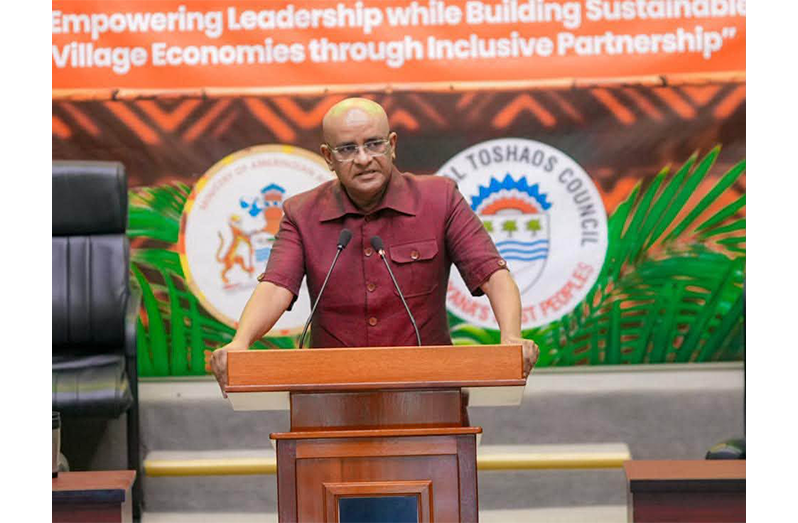
VICE–PRESIDENT, Dr Bharrat Jagdeo, has commended Amerindian village leaders for their stewardship of billions of dollars in Low Carbon Development Strategy (LCDS) resources, saying communities have outperformed international agencies in implementing development projects while demonstrating the effectiveness of local governance.
The Vice President made the remarks while addressing Indigenous leaders at the National Toshaos Council (NTC) Conference recently.
He noted that more than $14 billion earned through Guyana’s LCDS has been allocated to over 250 Amerindian villages over the past three years, enabling the successful completion of more than 3,000 community projects.
He credited Toshaos and village councils for ensuring that the funds were managed responsibly and spent in accordance with priorities identified by residents.
“We have been able to directly allocate funds to the villages through the LCDS that we earn, for the villages to spend this money in a way that they, the people of the villages, see fit, and that has yielded enormous benefits to people, with over 3,000 projects in these 250-something villages completed,” Dr Jagdeo said.
The Vice President described the achievement as a testament to the management capabilities of Amerindian communities, arguing that the results have disproved the belief that development initiatives are more effectively managed by external organisations.
“It’s a perfect example of good governance and hard work at the village level,” he said, adding that village leaders have demonstrated accountability while delivering projects that directly benefit their communities.
Dr Jagdeo contrasted the performance of the villages with projects managed by international agencies, saying some initiatives funded under the country’s first LCDS remain unfinished more than a decade after implementation began.
“We have great faith sometimes in people who come from abroad to manage things,” the Vice President said, noting that some international organisations were given responsibility for managing projects in Amerindian villages but have progressed slowly.
“We still have projects that we gave to be managed by the UNDP since 2011, when we got the money from the first LCDS, and they have not been completed as yet,” he added.
By comparison, he said Amerindian communities have received more than $14 billion through the current LCDS over the past three years and have successfully implemented thousands of projects while ensuring transparency and accountability in the use of public funds.
“You have used the money, and you have used it in an accountable way, based on the wishes of your community, and you’ve implemented the projects,” Dr Jagdeo reiterated.
Against this backdrop, he said Guyana’s experience should serve as an example to the international community, demonstrating that Indigenous communities are fully capable of managing development financing and delivering results without relying on external intermediaries.
Dr Jagdeo noted that LCDS investments have complemented wider Government spending on education, healthcare and infrastructure in hinterland communities, ensuring residents benefit both from improved public services and direct financing for projects identified by their own villages.