–in announcement of next phase of investment
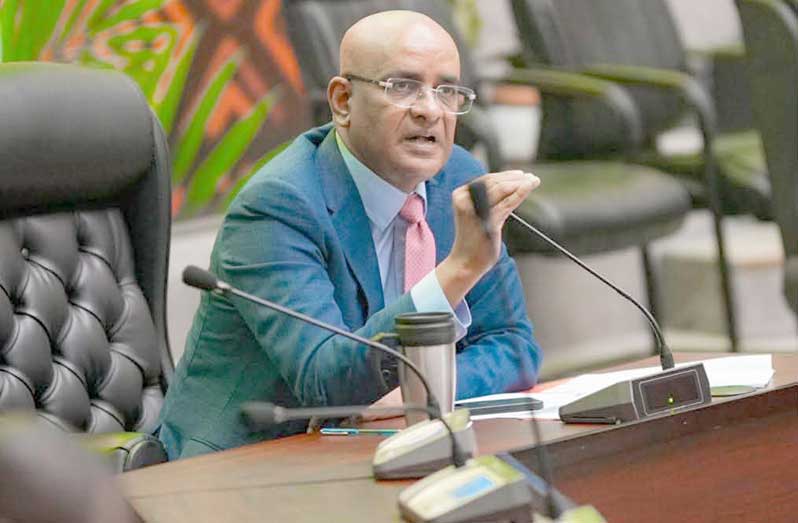
VICE-President Dr Bharrat Jagdeo has outlined what he described as a major shift in the government’s approach to hinterland development, announcing that the next phase of investment will prioritise creating jobs, expanding income-generating opportunities and building sustainable village economies across Amerindian communities.
Dr Jagdeo made this known while addressing village leaders at the National Toshaos Council (NTC) Conference at the Arthur Chung Conference Centre, during which he said that while the government has made significant investments in education, healthcare, infrastructure and community development since returning to office in 2020, the focus must now shift towards ensuring residents, particularly young people, can build livelihoods and businesses within their own communities.
“We now need to shift to other things that the residents want in these villages, and the first thing is income-generating activities, so people can make money. The young kids who live in your villages can start earning… without having to leave,” the Vice President said.
He noted that the discussions with Toshaos over the coming days would centre on identifying sustainable economic opportunities unique to each village, recognising that no single development model would suit every community.
According to Dr Jagdeo, the government wants villages to focus on industries with long-term market potential rather than short-term ventures, while ensuring projects are tailored to each community’s natural resources, location and strengths.
“We have to make a transformation, a qualitative shift, because in your villages that’s the biggest demand. Young people say, ‘What about jobs for us?’ There are lots of jobs on the coast, but they shouldn’t have to migrate to get those jobs,” he said.
To support that transition, Dr Jagdeo announced that the government intends to establish innovation and technical support hubs in every administrative region.
These centres, outlined in the People’s Progressive Party/Civic’s 2025 manifesto, would help communities diversify their economies, identify viable industries and provide technical support to develop sustainable enterprises.
He said villages would work alongside the government to determine the most suitable projects for their communities, pointing to examples such as large-scale coconut cultivation, honey production and other region-specific agricultural and forestry enterprises capable of generating long-term employment and significant village income.
He stressed, however, that economic development must be supported by the right infrastructure.
“No use we talk about economic activities, but we don’t have, say, a road to the farm or a track to get into the forest,” he said, while emphasising that roads, access trails and other productive infrastructure would become key priorities alongside economic planning.
Meanwhile, housing was another priority identified by the Vice President, who said the government intends to work with village leaders to develop models to support home construction, home improvements and assistance for vulnerable families living in hinterland communities.
Dr Jagdeo said these initiatives would complement the substantial investments already made in improving living standards across the hinterland.
He noted that more than $14 billion earned through Guyana’s Low Carbon Development Strategy (LCDS) has been allocated directly to Amerindian villages, resulting in more than 3,000 community projects over the past three years.
Dr Jagdeo added that while investments in education, healthcare and infrastructure would continue, including new hospitals and upgraded public services, the government believes the next phase of hinterland development must focus on building stronger local economies that create lasting employment and wealth for Amerindian communities.
“This is the direction we want to take together,” he told the gathering, adding: “We want to work with you to build sustainable economic opportunities that improve lives and allow people to prosper right where they live.”