





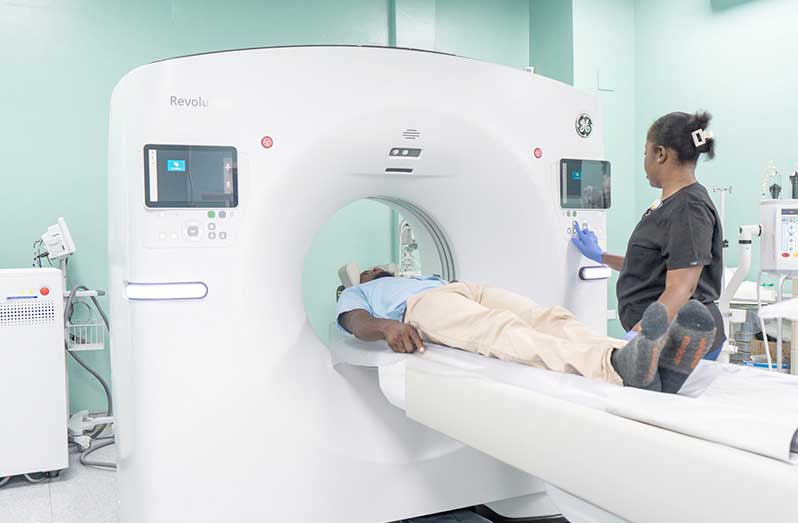
PATIENTS at the Georgetown Public Hospital Corporation (GPHC) are now benefitting from faster and more advanced CT imaging services following the full operationalisation of the hospital’s new GYD 282,058,200 CT scanner on Monday.
The new system is expected to improve diagnostic accuracy through clearer, higher-resolution images, while strengthening radiation-protection measures and increasing the efficiency of patient examinations.
It also incorporates multilingual instructions to help patients better understand and follow directions during scans, improving both the examination process and patient comfort.
The scanner became fully operational after specialised training was completed for GPHC radiologists, radiographers, CT technologists and other support staff responsible for delivering the service.
The investment comes after the hospital’s previous CT scanner experienced frequent technical problems and extended periods of downtime. During that period, GPHC partnered with private healthcare providers to ensure that urgent and critically ill patients continued to receive CT scans at no cost to them, with the corporation covering the full cost of the examinations.
However, the disruptions resulted in longer waiting times for some non-urgent patients.
With the new scanner now in service, the Medical Imaging Department is expected to focus on reducing the existing backlog and shortening waiting times, while strengthening diagnostic support for key departments, including Accident and Emergency, Internal Medicine, Surgery and Cardiology.
A CT, or computed tomography, scanner uses X-rays and advanced computer technology to produce detailed cross-sectional images of the body. The technology assists doctors in diagnosing injuries, diseases and a wide range of other medical conditions.
The investment forms part of GPHC’s broader efforts to modernise healthcare services and improve patient care.
Further expansion of advanced diagnostic services is planned through the hospital’s new Medical Imaging Centre, which is expected to house an additional CT scanner, the first MRI machine in Guyana’s public healthcare system, a cardiac catheterisation laboratory and other advanced imaging technologies.





