– research across Rupununi identifies more than 700 species using advanced conservation technologies
GUYANA has taken a significant step towards establishing a nationwide biodiversity monitoring system following the completion of the Sustainable Wildlife Management (SWM) Programme’s biodiversity research, which has documented more than 700 species across the Rupununi using a combination of cutting-edge technologies and Indigenous ecological knowledge.
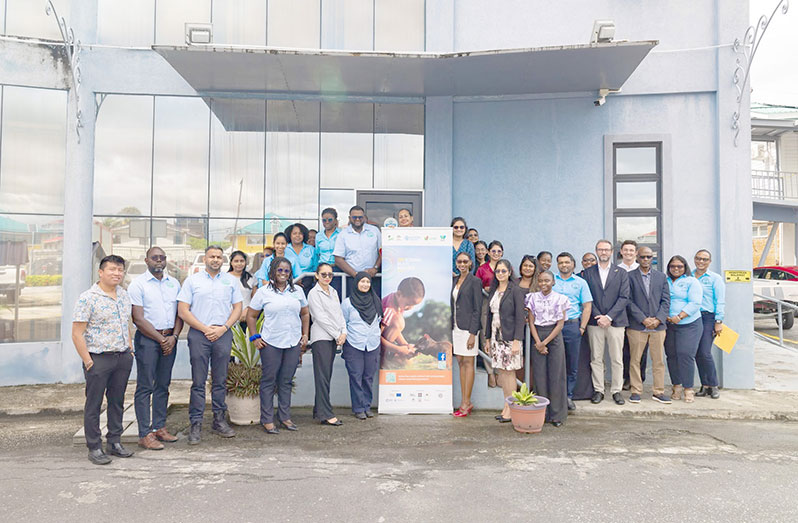
The programme recently presented the consolidated findings from its eight-year implementation, including preliminary results from its two-year biodiversity component, during a stakeholder review at the Environmental Protection Agency (EPA) boardroom in Georgetown.
The research is expected to guide the design of the National Biodiversity Monitoring Initiative, an ambitious border-to-border system that will track Guyana’s wildlife and ecosystems using scientifically tested monitoring methods.
Officials involved in the programme said the initiative represents one of the most comprehensive biodiversity monitoring efforts undertaken in the country and is expected to strengthen conservation planning, environmental management and sustainable use of natural resources.
The biodiversity component was conducted in seven villages across the Rupununi and evaluated six different monitoring methods to determine which approaches provide the most accurate and cost-effective means of tracking wildlife populations.
Researchers assessed camera trapping, passive acoustic monitoring, bird counts, environmental DNA (eDNA), local ecological knowledge and fish stock assessments, focusing on three major groups of wildlife—fish, mammals and birds.
Preliminary findings showed that each method excelled in monitoring different species groups.
Passive acoustic monitoring proved particularly effective in detecting birds, frogs and other vocal species, identifying 459 species during the study.
Camera trapping recorded 88 species and was found to be the most effective method for monitoring large mammals and ground-dwelling birds.
Researchers also found that species richness was highest in areas surrounding Rewa, Katoka and Maruranau, highlighting the ecological importance of these locations.
A major achievement of the project was the development of a regional artificial intelligence model capable of identifying 445 species classes, making it one of the largest regional biodiversity identification databases created to date.
Environmental DNA sampling also produced significant results.
Using 133 eDNA samples collected from water sources, researchers identified 276 vertebrate species, including 195 fish species, 32 mammals, 22 amphibians, 11 birds and 10 reptiles.
Among those detected were seven threatened species comprising four mammals, two turtle species and one fish species.
Overall, the combined use of camera trapping, acoustic monitoring and eDNA resulted in the detection of more than 700 individual species, demonstrating the value of integrating multiple scientific techniques to obtain a more complete picture of biodiversity.
The project concluded that camera trapping remains the most effective approach for monitoring mammals, while acoustic monitoring is best suited for birds and eDNA provides the strongest results for identifying fish populations.
Beyond collecting scientific data, the programme also focused on building capacity within Indigenous communities that participated in the research.
At the conclusion of the biodiversity component, researchers returned to each participating community to present the findings, demonstrate how to use digital biodiversity dashboards and provide hard drives containing all of the raw data collected during the project.
Officials said this approach ensures that communities remain active partners in environmental stewardship while strengthening local capacity for future biodiversity monitoring.
The findings will now be incorporated into the design of Guyana’s National Biodiversity Monitoring Initiative, envisioned as the country’s first comprehensive, border-to-border wildlife monitoring system.
Programme representatives described the initiative as a pioneering effort that could become one of the first biodiversity monitoring systems of its scale anywhere in the world.
The results will also be compared with data from Sustainable Wildlife Management Programme sites in other participating countries, contributing to global research on multi-method biodiversity monitoring and conservation.
Programme officials expressed appreciation to the Indigenous communities whose participation made the research possible, noting that local knowledge and community involvement were central to the project’s success.
Gratitude was also extended to the European Union for its continued financial support, the Guyana Wildlife Conservation and Management Commission (GWCMC), which served as the implementing partner, the Food and Agriculture Organization (FAO) of the United Nations, six local partner organisations and the participating village councils for their collaboration throughout the project.
As Guyana continues to balance economic development with environmental stewardship, the data generated through the SWM Programme is expected to play a critical role in shaping evidence-based conservation policies while helping to safeguard the country’s globally significant biodiversity for future generations.