THE construction of a new white sugar refinery and a fertiliser blending plant is expected to significantly strengthen Guyana’s agriculture sector by improving value-added production and providing farmers with easier access to customized fertilisers.
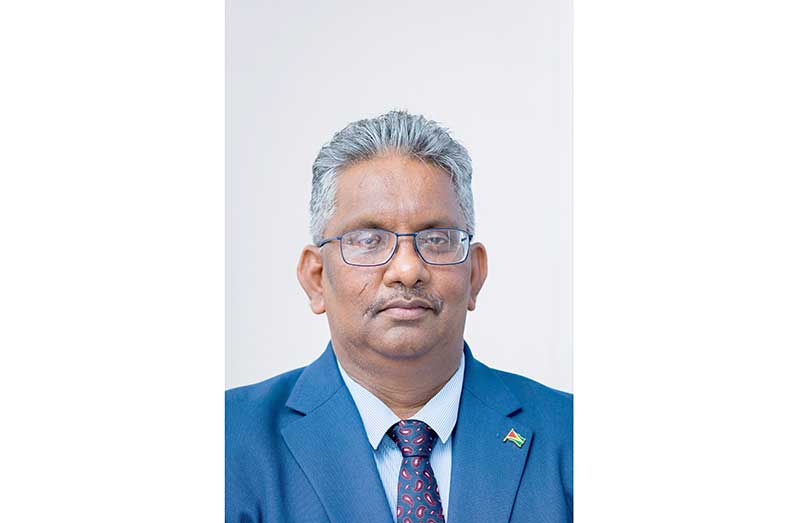
This was according to Chief Executive Officer (CEO) of GAICO Construction and General Services Inc. and Chairman of the Guyana Shipping Association, Komal Singh.
Appearing recently on the Guyana Dialogue programme, Singh provided an update on the two major private-sector investments, noting that both projects remain under construction despite global shipping delays affecting project timelines.
According to him, demolition of the old sugar factory at the former Wales Sugar Estate is currently underway to make way for the new white sugar refinery.
“The white sugar refinery—we’re currently in the process of demolishing the existing old sugar estate that was closed down in 2016 or 2017. That plant is currently being torn down. We’re going to replace, right in that same position, a brand-new white sugar refinery,” he said.
Groundworks for the refinery have already commenced, with completion now targeted for the first half of 2027.
Singh explained that while construction has progressed steadily, international shipping disruptions continue to affect the delivery of equipment for large industrial projects.
He noted, “We’re looking at an estimated time of completion, maybe by the first half of next year… Given some of the challenges in terms of shipping around the world, projects are getting pushed back right now.”
Once completed, the refinery is expected to enable Guyana to produce refined white sugar locally, reducing reliance on imports while creating additional value from the country’s sugar industry.
Singh also provided an update on a fertiliser blending plant being developed through a partnership between local investors and largest fertiliser producer in the Dominican Republic, FERSAN.
He disclosed that the equipment for the facility has already arrived in Guyana, with civil works expected to commence following a sod-turning ceremony scheduled for this month.
“The plant is already in country. We’re hoping to start in July with the commencement of the civil work on that project. If all goes well, we should have it up and running by the first quarter of 2027,” he said.
According to Singh, the two projects will complement each other in supporting agricultural production across Guyana.
“When those both projects are completed, it will significantly help the agriculture sector in Guyana, both from the sugar cane standpoint and fertiliser also for the entire agri-sector,” he said.
The fertiliser blending facility will produce customised fertiliser mixtures tailored to the nutritional requirements of different crops and soils, allowing farmers to improve yields while potentially lowering input costs through locally blended products.
During the discussion, Singh also sought to clarify the distinction between his company’s fertiliser blending project and the large-scale fertiliser manufacturing facility planned for the Wales Development Zone near the Gas-to-Energy project.
He explained that while both projects are linked to fertiliser production, they serve very different functions within the agricultural value chain.
“What we’re building out right now as a private investment between ourselves and Forestland out of the Dominican Republic, we’re building out a fertiliser blending plant,” Singh said.
By contrast, the planned facility at Wales will manufacture urea and ammonia using natural gas supplied through the Gas-to-Energy project.
“What is going to be built at Wales, close to the Gas-to-Energy location, is a whole urea-ammonia plant.”
He explained that Guyana currently imports urea, one of the principal ingredients used in fertiliser production. Once the Wales plant becomes operational, the country is expected to produce its own supply, reducing dependence on imports.
“Currently we will be importing urea to satisfy our need. But when that bigger project gets on stream, we now will be producing our own urea in Guyana, so we no longer need to import urea.”
Singh noted that the proposed urea-ammonia facility is considerably more technologically complex than a blending plant because it converts natural gas into fertiliser feedstock.
He explained, “That one is a lot more complex, utilising gas to convert that into fertiliser.”
The fertiliser blending facility, meanwhile, will use imported raw materials—including urea until local production becomes available—to manufacture crop-specific fertiliser blends for Guyana’s agricultural industry.
Singh’s company, GAICO Construction and General Services Inc., has partnered with Dominican Republic fertiliser producer FERSAN in a joint venture operating as Guyfer, which is developing the fertiliser blending plant.
The two projects form part of wider efforts to modernise Guyana’s agricultural infrastructure, improve food production and enhance value-added manufacturing. They also align with the country’s broader strategy of using natural gas resources to support industrial development while expanding downstream industries linked to agriculture.
If completed on schedule, both the white sugar refinery and fertiliser blending plant are expected to begin operations in 2027, providing new support for sugar production and strengthening fertilizer availability for farmers across the country.