– road accidents down 26 per cent in first half of 2026, but fatalities edge up
GUYANA recorded a significant reduction in overall road accidents during the first half of 2026, but traffic fatalities have increased marginally, highlighting the continued challenge of changing driver behaviour despite intensified enforcement and education efforts.
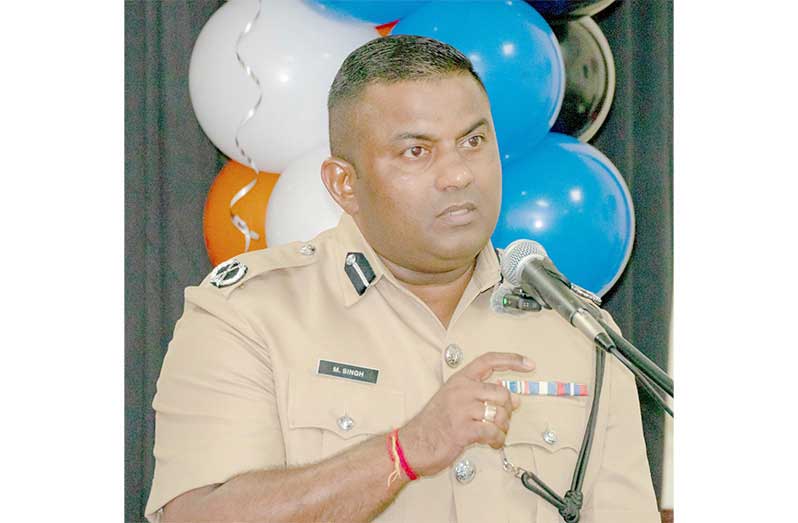
According to Traffic Chief, Assistant Commissioner Mahendra Singh, the Guyana Police Force’s Half-Year Traffic Report shows that the total road accidents fell by 26 per cent, declining from 783 incidents during the corresponding period in 2025 to 580 this year.
Fatal accidents, he said also decreased slightly from 59 to 58, representing a two per cent reduction. However, the number of persons killed on the nation’s roads rose from 63 to 64. Serious accidents declined by five per cent, while minor and damage accidents dropped sharply by 35 per cent and 33 per cent respectively.
Assistant Commissioner Singh noted that the figures suggest that increased enforcement, technological interventions and public awareness campaigns are producing positive results, although more work remains to be done to reduce fatalities.
“While speeding continues to be a concern and contributor to fatal accidents, there is a significant reduction owing to efforts made, awareness programmes, the implementation of the SRIS, automated ticketing and targeted enforcement,” the report stated.
The data revealed that speeding remained the leading cause of fatal accidents, accounting for 43 of the 58 fatal crashes recorded this year, down from 52 in 2025. However, the report highlighted a worrying increase in deaths linked to driver inattentiveness, which doubled from six cases last year to 12 in 2026.
According to the Traffic Chief, personal distractions among drivers are becoming an increasingly dangerous factor on Guyana’s roads.
“Inattentiveness owing to personal distraction is increasing at an alarming rate, with drivers seemingly unconcerned,” the report warned.
Motorcyclists continued to represent the largest category of road users killed. Twenty-six motorcyclists lost their lives during the first six months of 2026, with 22 of them reportedly not wearing safety helmets.
Additionally, all seven pillion riders who died were not wearing helmets. The report noted that investigations have revealed that many road users only comply with helmet regulations when police officers are visibly present.
Pedestrian fatalities also increased significantly, rising from 12 deaths in 2025 to 17 this year. Seven of those deaths were linked to inattentiveness, while five involved pedestrians crossing into the path of approaching vehicles.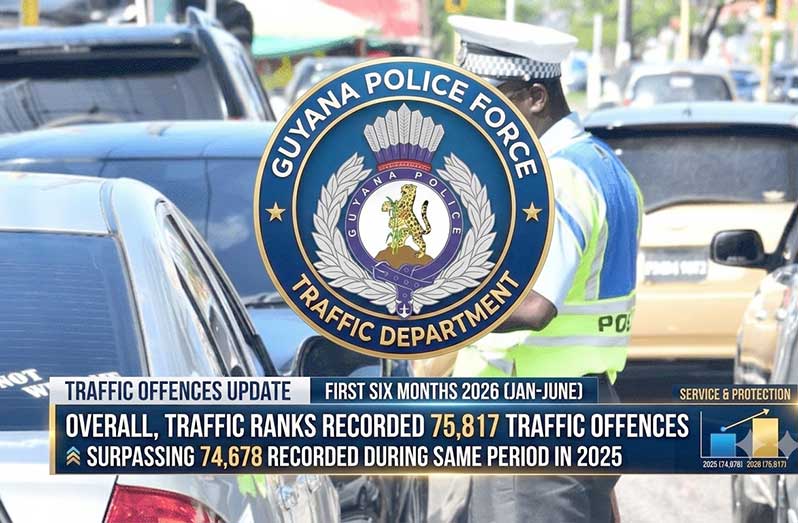
The report further showed that occupants of motor cars accounted for the largest number of vehicles involved in fatal accidents, increasing from 26 in 2025 to 31 this year. Fatal crashes were most prevalent during the evening hours between 6:00 pm and midnight, when 28 fatal accidents occurred.
Adults between the ages of 25 and 42 remained the demographic group most affected by fatal accidents, accounting for 36 of the 64 deaths recorded. Men continued to account for the overwhelming majority of fatalities, although female deaths increased from four to nine.
Saturday emerged as the deadliest day on Guyana’s roads during the reporting period, with 14 fatal accidents recorded, compared with nine during the corresponding period last year.
Despite the concerning fatality figures, enforcement activity intensified considerably during the first half of 2026.
Police issued 18,874 speeding tickets, an increase of more than 4,600 compared with the previous year. Cases involving failure to wear seat belts rose to 2,814, while prosecutions for driving under the influence increased to 916. Authorities also recorded increases in offences related to unlicensed drivers, traffic light violations and vehicles left in dangerous positions.
Overall, traffic ranks recorded 75,817 traffic offences during the first six months of 2026, surpassing the 74,678 recorded during the same period in 2025.
The Traffic Department also significantly expanded its public education campaign, conducting 980 traffic education exercises nationwide. These included lectures for drivers, school programmes, awareness sessions in bars and public outreach initiatives through radio broadcasts.
Assistant Commissioner Singh stressed that infrastructure improvements and increased enforcement alone will not solve Guyana’s road safety challenges.
“No amount of signs, signals or road markings will make a difference if drivers do not shift their behaviour to compliance and embrace the concept of shared road space,” the report stated.
Looking ahead, the Traffic Chief indicated that authorities expect vehicle imports to increase further due to ongoing economic growth and development.
In response, plans are underway to strengthen traffic management systems, particularly around major event venues such as the National Stadium at Providence.
The report added that the expansion of the Safe Road Intelligent System, automated enforcement mechanisms, enhanced penalties for traffic offences, broader public education programmes and increased deployment of technology are all expected to play a critical role in improving road safety across Guyana in the months ahead.
Ultimately, Assistant Commissioner Singh highlighted that every traffic regulation, from speed limits and seatbelt requirements to rules governing the use of the road especially where careless and dangerous driving or distracted driving exists for one fundamental reason: to preserve human life.
“No destination, appointment or convenience is worth the loss of a life on Guyana’s roads…The increase in pedestrian fatalities further reinforces the concept of shared road space repeatedly emphasised by the Traffic Department. Motorists, motorcyclists, cyclists and pedestrians all have a responsibility to exercise caution, remain alert and respect the rights and safety of others using the nation’s roads.”
He added that while investments in technology, enforcement and public education are yielding measurable improvements, the ultimate determinant of road safety remains human behaviour.