






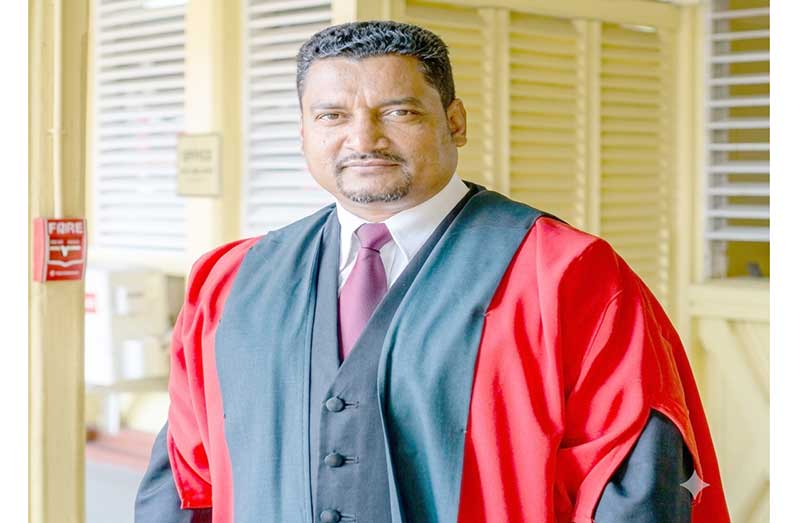
ACTING Chief Justice, Navindra Singh, has quashed a decision by Magistrate Dylon Bess to dismiss four money laundering charges brought by the Special Organised Crime Unit (SOCU), ruling that the prosecution’s absence from court may have resulted from administrative error rather than neglect.
In a ruling delivered on June 29, 2026, the High Court granted judicial review relief in favour of SOCU and set aside Magistrate Bess’s decision to dismiss the matters for want of prosecution. The court also ordered the magistrate to pay costs of $50,000 to the agency.

The cases involve four defendants, Ian Jacobis, Ashiana Salamalay, Shameena Ahmad and Shafee Ahmad, who were charged by SOCU in July 2024 with money laundering offences under Section 3(1)(b) of the Anti-Money Laundering and Countering the Financing of Terrorism Act, Chapter 10:11.
According to court documents, the matters were reassigned to Magistrate Bess in February 2026 and were subsequently adjourned to April 14, 2026, for a ruling on a preliminary issue. However, SOCU prosecutors were informed by court staff on April 14 that Magistrate Bess had proceeded on special leave following the death of his father and that a new date would be assigned.
SOCU said it was later advised by a court clerk that the matters had been adjourned to June 4, 2026. Despite this, Magistrate Bess dismissed the cases on May 6, 2026, for want of prosecution.
In seeking judicial review, SOCU argued that the magistrate’s decision was improper, arbitrary, irrational and unfair, contending that the matters were dismissed without the prosecution being notified or given an opportunity to be heard.
During the proceedings, Magistrate Bess stated that he had asked defence attorney Latchmie Rahamat to inform the prosecution that the matters had been fixed for May 6. According to the magistrate’s account, Rahamat subsequently applied for the matters to be dismissed after informing the court that repeated attempts to contact SOCU prosecutors had been unsuccessful and that the agency appeared to have abandoned the cases.
SOCU, however, maintained that its prosecutors were never contacted or informed that the matters had been fixed for hearing on May 6.
In his ruling, Acting Chief Justice Singh found that the circumstances surrounding the dismissal raised serious concerns regarding fairness and procedural propriety.
The Chief Justice observed that the adjournment in April had not been for the purpose of taking evidence or advancing the prosecution, but rather to allow the magistrate to review earlier pre-trial rulings. He further noted that the prosecution had not failed to attend a scheduled hearing in April and that the information provided by court staff regarding the June 4 date may have reasonably led prosecutors to believe that the matters had been adjourned.
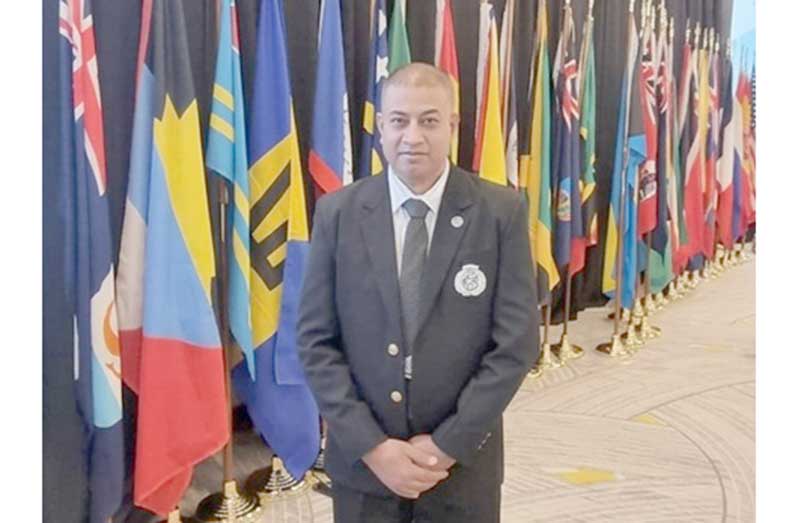
“A dismissal for want of prosecution generally presupposes some culpable failure by the prosecution to diligently pursue the matter,” the Acting Chief Justice stated, adding that if the prosecution had genuinely relied on information provided by court officials, then its absence on May 6 may have been induced by the court administration itself.
The High Court held that courts should be reluctant to penalise parties who rely on information communicated by court staff, particularly in relation to adjourned dates, and stressed that the overriding consideration must be fairness.
The court further ruled that before dismissing the matters, the magistrate should have sought to determine the reason for the prosecution’s absence, whether proper notice of the May 6 hearing had been given, and whether the absence reflected genuine neglect or administrative confusion.
The court concluded that an immediate dismissal without such inquiries was a drastic measure and accordingly quashed the magistrate’s decision.
Following the ruling, Head of SOCU and Deputy Commissioner Fazil Karimbaksh expressed concern that the agency had once again been forced to challenge a decision of Magistrate Bess through judicial review proceedings.
Karimbaksh noted that this was the second judicial review application filed by SOCU against decisions made by Magistrate Bess in recent months and argued that the repeated overturning of those decisions by the High Court raised concerns regarding compliance with statutory requirements and the proper exercise of judicial discretion.
He further lamented that SOCU had been required to repeatedly resort to court proceedings to overturn decisions that, in the agency’s view, failed to comply with the law.
SOCU was represented in the proceedings by attorneys-at-law and prosecutors David Brathwaite and Darin Chan. Magistrate Bess was represented by State Counsel from the Attorney General’s Chambers, while the respondents were represented by defence attorneys Latchmie Rahamat and Naresh Poonai.




