





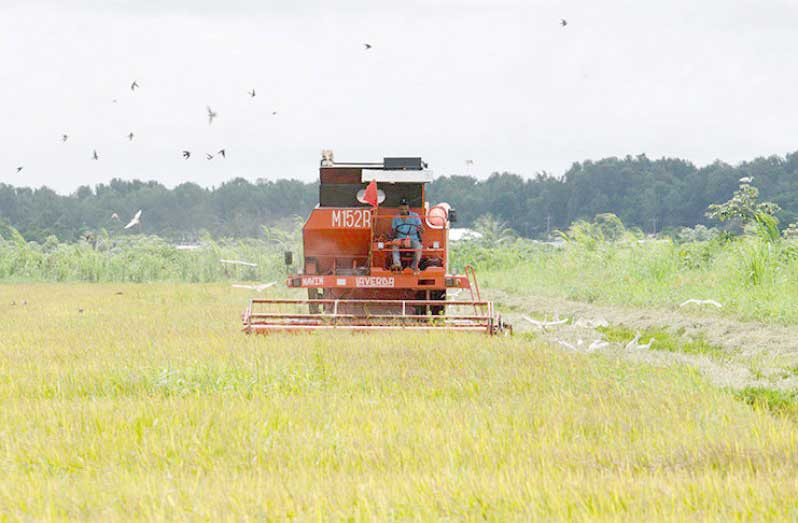
THE government will begin distributing cash subsidies to rice farmers across Guyana next week, Agriculture Minister Zulfikar Mustapha announced, fulfilling a pledge made by President Dr Irfaan Ali during consultations with rice producers in April.
“At the President’s direction, and following consultations with hundreds of rice farmers at the Arthur Chung Conference Centre on April 30, the Ministry of Agriculture will commence direct cash transfers to eligible rice farmers beginning next week,” Minister Mustapha said.
The programme provides GY$15,000 per acre for farmers cultivating 50 acres or less, and GY$10,000 per acre for farmers cultivating more than 50 acres.
The Guyana Rice Development Board (GRDB) completed registration and a post-harvest verification of claims to ensure transparency and accountability, Mustapha added.
The cash transfer initiative, funded to the tune of approximately GY$3 billion by the PPP/C administration, is intended to help cushion rice producers from mounting global pressures on agricultural production and markets.
The government framed the assistance as part of a broader strategy to protect livelihoods, bolster food security, and sustain rural economies.
Rice has long been one of Guyana’s most important agricultural exports and a cornerstone of rural employment.
Since coming to office, the PPP/C government has pursued a series of measures aimed at modernising the sector and improving producers’ incomes, including capital injections through the GRDB, mechanisation subsidies, infrastructure upgrades, and support for value chain development.
Key PPP/C measures and investments over recent years include direct subsidies and cash support schemes, including fertiliser and input subsidies and targeted cash transfers during periods of price or supply shocks.
There have also been infrastructure improvements, such as rehabilitation of irrigation and drainage networks, improvements to farm access roads, and investments in storage and milling capacity aimed at reducing post-harvest losses.
The government has also pursued mechanisation and extension support through the fostering of low cost financing, and training programmes to increase productivity and reduce labour bottlenecks.
There have also been market development efforts, including export facilitation, promotion of brand differentiation (including steps toward geographical indication protection), and assistance to processors to meet international standards.
Analysts say these interventions have helped stabilise production and support farmer incomes. The ministry said the verification process has concluded and emphasised that payments will follow strict accountability checks.





