Strength in Speaking Up
- How mentorship, family support and honest conversations can help men and boys break the silence around mental health
FOR many Guyanese men and boys, the first lesson in life is not how to ask for help, but how to hide pain, says Male Empowerment Network (MEN) Managing Director, Richard Collymore, who warns that deeply rooted ideas about “strength” are pushing men into silence until the crisis point. Speaking to the Pepperpot Magazine earlier this week, as the world observes Men’s Mental Health Month, he said that while resilience is often praised, it has also become a barrier, leaving many to struggle alone with mental health challenges, crime risk and life pressures that could be eased through simple conversation, mentorship and community support.
Men’s mental health is just one of the many areas of advocacy that Collymore is passionate about, and MEN is just one of the organisations that he works with. He is also a member of BROCODE, another NGO with a broader focus on men’s health.
While both organisations deal with differing issues, Collymore said that when it comes to men’s mental health in particular, the major challenge, men asking for help, has been taught since childhood. After working with boys and men for almost a decade, Collymore said that the idea that asking for help is a weakness remains the biggest hurdle preventing men from accessing mental health support, and it has been reinforced from an early age.
As he shared, “Generally, men, even when you take it all the way back, are raised with conflicting messages. We start telling our boys at a very young age that they need to find a way to deal with problems on their own. And there’s no place in society for weakness when it comes to men,” he added. “The reality is that while resilience is important, asking for help is seen as a sign of weakness rather than a sign of responsibility. So problems are left unaddressed and, a lot of times, those situations become a crisis.”
Over the course of eight years working with both BROCODE and MEN, Collymore said he has been able to speak to more than 10,000 young men and boys. Speaking on the similarities, he noted that mentorship has a major impact on the mental health of young men from an early age.
As he shared, “I think mentorship plays a big role in supporting young boys who are on the brink of getting involved with the law, or who are already at that first stage.”
This is why Collymore has partnered with various organisations, both locally and internationally, to mentor and support young men, particularly those in vulnerable situations, towards independence.

“We brought them away from their community, and we used places like cafés and similar spots in New Amsterdam to bring them into a new environment and bring professionals from different walks of life to share their stories. We brought professionals who are successful today but came from similar backgrounds to share their stories with young people,” he added. “We collaborated with some businesses and local employers. Persons were able to get jobs. We got some certified in cosmetology and welding. We got some certified in installation.”
While men supporting each other and mentorship can help pave a better path for young boys, family support is also vital, Collymore said. Describing the family as the first line of support, he added that for men, particularly fathers and husbands, the family may be the only place they can go to.
As Collymore stated, “The family is the first line of support. For men, that support from the nearest sibling or close relatives makes a tremendous difference. You don’t need your whole family. Just having that one person in your family that provides the level of support you need, that in itself is powerful,” he said.
Speaking to families, Collymore noted that all they need to do is listen, adding, “Most men do not need somebody to solve their problems immediately. What you need is somebody who can listen and not judge. Having that person in your family, having that type of relationship, what that does is create a healthy environment, not just for the family, but beyond.”
Men’s mental health, just like all issues impacting a major part of society, is not just an isolated hurdle, but a social one. This is why Collymore said that the community, too, should create space for young men and boys to speak about their mental health. As he added, community spaces and gatherings could serve as platforms for these conversations.
“People, especially boys, need a place that they can go to channel all their energy. If we don’t have that, they’re going to find creative ways to occupy themselves. We need to start normalising conversations about mental health and asking for help,” he said.
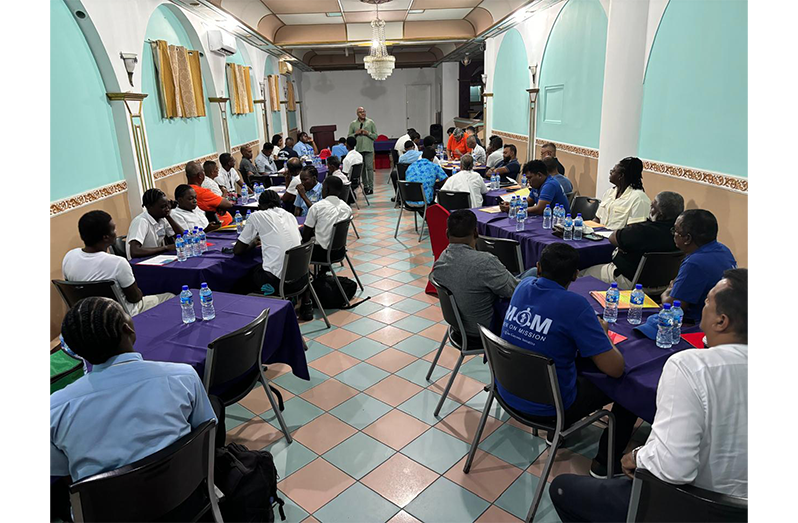
Collymore and his team are also working to revive ‘Men’s Night’, a safe space for men to speak and express themselves, as he added, “We had men from different places, company executives, labourers, employees from the ghetto. We would ask questions: What issues affect men? And what are some opportunities with regard to those issues?”
For Collymore, creating healthier men and stronger communities begins with changing how society views vulnerability. Whether through mentorship programmes, family support, community initiatives or simple conversations, he believes men must be encouraged to seek help before challenges become crises.
His message to boys and men remains simple yet powerful: ask for help when you need it.
As he noted, “If somebody has mental health issues, often it can be very difficult to get help. But we have to learn to ask for it. We have to ask for it. Sometimes you are scared, but you have to take that step, because if you do not, you are going to miss the opportunity.”