






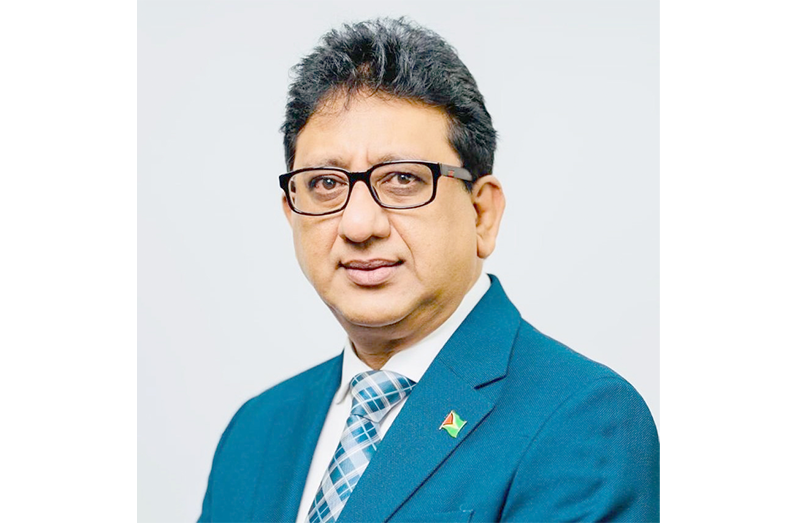
– AG says, notes changes helped ensure results reflected ‘the will of the people’
ATTORNEY-GENERAL and Minister of Legal Affairs Anil Nandlall, SC, recently said the final report released by the Carter Center on Guyana’s 2025 General and Regional Elections validates a series of electoral reforms introduced following the controversial 2020 elections.
He said the report also highlights that further constitutional changes remain an ongoing process.
Speaking on his weekly programme ‘Issues in the News.’ on Tuesday night, Nandlall described the Carter Center’s May 14 report as “a good report” that highlighted several “very crucial issues” relating to the conduct of the elections and the tabulation of results.
“The report observed that election-day voting in Guyana was generally well conducted, calm, and orderly, with most polling stations opening on time, adequate materials in place, and procedures properly followed throughout the opening, voting, closing, and counting,” Nandlall said.

According to the Attorney General, the Carter Center’s assessment effectively “ticked all the boxes” in relation to the management of polling day activities.
He added, “The entire voting process from beginning, from the opening of polls to the close of polls, they said was properly done, orderly, calm, with sufficient materials, et cetera.”
Nandlall said too that the report also addressed the tabulation of results against the backdrop of the disputed 2020 elections, which he described as a “horrendous experience” that damaged public confidence in the electoral system.
He noted that the Carter Center acknowledged reforms aimed at decentralising the tabulation process and increasing transparency.
Quoting the report, Nandlall said the Carter Center found that “the tabulation of results in Guyana’s 2025 elections took place against the backdrop of deeply contested 2020 tabulation process, which had eroded public trust and prompted legal and procedural reforms aimed at decentralisation and greater transparency.”
He said the changes were deliberately introduced to prevent a recurrence of the controversial Region Four tabulation process at the Ashmins Building in 2020, which had sparked widespread scrutiny over the handling of results in Guyana’s largest voting district.
“They have acknowledged new procedures, new legal reforms intended to decentralise that tabulation process, that fiasco — that fraudulent fiasco that occurred at the Ashmins Building — and to bring greater transparency to that process,” he said.
The Attorney General further pointed to the Carter Center’s conclusion that legislative amendments introduced after 2020 had strengthened the electoral framework.
“Overall, the legislative changes made to the tabulation process following the 2020 elections were positive and contributed to a more efficient and transparent tabulation process that better ensures results announced reflect the will of the people as expressed on election day,” Nandlall quoted from the report.
Describing those observations as “highly commendable statements,” Nandlall said the findings reflected the impact of reforms implemented by the government.
He also highlighted observations from Carter Center monitors regarding improvements in transparency during tabulation.
According to Nandlall, observers reported that tabulation in 2025 “was generally conducted in a reasonable or very good manner across all tabulation centres, with improved transparency through the public posting of SoPs [Statements of Poll] at polling stations and their timely upload to GECOM’s website for public scrutiny.”
He explained that the public posting of SoPs and the requirement to upload them before tabulation commenced were among new legal provisions introduced after the 2020 crisis.
“All of these are new measures that we incorporated into the law,” Nandlall said.
While acknowledging that the procedures contributed to some delays, he said the report recognised that the system functioned effectively overall.
He noted, “While the new procedures, particularly [the] requirement to upload all SoPs before beginning tabulation, contributed to delays, the system functioned efficiently with few technical issues and allowed observers and the public to follow the results closely.”
Addressing criticism that reforms had not advanced sufficiently, Nandlall rejected suggestions that recommendations from previous elections had been ignored.
“These are the fruits of the reform. And yet, you’re hearing that we have not done any reform, that we have slept on recommendations made in relation to prior elections,” he said.
The Attorney General maintained that government remains committed to implementing “most” recommendations from election observers’ reports, but cautioned that some changes require constitutional amendments and broader public engagement.
Nandlall explained, “As we stated, we are committed to implementing most of these recommendations. But they have to be done in stages. Some require constitutional interventions.”
He said constitutional matters have been left to the Constitutional Reform Commission, which has been tasked with engaging citizens and recommending reforms through a consultative process.
“The Constitutional Reform Commission is extant, up and running, and is doing its business,” he said, while disclosing that discussions are advancing on an outreach programme to facilitate consultations “across the lengths and breadths of Guyana.”
Nandlall described electoral reform as an evolving process, expressing confidence that significant progress would be achieved before the next election cycle.
“So, the process is an ongoing one. By the time the next election’s cycle come around, we will have accomplished most of the tasks which we have set ourselves,” he said.




