-site visit to GECOM headquarters gives court critical perspective on witness accounts, special prosecutor says
THE prosecution in the ongoing election fraud trial has confirmed that more than 10 witnesses are still to be called, as proceedings continue with no fixed end date in sight.
Special Prosecutor, attorney-at-law Latchmie Rahamat, spoke to the media following Thursday’s site visit to the Guyana Elections Commission (GECOM) headquarters at High and Cowan streets, Kingston, Georgetown. She explained that while the State remains prepared to proceed efficiently, the fluid nature of trial proceedings makes it difficult to determine when the matter will conclude.
“What I will say is that a trial is very fluid for many reasons,” Rahamat said, noting that variations in witness examination and cross-examination significantly affect the pace of the case.
“We cannot estimate how long it will take, but I do know that we have more than 10 witnesses remaining. The exact number I cannot give you at this time.”
She added that the prosecution continues to ensure that witnesses are available whenever the matter is called, expressing hope that the remaining testimonies can be completed in the shortest possible time.
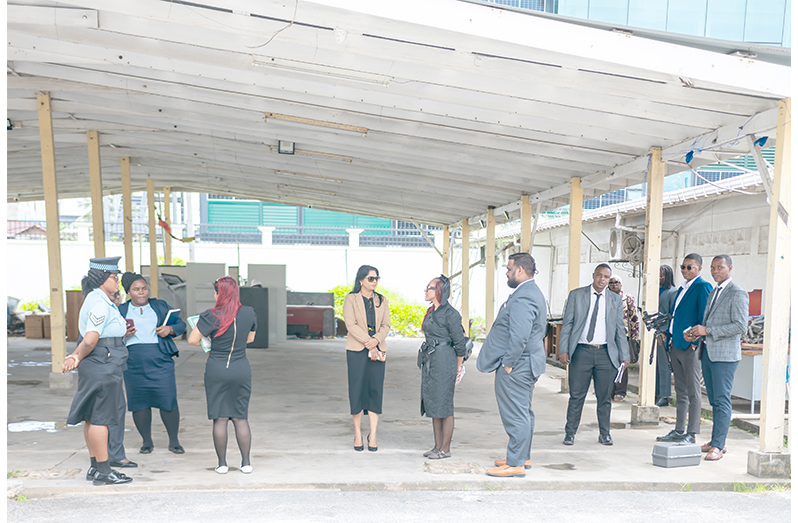
The update came as the court conducted its second site visit, this time to GECOM’s headquarters. Rahamat described the exercise as a critical component of the trial process, particularly given the number of eyewitnesses whose testimonies relate to events inside the tabulation room.
“What happened today [Thursday] is legally called a site visit, and you would recall we had previously done a site visit at the Ashmin’s building, and this is the second site visit that was scheduled by the court,” she explained.
GECOM’s headquarters and the Ashmin’s building were both used to tabulate and verify votes cast in Region Four, which is the country’s largest voting district.
According to the prosecutor, the purpose of such visits is to assist Acting Chief Magistrate Faith McGusty, who serves as the finder of fact, in understanding the physical layout of locations referenced in witness testimony. This, she noted, is especially important in a case involving multiple perspectives from individuals present at the same scene.
“Every person will tell you their perspective of what happened and as the magistrate has to put the evidence together as the judge of the facts at the end of the matter. It was obviously to help the court… to understand the layout of the location where these witnesses were present,” Rahamat stated.
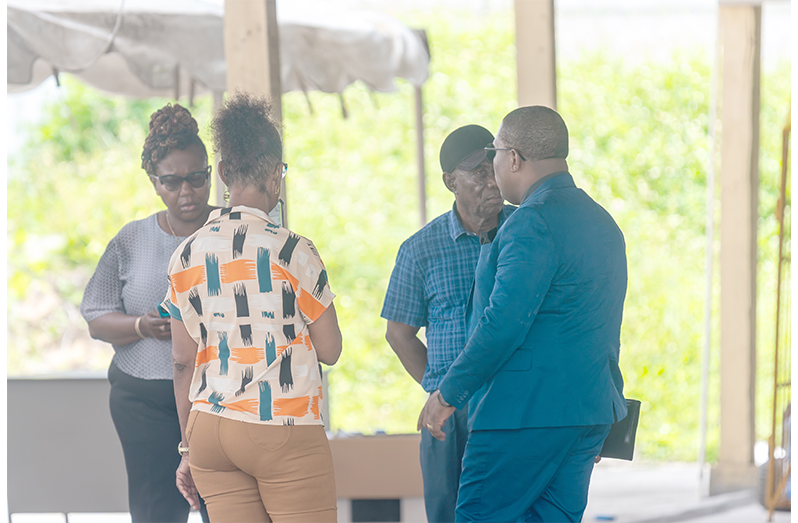
She highlighted that several key witnesses were present at the site visit to physically indicate where they were positioned during the tabulation process. These included Minister of Education Sonia Paraj, former election observer for the American Chamber of Commerce (AmCham) Rosalinda Rasul, and former executive member of A New and United Guyana (ANUG), Johnathan Yearwood.
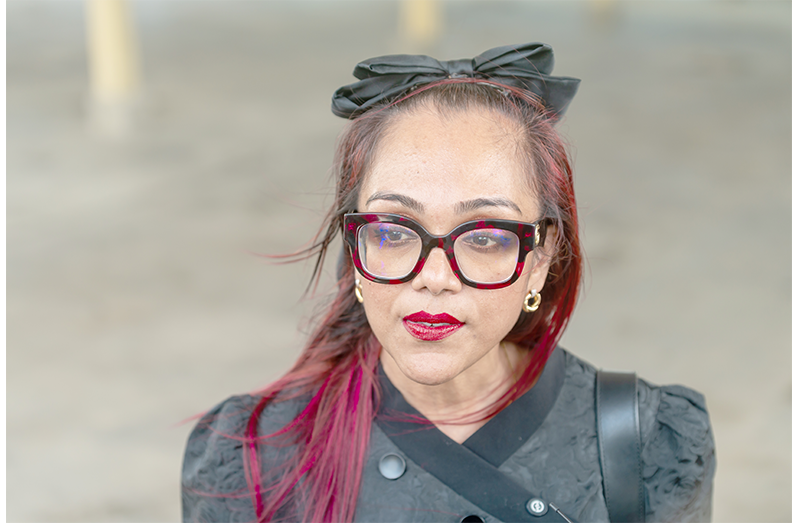
The ability of witnesses to point out specific locations, the prosecutor said, allows the court to better assess the credibility and plausibility of their accounts. She referenced earlier testimony from a witness, who claimed difficulty following the tabulation process due to the rapid projection of Statements of Poll (SoPs) onto a “bed sheet.”
Minister Parag pointed out specific areas where certain defendants were standing during the tabulation process, as well as the location where a bedsheet had been placed to project figures.
Rasul also pointed out where she was positioned on March 13, 2020, noting that several GECOM staff, including one of the nine defendants, Clairmont Mingo, were present at the headquarters. She also identified the area where international observers had been seated.
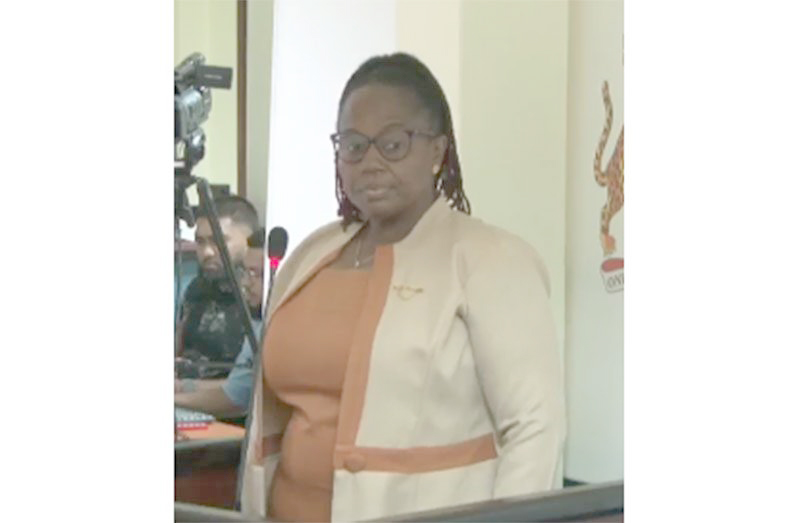
Thursday’s site visit also provided context for reported interactions between individuals in the room, including an alleged altercation. Yearwood identified the location where he and another defendant, Carol Smith-Joseph, were involved in a confrontation, adding further context to his earlier testimony.
Rahamat noted that physically identifying where such incidents occurred helps the court appreciate the dynamics within what was described as a crowded and tense environment.
“For an event like that to have taken place, it brings perspective to the court exactly where the GECOM staff was and where he was when that was happening,” she said.
Addressing concerns raised by defence attorney Dexter Todd regarding whether observations from the site visit form part of the official evidence, Rahamat firmly rejected the suggestion that they do not.
“Every single witness that came today gave evidence under oath in the courtroom in relation to this location and what they observed when they were here, and so that is the evidence on the record,” she stated.
She clarified that the site visit does not introduce new evidence but rather allows witnesses to illustrate and contextualise testimony already given under oath.
“They are here today to point out those locations. So, I would disagree that it is not part of the evidence, when you had these very witnesses testifying under oath about this location,” Rahamat added.
The prosecution has consistently emphasised the importance of eyewitness accounts in the case, particularly those who were present during the tabulation of votes following the March 2020 General and Regional Elections. Rahamat underscored that these witnesses remain central to the State’s case.
“These are witnesses whom the State is relying on, who were present at the time the tabulation was being done, and so their evidence is important,” she said.
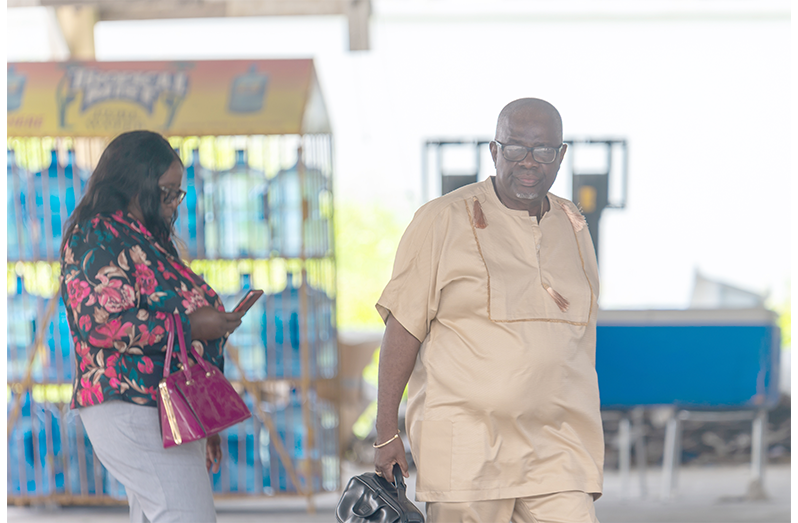
Several defendants, along with their attorneys, were present at the location observing the process.
Police ranks were also present at the site visit, where they took measurements and documented the proceedings with photographs and video recordings.
With proceedings set to resume on May 18, 2026, the court is expected to continue hearing from the remaining witnesses as it moves closer to the conclusion of one of Guyana’s most closely watched election-related trials.
BACKGROUND
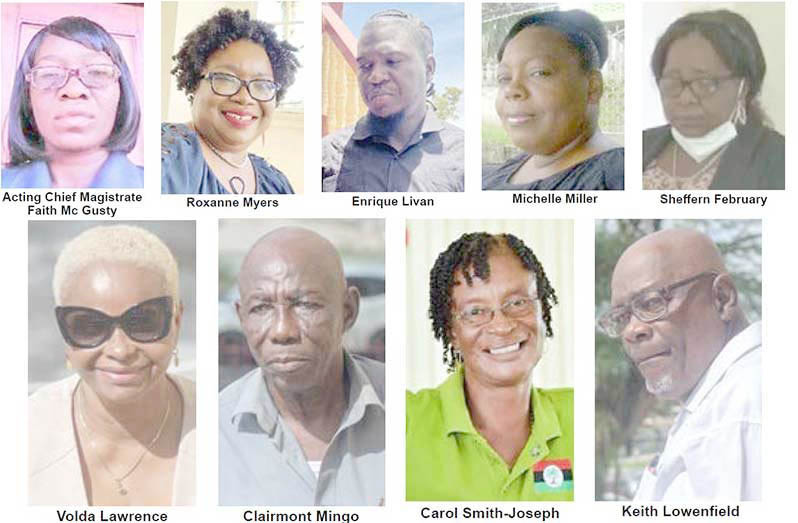
Those on trial include former Chief Elections Officer (CEO) Keith Lowenfield; former Deputy CEO Roxanne Myers; former Region Four Returning Officer Clairmont Mingo; former Health Minister Volda Lawrence; and People’s National Congress Reform (PNCR) member Carol Smith-Joseph.
Also facing charges are former GECOM staffers Michelle Miller, Sheffern February, Enrique Livan, and Denise Babb-Cummings.
The defendants collectively face 19 charges, including conspiracy to defraud and misconduct in public office. Each has entered a plea of not guilty and was released on significant cash bail.
The prosecution, led by King’s Counsel Darshan Ramdhani, has argued that the defendants each played a “critical role” in attempts to inflate votes in favour of the then-incumbent A Partnership for National Unity and Alliance for Change (APNU+AFC) coalition while reducing votes for the People Progressive Party/Civic (PPP/C).
Initial results announced by Lowenfield had declared an APNU+AFC victory, with 171,825 votes against the PPP/C’s 166,343. However, after five months of litigation and a Caribbean Community (CARICOM)-supervised recount, the PPP/C was declared the winner with 233,336 votes to APNU+AFC’s 217,920, paving the way for Dr Irfaan Ali’s swearing-in as president on August 2, 2020.
The fallout from the election controversy led to the termination of Lowenfield, Myers, and Mingo’s contracts at GECOM in August 2021.
The Presidential Commission of Inquiry (CoI) into the events of the 2020 General and Regional Elections have found that there were collusion and collaboration between senior GECOM officials to divert votes to the APNU +AFC instead of safeguarding and preserving the integrity of the electoral system.