–ongoing judicial education critical to upholding rule of law, says Chancellor
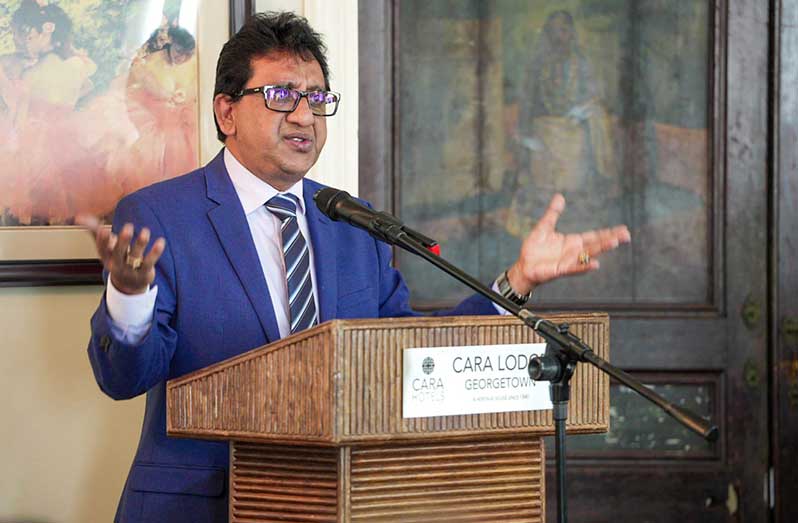
“TRAINING can never be a wasteful exercise,” Attorney General and Minister of Legal Affairs Anil Nandlall, SC, declared as he delivered the feature address at the opening ceremony of the Partnership for Caribbean and European Union on Justice (PACE Justice) judicial training, held at the Cara Lodge Hotel in Georgetown, on Monday.
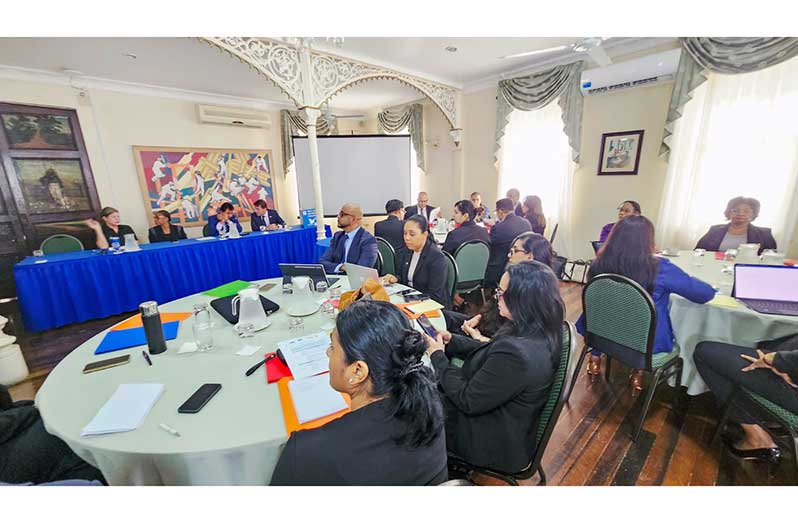
The training targets newly appointed High Court judges and justices of appeal and focuses on criminal trials and criminal appeals—areas Nandlall described as increasingly complex in today’s legal environment.
“These trainings are very, very crucial. They’re very timely, and we have to continue to do so,” he said.
The Attorney General noted that the four-day programme forms part of a broader effort to address the root causes of inefficiencies in the justice system, particularly delays in criminal cases.
He said that similar initiatives have already been rolled out for a wide range of stakeholders, including police prosecutors, judicial officers and forensic investigators.
“These training include restorative justice, criminal mediation… artificial intelligence and digital transformation in criminal justice,” he outlined.
Nandlall stressed that ongoing education will soon become a formal requirement within the legal profession. He disclosed that amendments are being planned to make continuing legal education mandatory.
“We will amend the Legal Practitioners Act to insert continuing education as a mandatory obligation,” he revealed, adding that systems must be put in place to ensure regular and high-quality training delivery.
Beyond technical knowledge, the Attorney General highlighted the evolving nature of crime as a key reason for continuous learning. With emerging threats such as cybercrime and organised financial crime, he said legal professionals must remain equipped to respond effectively.
“We have to also prepare for what the new challenges are. The new challenges mainly will emanate from the cyberspace,” he warned.
Nandlall also pointed to regional and international collaboration as a major benefit of such programmes, noting that Caribbean states are increasingly working together to confront shared challenges in criminal justice.

Importantly, he underscored that training is not limited to newcomers in the field but is necessary at all levels of experience.
“Training can never be a wasteful exercise… no matter how bright we think we are… training is always crucial for us to continue to enhance our ability,” he said.
Nandlall expressed confidence that the sessions will strengthen the judiciary’s capacity and ultimately contribute to a more efficient and responsive justice system.
Acting Chancellor of the Judiciary, Justice Roxane George, SC, also underscored the importance of judicial education in maintaining high standards within Guyana’s justice system, noting that ongoing training is essential to ensuring efficiency and upholding the rule of law.
Delivering remarks at the opening of the training programme, Justice George said the judiciary’s recent membership in the International Consortium for Court Excellence places a responsibility on the courts to remain at the forefront of best practices.
“Judicial education programmes such as this will keep us on the cutting edge, so that we maintain the high standards of education and judicial conduct,” she stated.
She emphasised that the initiative aligns with established codes governing judicial officers in Guyana, as well as international standards, ensuring that the judiciary continues to function effectively and professionally.
Justice George also expressed gratitude to the United Nations Development Programme (UNDP), the European Union, and the PACE Justice Project for their continued support, along with the Government of Guyana for its commitment to strengthening the judiciary.
Looking ahead, she said the four-day training is expected to be highly engaging and impactful.
“We look forward to an engaging four days of learning as we strive to always ensure that we competently, efficiently and effectively carry out our judicial functions,” she said.
The Chancellor added that the goal remains improved access to justice and the consistent upholding of the rule of law.
European Union Ambassador to Guyana, Luca Pierantoni, underscored the regional importance of the PACE Justice initiative, noting that criminal case backlogs remain a shared challenge across Caribbean states.
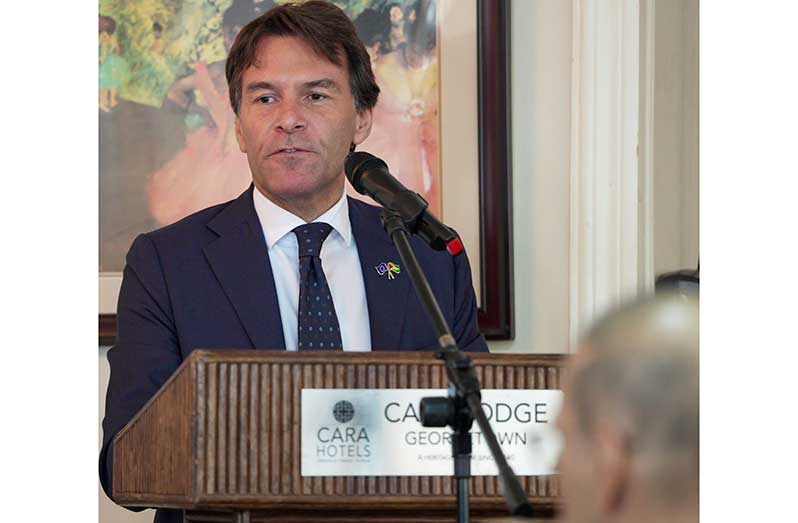
Reflecting on the programme’s development, he said that consultations with judicial stakeholders revealed widespread delays driven by issues such as case management and limited resources.
Pierantoni said the European Union funded the initiative to improve access to justice, which he described as fundamental to fair societies.
He also emphasised that tackling modern crime requires cross-border collaboration, noting that “transnational crime… knows no borders,” making international cooperation essential.
The PACE Justice Project is a criminal justice reform project funded by the European Union and implemented by UNDP Guyana in partnership with the Government of Guyana through the Ministry of Legal Affairs.
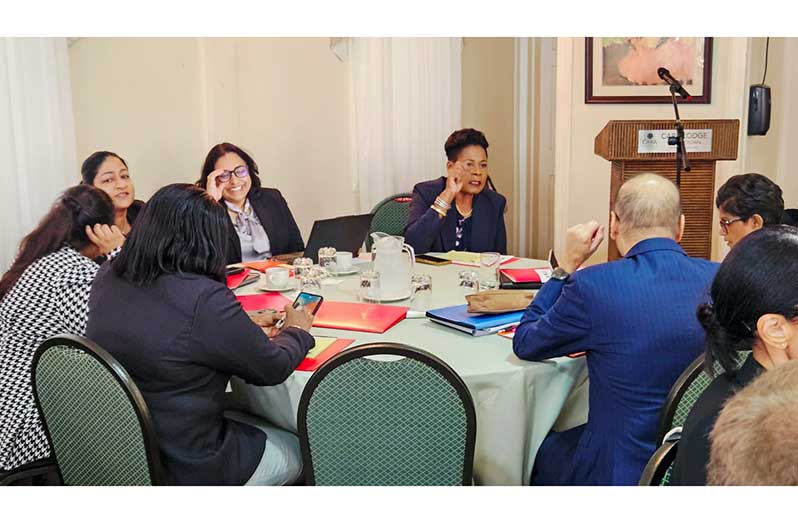
The project aims to reduce the backlog of cases in Guyana’s criminal justice system by enhancing the institutional capacity of the country’s prosecutors, courts, police, and prisons through the deployment of technology and training.
The project is also being implemented in Antigua and Barbuda, Barbados, Belize, Dominica, St. Kitts and Nevis, St. Lucia, and Trinidad and Tobago, and is supported by governments and key stakeholders in each jurisdiction, as well as regional justice bodies.
Valued at €10 million, the PACE Justice initiative spans nine countries across the region. In Guyana, the current programme is the first of several slated for 2026 and represents the fourth training conducted locally under the initiative.