–says Toshao David Albert, notes night flights now possible
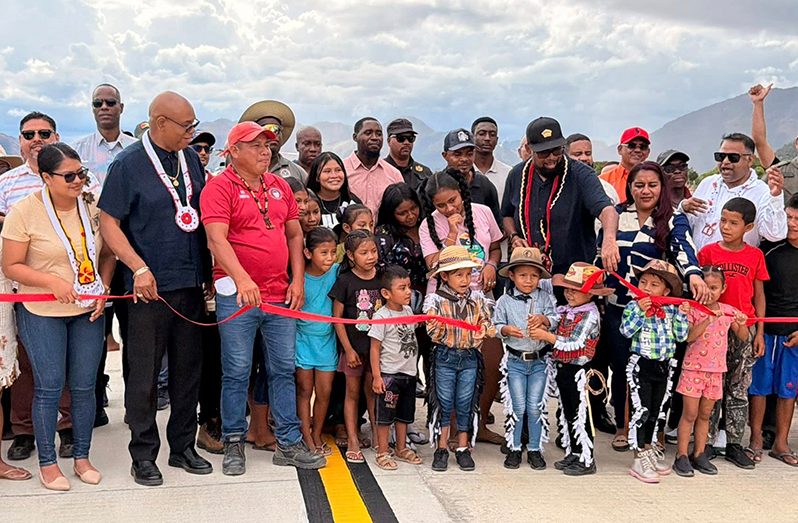
A NEWLY-commissioned $1.53 billion airstrip at Karasabai is being hailed as a transformative development for the hinterland, with residents and community leaders pointing to improved access, economic opportunity, and enhanced emergency services as immediate benefits.
Toshao David Albert said the modern facility will serve more than 1,200 residents across Karasabai and seven neighbouring communities, marking a significant step forward for a region long challenged by limited transportation infrastructure.
Speaking shortly after the project’s completion, Albert described the airstrip as a long-awaited achievement that signals the start of broader development. “I feel really happy that we are seeing all of these things happening,” he said, adding: “Ten or fifteen years ago, we did not expect that we would have had all of this here, especially not a modern airstrip.”
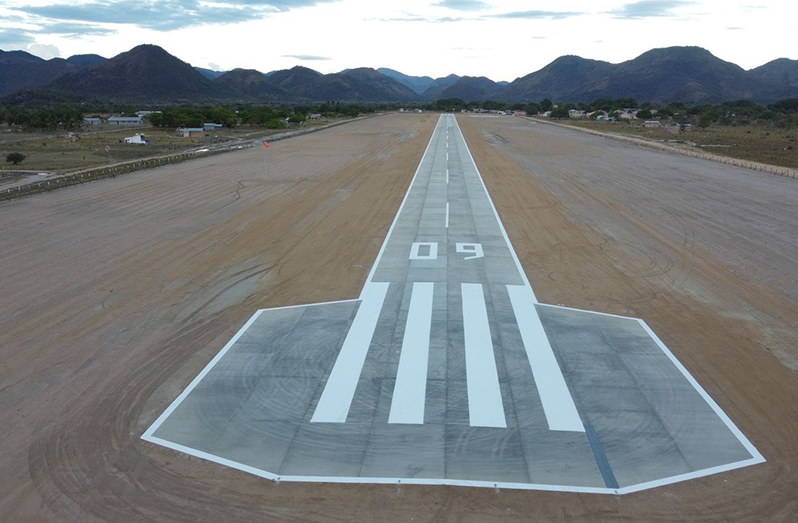
Completed within three months, the upgraded airstrip replaces an older earthen runway that was frequently rendered unusable during heavy rainfall. The lack of lighting at the previous facility also meant flights were often cancelled after dark, creating serious challenges, particularly in emergency situations.
The new airstrip addresses those long-standing issues with a reinforced concrete surface measuring 3,000 feet in length and 50 feet in width, built to withstand heavy use over an estimated 30-year lifespan. The installation of approximately 50 navigational lights now allows for safe night-time operations, significantly improving reliability.
One of the most immediate impacts is expected in healthcare access. Medevac aircraft can now land directly in Karasabai, thus eliminating the need for patients to travel to Lethem for emergency evacuations, a journey that was often difficult and time-consuming.
Beyond emergency response, the improved infrastructure is expected to open new economic pathways. Albert noted that farmers in the area will now have greater access to markets across Guyana, while the community itself is better positioned to attract visitors and support tourism growth.
“This was a dream being realised,” he said, adding that the airstrip will bring “tremendous benefit” not only to Karasabai but to surrounding villages as well. He expressed optimism that increased accessibility will lead to more consistent visitor arrivals, and further upgrades in the future.
The project has already provided a boost to the local economy, employing around 60 residents during its construction phase. Looking ahead, Albert believes the airstrip will continue to reshape daily life in the community, making travel easier and creating new opportunities for income generation.
Reflecting on the transformation, he pointed to the stark contrast between past and present. What was once a simple grass track has been replaced by a modern aviation facility, bringing the hinterland closer to the coast and expanding possibilities for those who call the region home.
Albert also linked the development to broader national efforts to improve infrastructure and connectivity in indigenous communities, noting that projects like these are helping to bridge longstanding gaps and bring more equitable development across Guyana’s hinterland.