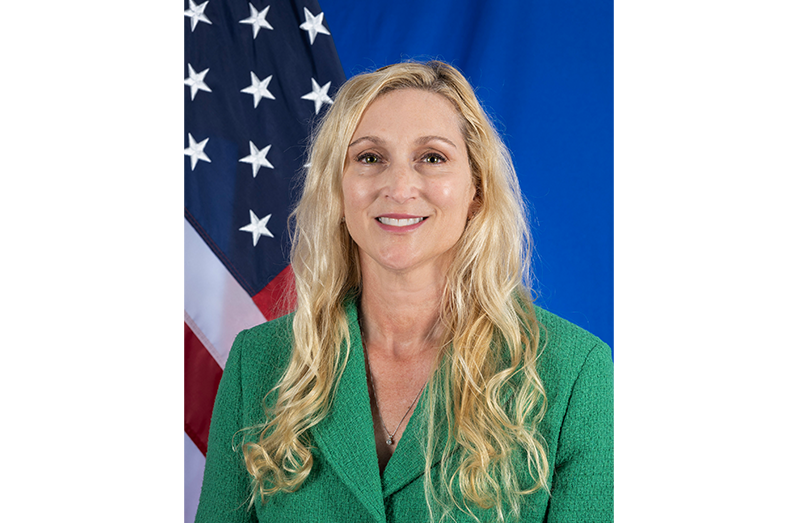
NEGOTIATIONS between the Government of Guyana and United States energy firm Curlew Midstream over a proposed US$300 million refined fuel facility are still underway, with a resolution anticipated, according to United States Ambassador to Guyana, Nicole Theriot.
Speaking during an appearance on the ‘Sources’ programme, Ambassador Theriot dismissed suggestions that talks had stalled.
Responding to a question about reports that discussions had gone quiet, she said she was engaged on the matter as recently as the day before the interview.
“Just yesterday, I was talking to the government and to Curlew about this, negotiations are absolutely ongoing. They’re still working to reach an agreement on the contract,” she added.
While declining to go into further details due to the sensitivity of the talks, she expressed confidence in the outcome.
“It’s best if I don’t speak to it further because it is still ongoing, but we are very confident that they will reach a resolution,” she added.
The proposed US$300 million refined fuel facility is seen as strategically important to Guyana’s evolving energy landscape. As the country seeks to leverage its emerging oil and gas wealth while improving domestic energy security, a dedicated refined-fuel facility could help stabilise supply, reduce import dependence and support industrial and economic expansion.
Recently, President, Dr Irfaan Ali told stakeholders that the country must move ahead with key plans for an oil refinery, a second gas plant and deep-water port.
“If we can have greater, bigger capacity coming in, then we will always be shooting in the dark…now I believe we should return to the conversation of a refinery for national security,” she added.
He also pointed to the possibility of establishing large-scale storage facilities in Guyana with the capacity to hold several months’ worth of critical supplies, including fertiliser, which could serve regional and international markets during periods of disruption.
According to President Ali, Guyana’s geographic location, which offers a direct access to the Atlantic and proximity to major markets such as Brazil, places the country in a unique position to support global supply chains.
He added that the country’s trade arrangements within the region, coupled with its natural resource base oil, gas and gold could further strengthen its potential as a strategic logistics centre.