
Veteran dance educator highlights growth and the future of Guyana’s evolving dance culture
FOR decades, Linda Griffith has been a pillar of dance development in Guyana, shaping generations of performers through the Guyana National School of Dance (GNSD). From a time when formal training was limited to today’s growing network of trained dancers, choreographers, and companies, she has witnessed—and helped drive—the art form’s transformation. Now, as she looks towards eventually stepping back, Griffith, in an interview with the Pepperpot Magazine, is reflecting on the progress made, the gaps that remain, and the cultural legacy she hopes to leave behind.
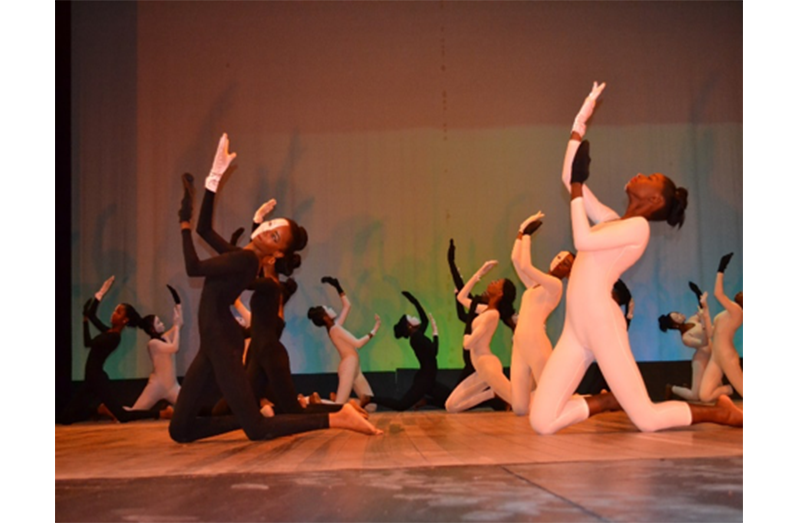
Griffith has seen the evolution of dance in Guyana more than perhaps anyone else. Beginning her career in dance more than four decades ago, she has shaped the careers of thousands of Guyanese dancers. In those years, she says dance in Guyana has changed, with the biggest shift being the improvement of the art form at a national level. This, Griffith added, is due to growth; with more dance companies and schools, the art form has matured and developed in recent years. “We have improved as a country where dance is concerned. This is due to the fact that there are more dance groups now, there are more dance companies, and the people who are heading them, the majority of them have passed through the National School of Dance.” She added that dancers have also gained more from the art form, with a number of them venturing abroad to represent Guyana. “We have moved from not having established dance schools or dance companies in 1972 to having a lot of groups and companies where people have been trained as dancers and choreographers,” Griffith added.
Growth in the art form has also been present at the institutional level. As Griffith explained, the National School of Dance is now a part of the Institute of Creative Arts. This move, while seemingly small, is important to building the capacity of dance teachers and students. It has bolstered what the school can teach and what its students can accomplish. As Griffith shared, graduating students are now better equipped than ever before. “These are certificates in dance, in technique. They study choreography, methodology, and fundamentals of dance. They are equipped when they finish these programmes to go out and establish their own schools and companies.” She added, “There are also people who graduate as students from the school and are in the educational system, where they teach and send children up for competitions, and you see them doing very well.”
Dance in Guyana has also changed, says Griffith. As she explained, the art form has evolved and is now seeing a rise in more contemporary dance forms. While a new addition to the landscape, Griffith says she would like to see more traditional dances return. “More contemporary forms are emerging because we’re following a lot of what is happening on the outside. But for me, we prefer people to study more of our culture, because it’s unique.” As she added, Guyana’s rich culture has crafted unique dance styles that should be performed and preserved. “People need to take time; choreographers and teachers need to study and research our cultures and our dances. Then we can create and have our own style, our own form of Guyanese dance, but it takes time to develop that. Also performing on a regular basis, touring, and showcasing what Guyana has as our dance culture.” These steps, she added, would be impactful in developing Guyana’s signature style of dance.
While the exact time and date are yet to be decided, Griffith says she hopes to retire in the near future. After more than thirty-five years at the helm of the Guyana National School of Dance, she says she will hand over the mantle sometime soon, knowing that the art form will be in good, talented hands. “I plan to retire soon because there are people who can carry on. We can’t carry on forever. You have to, at some time, let go and give them a chance to develop as you have developed over the years.” Looking at the art form, she added that there are countless Guyanese dancers, many of them her own students, who will ensure its continued growth.
Although she has undoubtedly been a pioneer of dance in Guyana, choreographing numerous captivating performances, Griffith says her proudest moments come from seeing the success of her committed students. “My proudest moments are to see persons who are now in the National Dance Company come into the school as four-year-olds, and they pass through our instructors at the various levels, and they are now in the National Dance Company. They are instructors, they are choreographers—I am very proud of that.” She further added that helping someone move from not believing they have the potential to dance to becoming a skilled dancer has also been profoundly fulfilling.
As she transitions into retirement, Griffith says she will continue to advocate and work to develop cultural dances, and hopes this, too, is part of her legacy. Highlighting her passion for masquerades and the preservation of that art form, she added, “One of the things that I have worked a lot on is masquerading, trying to revive masquerades. One of the things I want to do when I retire is continue writing books on masquerade—how it is done, the history of masquerade, the costumes, the dance, the images. That is something I really want to leave behind.”
As Guyana’s dance landscape continues to evolve, Griffith’s reflections serve as both a record of progress and a call to action. With a generation of trained dancers, educators, and choreographers now carrying the work forward, she remains confident that the foundation built over decades will continue to grow.